

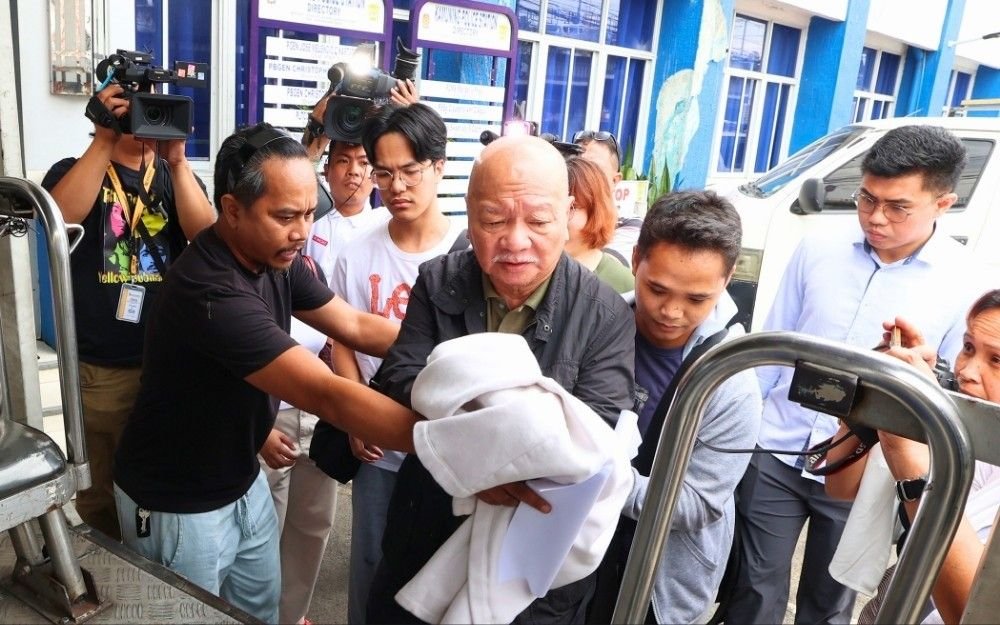

Veteran Filipino journalist Philip Lustre Jr. has been arrested in Quezon City over a cyberlibel case filed in Davao City, adding to a continuing debate in the Philippines over the use of criminal defamation laws against journalists and online commentary.
Police detained Lustre on October 24 shortly after he attended the regular Saturday News Forum at a restaurant in Quezon City.
The arrest was carried out on a warrant issued by Branch 10 of the Regional Trial Court in Davao City.
Later Philippine reporting identified Davao City 1st District Representative Paolo Duterte as the complainant in the libel and cyberlibel case.
The allegations have not been decided by the court.
FCRF’s Chief AI Officer Certification Returns on November 14 to Prepare Future AI Leaders
Journalist Says He Was Unaware of Case
Lustre initially told reporters after his arrest that he did not know who had filed the complaint or which article had triggered the case.
His lawyer, Dino De Leon, also said Lustre had not been aware of the proceedings before police arrived.
De Leon said the legal team planned to post ₱48,000 in bail and seek the reopening of the preliminary investigation.
That step could allow Lustre’s lawyers to challenge the complaint and submit arguments they say were not considered before the arrest warrant was issued.
Police took Lustre to the Quezon City Police District’s Kamuning Station 10 for booking and medical examination.
The arrest was coordinated by the local warrant section, anti-cybercrime officers and cyber-tracking personnel.
What Cyberlibel Means in the Philippines
Cyberlibel is essentially libel committed through a computer system or online platform.
The offence is covered by the Philippines’ Cybercrime Prevention Act of 2012 together with provisions of the Revised Penal Code governing libel.
A statement does not become criminal simply because it criticises a public figure.
Prosecutors generally need to establish the legal elements of libel, including that a defamatory allegation was published and referred to an identifiable person.
Defences can include truth, privileged communication and other protections recognised under Philippine law.
The internet element can make a case more serious because publication online falls within the country’s cybercrime statute.
Philippine journalists and press-freedom groups have repeatedly argued that criminal cyberlibel can have a chilling effect on investigative reporting and political commentary.
Supporters of existing laws argue that individuals should also have legal remedies when false and damaging claims are spread online.
Complaint Linked to Paolo Duterte
Later reports said the complaint against Lustre was filed by Paolo Duterte, the son of former Philippine President Rodrigo Duterte.
The precise statement or publication forming the basis of the case had not been clearly identified in the first reports following Lustre’s arrest.
That detail will be important as the case moves forward.
Courts will need to examine the exact language allegedly used, where it was published, whom it referred to and whether legal defences apply.
Lustre has been a long-time journalist, columnist and commentator.
He has also written critically about the Duterte administration and its anti-drug campaign.
His recent book, Kill, Kill, Kill: Extrajudicial Killings in the Philippines — Crimes Against Humanity v. Rodrigo Duterte Et. Al., examines killings associated with the former president’s war on drugs.
That background makes the case politically sensitive, but it does not by itself establish what motivated the complaint.
The legal dispute will turn on the specific publication and evidence presented in court.
Press Group Calls for Transparency
The arrest has already prompted concern from Philippine press groups.
The National Press Club called for transparency surrounding the case and sought clarity over the circumstances leading to Lustre’s arrest.
Press-freedom disputes involving cyberlibel are not new in the Philippines.
Journalists, bloggers and ordinary social-media users have previously faced criminal cases arising from online posts and news articles.
One of the country’s most internationally prominent examples involved journalist Maria Ressa and Rappler, whose cyberlibel case became part of a wider global debate over press freedom and online speech.
Lustre’s case is legally separate and must be considered on its own facts.
However, it again raises the issue of how traditional criminal-defamation law is being applied to digital publication.
Court Proceedings Will Determine Liability
An arrest warrant does not establish that Lustre committed cyberlibel.
The prosecution will still need to prove its case and establish each element of the alleged offence.
Lustre’s legal team will also have the opportunity to challenge the complaint, question procedural issues and present applicable defences.
The request to reopen the preliminary investigation could become an early point of contention.
For journalists, the case is likely to be watched closely because online publication is now central to modern reporting.
Articles, columns and social-media commentary can remain searchable for years and can potentially trigger legal disputes long after they are first posted.
That has made cyberlibel law an increasingly important part of the wider debate over accountability and freedom of expression in the Philippines.
What this means for you:
Online publication does not remove ordinary defamation risks. Journalists and social-media users should distinguish verified facts from allegations, preserve source material and use careful attribution when making claims about identifiable individuals.
Follow for daily updates on cybercrime, corporate fraud, DFIR, hacking, investigations, and digital forensics
