
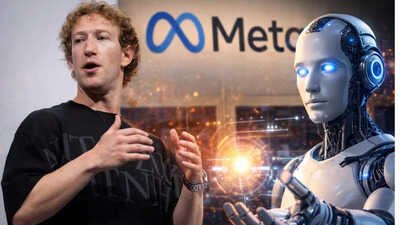
In a development that could redefine corporate leadership, Mark Zuckerberg is reportedly building an AI-powered “CEO agent” designed to assist him in running Meta Platforms. The move signals a major shift—artificial intelligence is no longer limited to employees, but is now entering the highest levels of decision-making.
The AI system, currently under development and testing, is aimed at handling core executive functions such as retrieving information, analysing data, and supporting decision-making in real time.
AI designed to assist — and potentially replace — leadership tasks
Unlike traditional enterprise tools, this “CEO agent” is being built to function as a personal executive assistant powered by advanced AI, capable of bypassing layers of corporate hierarchy.
Instead of relying on multiple teams and reports, Zuckerberg can directly query the system to obtain insights instantly. This reduces dependency on internal coordination and speeds up decision-making processes significantly.
The system is still evolving, but early reports suggest it is already being used in limited capacity to streamline workflows and improve operational efficiency.
FCRF Launches Premier CISO Certification Amid Rising Demand for Cybersecurity Leadership
Part of Meta’s larger AI transformation
The development is not an isolated experiment. It is part of Meta’s broader strategy to become an “AI-native” organisation, where artificial intelligence plays a central role across all levels of the company.
Zuckerberg has been pushing for:
- Greater adoption of AI tools across teams
- Flattening of organisational hierarchies
- Empowering individual contributors with AI assistance
This shift aims to reduce friction, cut communication delays, and increase productivity in a company with tens of thousands of employees.
Debate intensifies: Can AI replace CEOs?
The news has sparked a wider debate in the tech world about whether AI could eventually replace top executives.
Interestingly, leaders like Sundar Pichai have also suggested that AI might one day be capable of performing CEO-level tasks. The development at Meta appears to be one of the first real-world attempts to test that possibility.
While some see this as a natural evolution of workplace automation, others argue that leadership involves judgment, ethics, and human intuition—areas where AI still has limitations.
Efficiency vs job security concerns
The introduction of AI at the executive level also raises concerns about job displacement and organisational restructuring.
By reducing reliance on middle management and support layers, such systems could:
- Shrink traditional corporate hierarchies
- Redefine roles within organisations
- Increase pressure on employees to adapt to AI-driven workflows
Some reports suggest that Meta’s broader AI push is already linked to efficiency drives and workforce restructuring, adding to concerns about long-term job security.
A glimpse into the future of work
Experts believe this development marks the beginning of a new phase where AI evolves from a tool into a decision-making partner at the highest level of organisations.
If successful, AI “CEO agents” could:
- Assist executives in complex decision-making
- Provide real-time strategic insights
- Potentially redefine how companies are managed
However, the idea of AI fully replacing CEOs remains speculative for now, with most systems still functioning as support tools rather than autonomous leaders.
The bigger picture
Zuckerberg’s experiment reflects a larger industry trend—AI is rapidly moving up the value chain, from automating routine tasks to influencing strategic decisions.
Whether AI becomes a co-pilot for CEOs or eventually replaces them, one thing is clear: the structure of leadership itself is beginning to change.
About the author – Rehan Khan is a law student and legal journalist with a keen interest in cybercrime, digital fraud, and emerging technology laws. He writes on the intersection of law, cybersecurity, and online safety, focusing on developments that impact individuals and institutions in India.
