

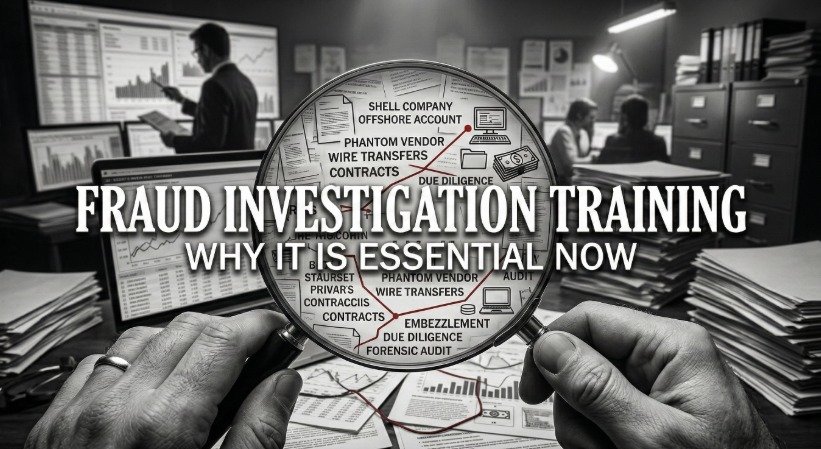

India’s economic expansion — powered by fintech growth, digital payments, startup capital flows and cross-border transactions — has created unprecedented opportunity. It has also expanded the surface area for fraud.
UPI-linked mule accounts, vendor shell companies, procurement manipulation, insider collusion, accounting irregularities, cyber-enabled phishing frauds and money-laundering chains increasingly intersect. A single incident can now trigger criminal prosecution, regulatory inquiry, internal audit escalation and reputational crisis simultaneously.
The enforcement climate has tightened. AML compliance under PMLA has sharpened. RBI fraud classifications require structured reporting. FIRs must align with the new criminal codes. Digital evidence must meet admissibility standards under evolving evidentiary rules. Boards and audit committees face increasing accountability.
In this environment, fragmented knowledge — accounting without legal context, law without forensic discipline, cybersecurity without financial literacy — is no longer sufficient.
A Structured Response to a Structural Problem
Against this backdrop, FCRF Academy has launched the Certified Fraud Investigator (CFI) program, positioning it as a comprehensive response to the convergence of fraud, compliance and cyber risk. The program is scheduled to commence on 14th March.
Designed as a multi-week, module-based certification, the CFI program spans the full fraud lifecycle — from prevention and risk assessment to investigation methodology, legal procedure, asset recovery and governance oversight.

The curriculum integrates:
- Fraud typologies, including asset misappropriation, corruption and financial statement fraud
- Accounting red flags and ratio analysis for non-finance professionals
- Indian criminal law provisions relevant to fraud and economic offences
- AML frameworks and regulatory obligations
- Cyber fraud, digital evidence handling and chain-of-custody principles
- Data analytics tools for fraud detection
- FIR drafting, procedural safeguards and civil versus criminal strategy
- Banking fraud classification, account freeze protocols and recovery mechanisms
- Board-level oversight and governance accountability
The emphasis is not merely academic. The training focuses on defensibility — ensuring that investigations can withstand regulatory and judicial scrutiny.
Built on a Growing Training Ecosystem
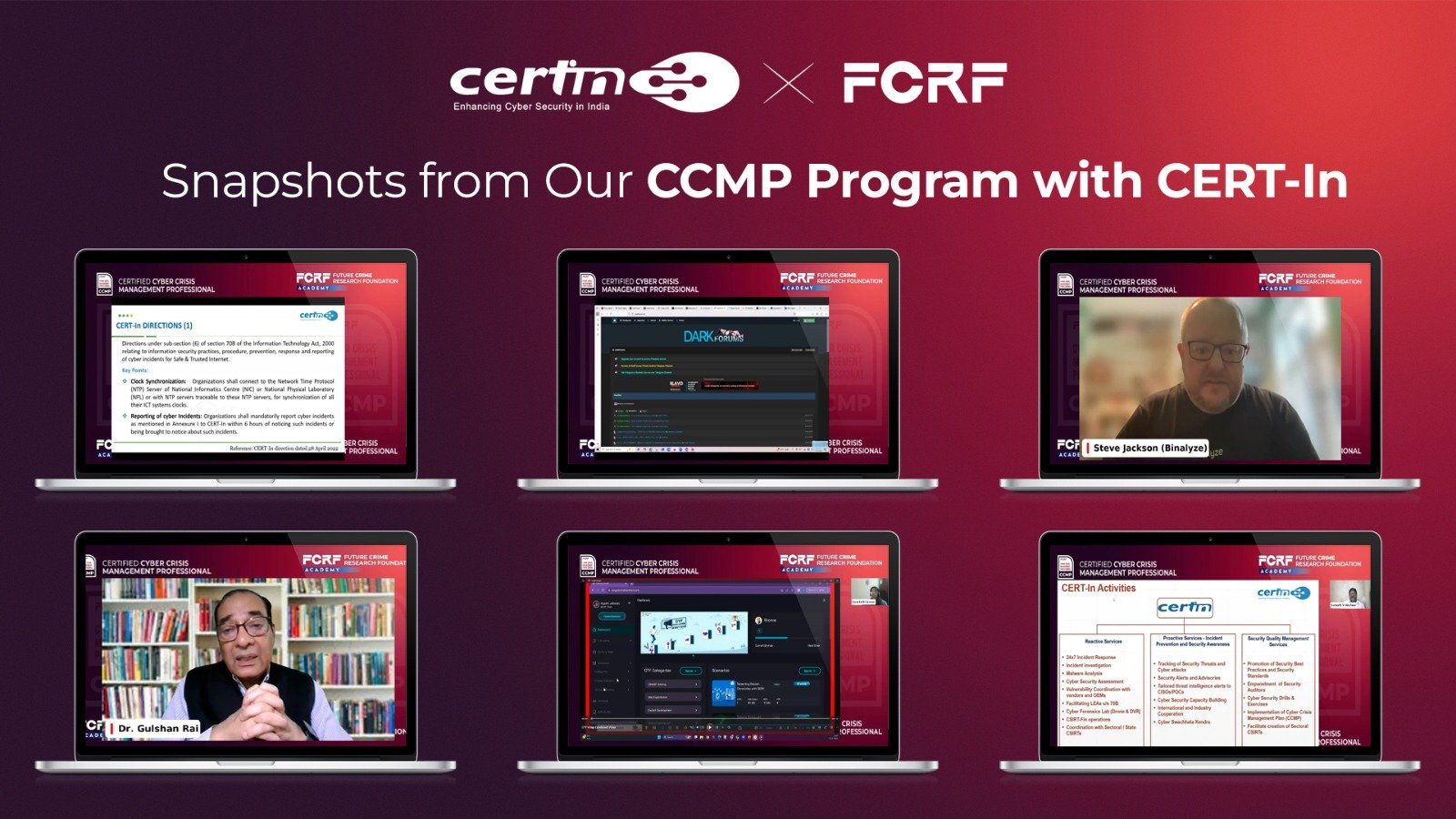
The CFI program does not emerge in isolation. FCRF Academy has previously trained thousands of professionals through its flagship certifications in cyber crisis management (CCMP, conducted with CERT-In), data protection (CDPO), cyber law (CCLP) and governance risk and compliance (GRCP).
Those programs responded to earlier waves of regulatory and technological change: cyber resilience mandates, the Digital Personal Data Protection Act, IT Act compliance and enterprise risk governance.
The Certified Fraud Investigator program represents the next logical progression. As financial misconduct increasingly overlaps with cybercrime and regulatory enforcement, fraud investigation has become a cross-disciplinary requirement rather than a specialized niche.
For FCRF Academy, the launch signals an expansion from digital risk literacy to financial integrity leadership.
Who Needs It — and Why Now
The target audience is deliberately broad: compliance officers, internal auditors, risk managers, lawyers, bankers, law enforcement officials, corporate security professionals, forensic specialists and cyber investigators.
The rationale is straightforward.
Compliance officers must now go beyond policy drafting to structured fraud risk assessments.
Lawyers must navigate white-collar defense intertwined with digital evidence.
Banking professionals must manage account freezing protocols and fraud classifications under RBI norms.
Investigators must balance procedural rigor with speed.
Board members must understand fraud governance beyond quarterly reporting.
In each case, the gap is not awareness — it is integration.
Fraud today is rarely isolated. It is layered, data-driven and often cross-jurisdictional. Without structured investigative training, even experienced professionals risk procedural missteps, evidentiary weaknesses or regulatory penalties.
As the 14th March start date approaches, the CFI program enters a landscape defined by urgency. Financial crime is evolving faster than traditional training models. Institutions are under scrutiny. Boards demand accountability. Regulators expect precision.
In such a climate, structured fraud investigation expertise is no longer optional enhancement. It is increasingly foundational.
And for professionals navigating India’s high-risk economy, the question is no longer whether fraud literacy matters — but whether they can afford to operate without it. Interested participants can join the Certified Fraud Investigator (CFI) program by clicking here to register.
