

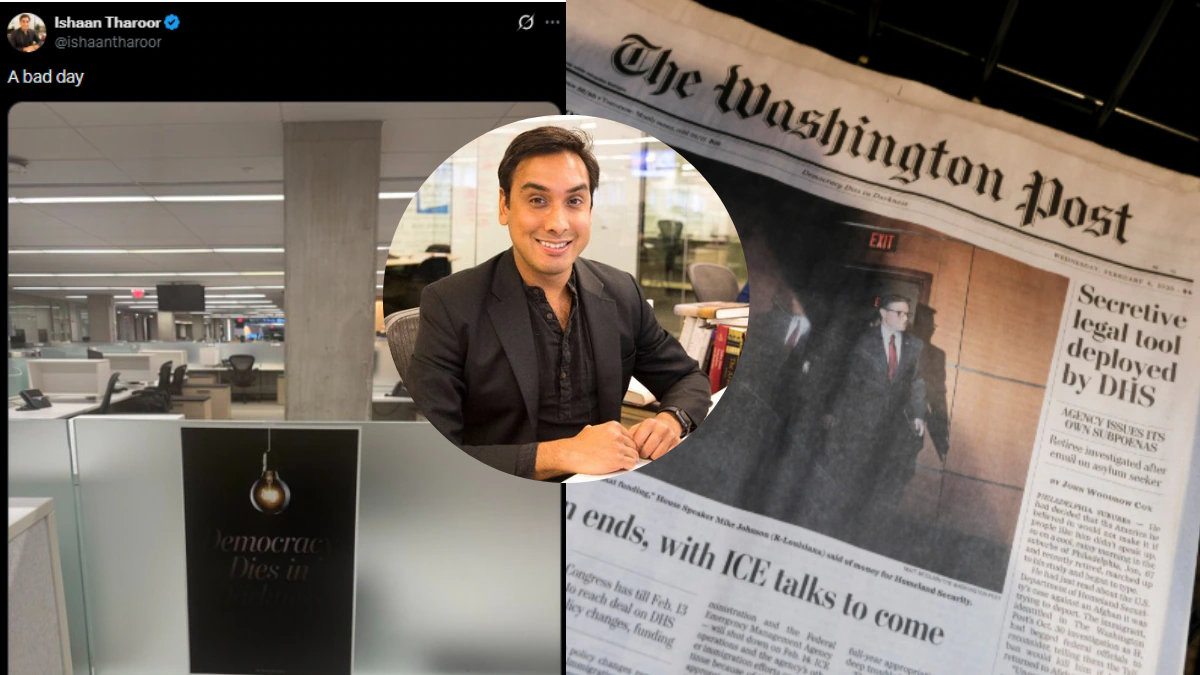

The layoffs at The Washington Post were sweeping and sudden, touching nearly a third of its newsroom and shuttering entire desks that once defined its global reach. For many inside the paper, the cuts marked not just a restructuring, but the end of a particular idea of international journalism.
A Sweeping Cut Across the Newsroom
One of the world’s most influential newspapers has carried out one of the largest staff reductions in its recent history. The Washington Post has laid off more than 300 employees—nearly one-third of its total staff—in a move the company described as part of a broader restructuring to adapt to changing reader habits and technological shifts.
The cuts fell heavily on the newsroom. The paper confirmed that its standalone reporting section has been completely shut down. Several foreign bureaus were closed, and coverage teams that once anchored the Post’s global reporting footprint were dismantled. Among the most striking decisions was the removal of the entire Middle East reporting team and its editors, a move that surprised many within the organisation.
The layoffs extended beyond desks to individual journalists whose work had shaped the paper’s international voice over the past decade. The changes were communicated to staff after internal meetings, followed by emails outlining the future direction of the organisation.
Certified Cyber Crime Investigator Course Launched by Centre for Police Technology
Ishaan Tharoor and the End of a Global Column
Among those laid off was Ishaan Tharoor, a senior international columnist and the son of Indian Member of Parliament Shashi Tharoor. Tharoor had been associated with the paper for years and was widely known for WorldView, the daily foreign affairs column he launched in 2017.
In a post on X (formerly Twitter), Tharoor wrote that he had been laid off along with most of the international staff and several “wonderful colleagues.” Reflecting on his time at the paper, he described the end of his tenure as “a sad day for the newsroom and for global journalism.”
In a separate post, he shared an image of an empty newsroom and called the day simply “a bad one.” Tharoor also thanked nearly half a million subscribers who had followed his reporting over the years, noting that the column had been created to help readers better understand global affairs at a time of rising international complexity.
Former Editors Speak Out
The scale and nature of the cuts prompted sharp reactions from former leaders of the paper. Martin Baron, the Post’s former executive editor, criticised the decision as “gutting the brand.” While current management has argued that the restructuring was necessary to keep pace with changing technology and audience behaviour, Baron’s remarks echoed broader concerns within the journalism community.
Veteran reporters were also affected. Claire Parker, the paper’s Middle East bureau chief, said she had been laid off along with the entire reporting team from the region. She described the decision as incomprehensible, particularly at a time when conflicts in the region continue to demand sustained, on-the-ground reporting. Lizzie Johnson, who had recently reported alone from conflict zones, also confirmed that she was among those let go, underscoring the depth of the cuts to international coverage.
A Broader Reckoning for Legacy Journalism
The reaction to the layoffs extended well beyond the newsroom. Journalism educators, former employees, and media commentators expressed alarm at what they saw as a retreat from the kind of international reporting that helped define the paper for decades.
In an article published in The Atlantic, former Post journalist Ashley Parker warned that the paper’s current direction could place its nearly 150-year legacy at risk. She argued that the erosion of global reporting threatened not just the institution itself, but a pillar of American democratic discourse.
The Post’s executive editor, Matt Murray, acknowledged the pain caused by the layoffs, calling the decision “painful but necessary.” He told staff that no organisation could be everything to everyone in a rapidly evolving media environment, and that difficult choices were unavoidable.
For many inside and outside the newsroom, however, the layoffs marked more than a business decision. They represented a moment of reckoning for legacy journalism, raising enduring questions about how global reporting can survive in an era of shrinking newsrooms and accelerating technological change.
