

New Delhi | January 6, 2026: Today, the name Venezuela evokes images of soaring inflation, food shortages, mass migration and political instability. Yet this is the same country that once ranked among the world’s most prosperous. In the 1950s and 1970s, Venezuela’s per capita income exceeded that of several European nations. The capital, Caracas, was dubbed the “Paris of Latin America,” and the national currency, the bolívar, was considered strong against the US dollar.
When Venezuela Ranked Among the World’s Wealthiest
According to historical data cited by the World Economic Forum, Venezuela was the fourth richest country in the world by GDP in 1950. At the time, it was wealthier than Chile by a wide margin, four times richer than Japan, and nearly twelve times richer than China. The engine of this prosperity was clear: oil.
Final Call: FCRF Opens Last Registration Window for GRC and DPO Certifications
Oil Changed Venezuela’s Fortunes—And Marked Its Biggest Mistake
The discovery of vast oil reserves in the early twentieth century transformed Venezuela’s economy. Between the 1920s and the 1970s, oil exports generated such immense revenues that governments invested heavily in roads, schools, hospitals and social programmes. But this boom also masked a fatal policy error: the economy became almost entirely dependent on oil.
Agriculture, industry and manufacturing were neglected. Economists describe this phenomenon as “Dutch disease,” where success in a single natural resource weakens the rest of the economy. Venezuela became a textbook case.
When Oil Prices Fell, the Crisis Deepened
Oil revenues were easy to earn but inherently volatile. Whenever global oil prices dipped, government finances took a hit. Instead of cutting spending, successive administrations borrowed heavily to maintain outlays. In 1983 came the moment Venezuelans still call “Black Friday”—a sudden currency devaluation that wiped out savings and shattered public confidence in the system.
A Democracy with Fragile Institutions
It is often argued that Venezuela collapsed due to authoritarianism. The reality is more complex. For decades, the country had elected governments. The deeper problem lay in weak institutions and rising corruption. Political parties focused more on dividing oil rents than on structural reform. Oil money helped suppress public discontent—until revenues dwindled and anger spilled into the streets.
The Rise of Chávez: Hope and Illusion
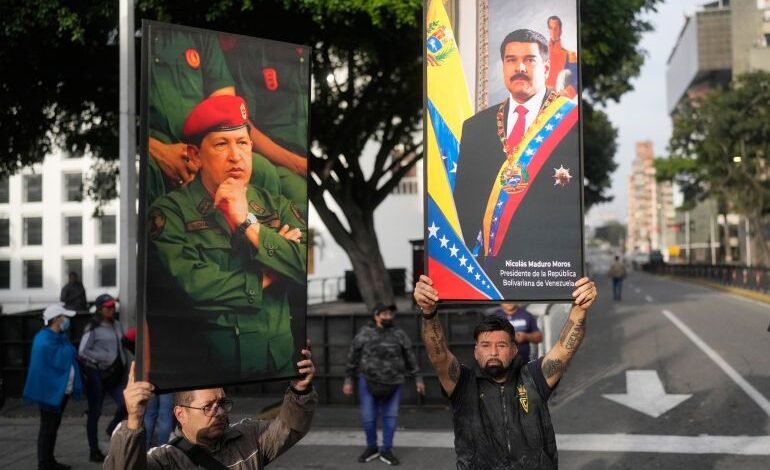
Against this backdrop, Hugo Chávez rose to power, presenting himself as a champion of the poor. Initially, high oil prices gave his government room to expand social spending. But instead of diversifying the economy, the Chávez administration doubled down on nationalisation and state control.
At the state oil company PDVSA, political appointees replaced technical experts, leading to falling output. Private investment fled, foreign firms exited, and productivity suffered.
Controls, Money Printing and Hyperinflation
Strict currency controls, price caps and heavy state intervention worsened conditions. To plug fiscal gaps, the government resorted to printing money on a massive scale, unleashing one of the world’s worst episodes of hyperinflation. Wages lost value within days, shops ran empty, and basic goods vanished from shelves.
Oil Slumped, the System Collapsed
After 2014, a sharp fall in global oil prices pushed Venezuela over the edge. With no foreign reserves and little productive capacity beyond oil, the economy imploded. Millions fled in search of food, medicine and work—creating the largest refugee crisis in Latin America’s history.
The Maduro Era and a Deepening Crisis
Following Chávez’s death in 2013, Nicolás Maduro inherited an economy in free fall. Instead of pursuing meaningful reforms, political repression intensified. Protests were crushed, opposition leaders jailed, and institutional independence steadily eroded, further undermining confidence at home and abroad.
What Venezuela’s Story Teaches the World
Venezuela’s collapse is not merely a national failure—it is a global cautionary tale. When a country:
- anchors its entire economy to a single resource,
- allows institutions to weaken, and
- chooses control over reform in times of crisis,
- decline becomes not only economic, but social and humanitarian.
Oil once made Venezuela rich. But misguided policies, fragile institutions and short-sighted politics turned that same oil into the central cause of its downfall.
