
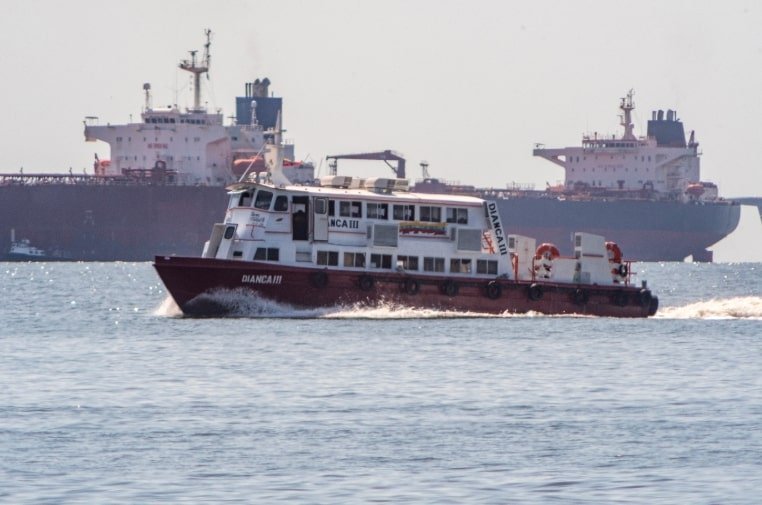
Global energy politics is increasingly defined not by how much oil countries produce today, but by who controls the world’s proven reserves—the oil that can be tapped tomorrow. At the centre of this equation sits Venezuela, a nation that holds the largest proven crude oil reserves on the planet, yet remains economically fragile and geopolitically isolated.
Data for 2024 shows that a small group of countries controls the backbone of global energy supply, giving them disproportionate influence over prices, diplomacy and strategic alliances. These reserves are not just geological assets—they are leverage.
Final Call: FCRF Opens Last Registration Window for GRC and DPO Certifications
The oil oligarchy
Only a handful of nations dominate global oil reserves. This concentration means that supply shocks, sanctions or political instability in just one region can ripple through fuel markets worldwide—impacting inflation, trade balances and even elections.
At the top of this list is Venezuela, followed closely by Saudi Arabia, Iran, Iraq, and Canada. Together, these nations sit on the majority of the world’s easily accessible crude.
The Venezuela paradox
Venezuela holds over 300 billion barrels of proven oil reserves—more than any other country. Much of this lies in the Orinoco Belt, one of the world’s richest hydrocarbon regions. Yet paradoxically, Venezuela’s oil wealth has failed to translate into economic power.
Years of US-led sanctions, underinvestment, mismanagement and crumbling infrastructure mean that a large share of this oil remains underground and unusable. Instead of acting as an economic stabiliser, oil has become a political flashpoint, influencing everything from migration flows to foreign intervention debates.
Energy analysts note that if sanctions were lifted and infrastructure modernised, Venezuela could quickly become a game-changer in global oil markets—a prospect that makes its reserves strategically explosive.
Saudi Arabia’s swing power
With more than 267 billion barrels in proven reserves, Saudi Arabia remains the world’s ultimate swing producer. Unlike Venezuela, it can rapidly increase or cut output, allowing it to cool or overheat global oil prices almost at will.
Markets closely watch Riyadh’s production decisions, as even modest adjustments can move crude prices sharply. This capacity gives Saudi Arabia enduring diplomatic and economic clout, even as the world talks up energy transition.
Sanctions and frozen wealth
Venezuela is not alone in learning that oil wealth does not always equal oil power. Sanctions on Iran and Russia show how geopolitics can effectively freeze reserves, limiting who benefits from them.
In this sense, oil reserves have become as much a political asset as a physical one. Access to capital, technology and export markets now determines whether oil underground translates into influence above ground.
The Middle East energy core
Beyond Saudi Arabia, a cluster of Middle Eastern states—Iran, Iraq, Kuwait and the UAE—forms the core corridor of global oil supply. Any disruption here, whether military or diplomatic, is immediately reflected in fuel prices from Asia to Europe.
This concentration ensures that the Middle East remains central to global strategy, regardless of advances in renewables.
Canada and Russia: quiet heavyweights
Often overlooked, Canada ranks fourth globally, thanks largely to its oil sands. However, environmental constraints and high extraction costs limit how much of this oil can be commercially exploited.
Russia, despite sanctions and war-driven isolation, still commands vast reserves. Its case underlines a key reality: energy power erodes slowly, even under sustained pressure.
The US reality
The United States leads the world in oil production but lags far behind in proven reserves. This highlights a crucial distinction between short-term pumping power and long-term resource depth—a gap that shapes Washington’s strategic anxieties around energy security.
Energy as a chessboard
Ultimately, oil reserves are not just barrels in the ground—they are strategic leverage. From diplomacy and defence budgets to sanctions and alliances, the concentration of oil wealth continues to shape global power structures in ways that renewables have not yet replaced.
As Venezuela’s crisis shows, the real question is no longer who has the oil—but who can use it, sell it, and turn it into power.
