

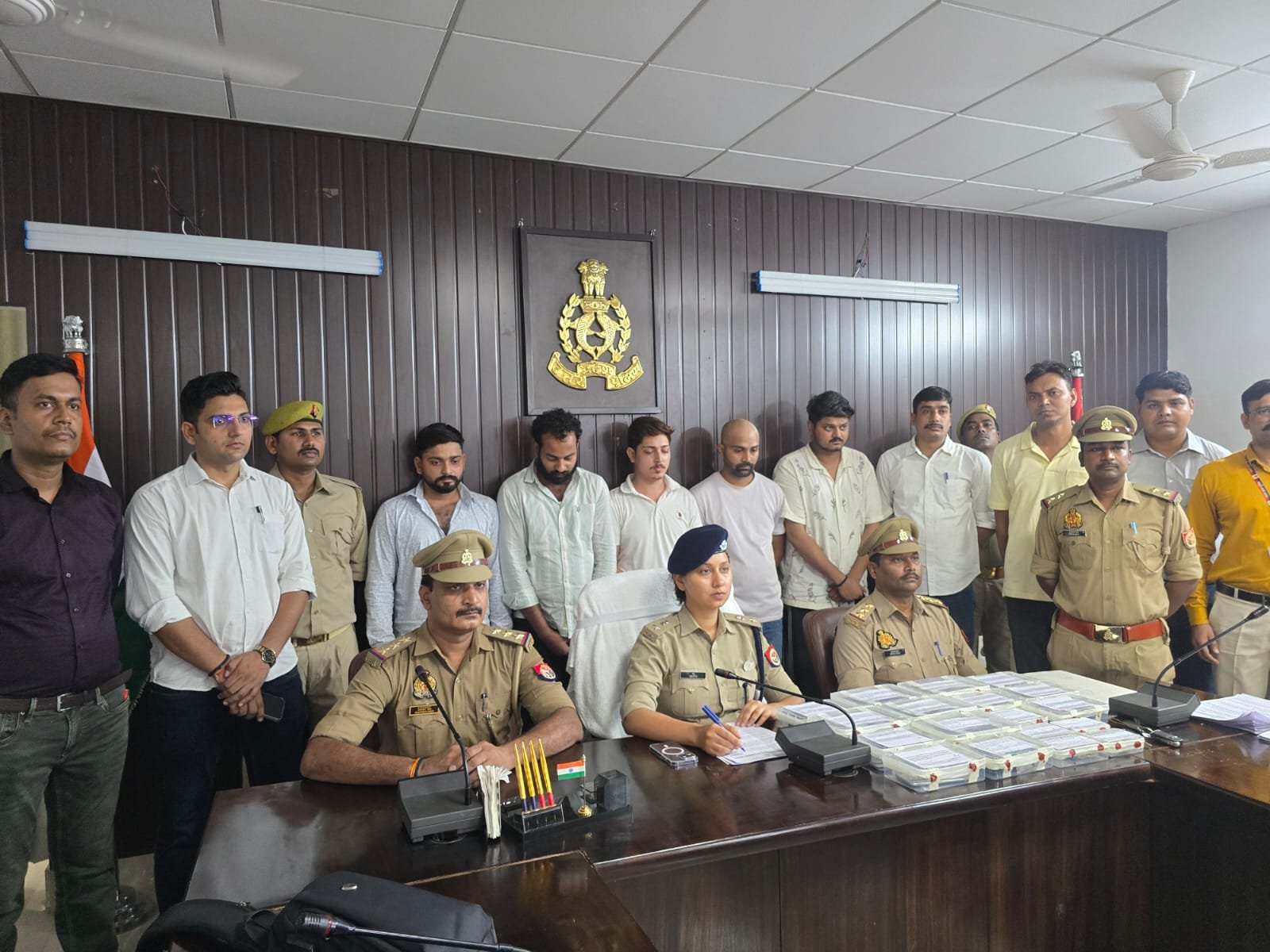

The Cyber Crime Police under the Varanasi Police Commissionerate have successfully dismantled an organized inter-state cyber fraud syndicate involved in procuring mule bank accounts and deploying malicious transaction APK files to execute large-scale financial fraud. Five key operatives were apprehended during a targeted law enforcement operation carried out under the directives of Police Commissioner Mohit Agarwal and supervised by Deputy Commissioner of Police (Crime) Neetu Kadyan, Additional Deputy Commissioner Nripendra, and Assistant Deputy Commissioner Vinay Dwivedi. Law enforcement officials seized an extensive collection of digital and physical evidence, including 18 mobile phones, 43 ATM cards, dozens of passbooks and checkbooks, SIM cards, a laptop, cash, and two luxury four-wheeler vehicles purchased directly with fraudulent gains.
Exploitation of Mule Accounts and Remote Access APK Architecture
Technical analysis and preliminary interrogations conducted by the police team revealed that the syndicate functioned as an intermediary infrastructure serving cybercrime operators across India and foreign jurisdictions. The gang systematically targeted financially vulnerable and unsuspecting individuals, luring them with monetary incentives to open accounts across various commercial banks. Upon opening these accounts, the suspects took total administrative control by seizing linked ATM cards, passbooks, checkbooks, registered SIM cards, and net banking credentials.
To execute transactions seamlessly, the syndicate relied on custom Android application package files supplied by foreign cybercriminals. These transaction APK files were installed directly onto mobile devices containing the phone numbers linked to the mule bank accounts. This configuration granted offshore cybercriminals remote access to the victim accounts, allowing them to deposit proceeds from online scams and immediately layer the funds through secondary account networks to prevent tracing. Interrogations revealed that the gang received an 8 to 15 percent commission on all laundered proceeds, which members split among themselves to cover personal expenses and fund monthly loan installments for two luxury vehicles—a Mahindra Thar and a Hyundai i20.
Suspect Identification, Asset Seizure, and Legal Proceedings
The five arrested individuals have been identified as Adarsh Chaubey, originally from Mirzapur residing in Varuna Enclave, Cantt; Ashish Yadav from Azamgarh, also residing in Varuna Enclave; Sujal Singh from Muzaffarnagar, staying in Ganpati Enclave, Sundarpur; Piyush Singh from Mau, residing in Kabir Nagar, Bhelupur; and Yuvraj Verma, a resident of Gandhi Nagar, Nariya, under Lanka police station in Varanasi.
During the arrests, the investigating team led by Inspector In-Charge Udayveer Singh recovered 15 Android smartphones, 3 iPhones, 43 ATM cards, 12 passbooks, 10 checkbooks, 11 QR codes, 12 SIM cards, a laptop, a transaction ledger diary, ₹12,060 in cash, and the two luxury cars. The Cyber Crime Police Station in Varanasi registered Case Crime No. 35/2026 under Sections 318(4), 61(2), and 112 of the Bharatiya Nyaya Sanhita, along with Sections 66C and 66D of the Information Technology Act. Forensic teams are currently auditing seized digital hardware, Telegram logs, and financial spreadsheets to map out additional network ties.
Official Police Advisory Against Financial Exploitation
Following the successful crackdown, the Varanasi Cyber Crime Police issued a public advisory urging citizens to safeguard their personal banking credentials and avoid sharing debit cards, passbooks, or SIM cards with third parties. Police officials highlighted that accepting money or commissions in exchange for letting others use personal bank accounts constitutes active participation in illegal financial fraud.
Authorities also cautioned the public against downloading unverified APK files or SMS-forwarding applications from unknown sources, noting that such software can silently compromise device security and grant unauthorized remote access to bank accounts. Victims of digital fraud are advised to report incidents immediately to the national cybercrime helpline at 1930 or file formal complaints on the official government reporting portal.
Follow for daily updates on cybercrime, corporate fraud, DFIR, hacking, investigations, and digital forensics
