
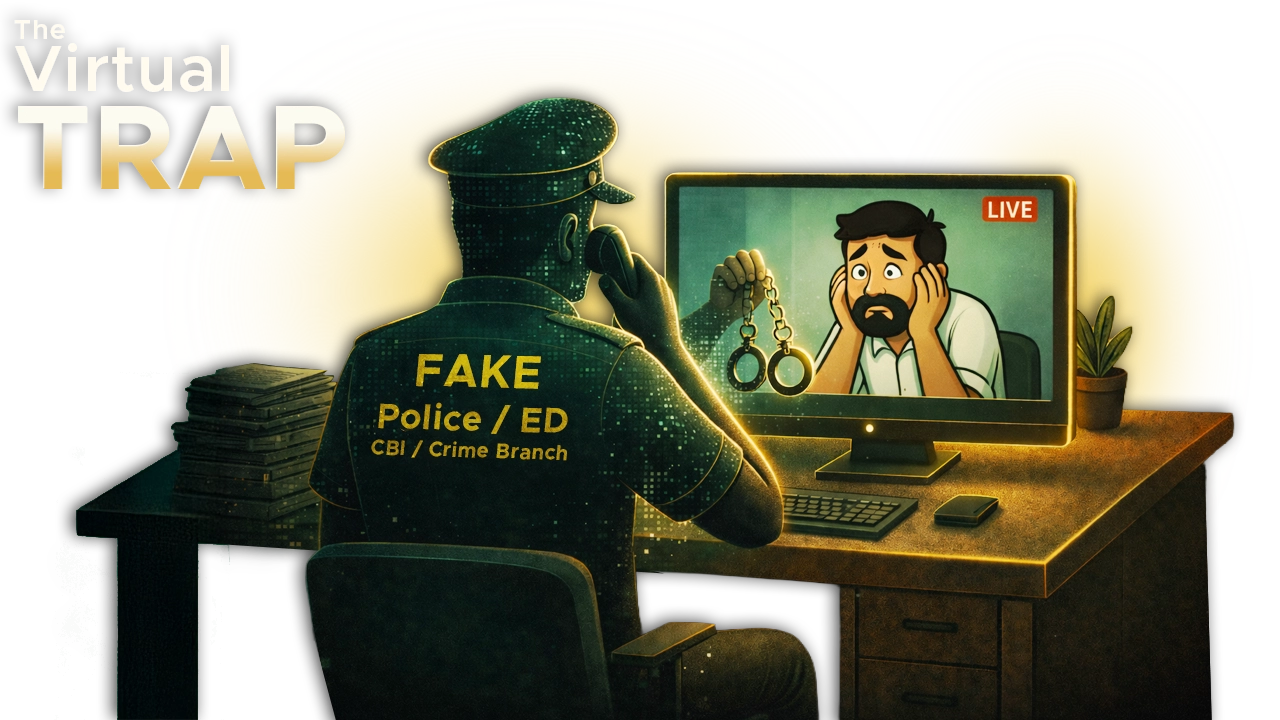
In one of the largest online frauds reported in Gujarat, a 62-year-old man from Vadodara was swindled out of nearly ₹1.5 crore. Cybercriminals used a trick called “digital arrest” to trap him. They scared him into staying under continuous video watch inside his own house for over two weeks, pretending to be powerful police officers and government agents.
The victim, Atul Kashikhar, lives on Vasna Road in Vadodara. He finally filed a complaint with the local Cyber Crime police station after his family discovered the massive fraud. According to the police, the gang managed to control his life and drain his bank accounts over several weeks using pure fear and deception.
Registration Begins for FutureCrime Summit 2026, India’s Largest Cybercrime Conference
How the Fake Telecom Warning Started
The multi-stage scam began in March when Kashikhar received an unexpected phone call from a man identifying himself as “Manav Sharma,” a representative from the Telecom Regulatory Authority of India (TRAI). The caller told Kashikhar that a mobile phone number had been illegally opened using his Aadhaar card details.
To make the situation sound terrifying, the fake agent claimed that this unauthorized phone number was being used to run illegal advertisements and criminal operations. He told Kashikhar that his identity was heavily compromised and instructed him to immediately connect with the Mumbai Crime Branch online to clear his name and avoid legal trouble.
The ₹538 Crore Money Laundering Threat
Shortly after, Kashikhar was directed to get on a video call. A man appeared on the screen pretending to be a senior Central Bureau of Investigation (CBI) officer. The fake officer aggressively told Kashikhar that his Aadhaar details had been linked to a massive, multi-crore money laundering banking racket involving ₹538 crore.
The scammers told the 62-year-old that he was a prime suspect in a national security threat. They threatened him by saying that if he did not cooperate fully with their “secret investigation,” he would face an immediate arrest warrant and a minimum of a seven-year prison sentence. To completely convince him, the criminals sent high-quality, forged CBI documents, fake court notices, and official-looking stamps directly to his phone.
Fourteen Days of Fake Video Court Hearings
To maintain absolute control, the gang kept Kashikhar under what is known as a “digital arrest” from March 10 to March 27. During these 17 days, different gang members changed roles, appearing on camera dressed as Indian Police Service (IPS) officials, legal lawyers, and even a live judge inside a fake courtroom setting.
The scammers called Kashikhar every two hours, forcing him to keep his camera on. They gave him strict orders:
- He had to keep all the doors and windows of his house completely shut.
- He was banned from stepping outside his home for any reason.
- He was strictly forbidden from talking to his wife, children, or friends about the “confidential case.”
Under the excuse of performing a “government verification audit,” the fake officials demanded full access to his wealth. Terrified of going to jail, Kashikhar shared his banking profiles, insurance data, and fixed deposit balances. He ended up transferring a massive total of ₹1.59 crore across multiple transactions into various dynamic bank accounts provided by the gang.
Bank Officials and Daughter Halt the Scam
The criminal ring eventually pushed for even more money. When Kashikhar tried to liquidate his final remaining fixed deposits (FDs), the suspicious activity triggered an internal alert at his bank. Realizing the high financial risk for an elderly customer, alert bank officials quickly contacted Kashikhar’s daughter to report the sudden withdrawals.
His daughter immediately called him, broke through his panic, and explained that he was being targeted by an active cybercrime syndicate. Kashikhar stopped all transactions and rushed to the police.
Cyber Crime officials have launched a detailed technical probe to trace the money trail. While the tracking is difficult due to the multi-layered accounts used by the gang, police teams have successfully frozen and recovered ₹11 lakh so far. Officials have urged citizens to remember that no government agency or police department will ever put a person under “digital arrest” or demand money over a video call.
