

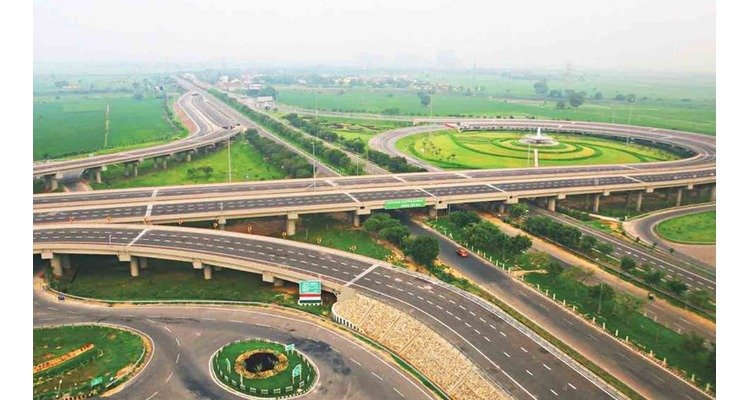

GREATER NOIDA: Along the Yamuna Expressway, where logistics parks and housing projects have steadily reshaped the landscape, the Uttar Pradesh government is preparing its most ambitious bet yet on the digital economy: a 250-acre fintech park intended to anchor the state’s push into high-value financial technology
A Digital Economy Bet Along the Expressway
On January 20, the Uttar Pradesh government signaled a new phase in its industrial strategy, announcing plans to develop a large fintech park in Sector-11 of the Yamuna Expressway Industrial Development Authority (YIDA) area. The project, spanning roughly 250 acres, is being positioned not as a conventional IT park but as a comprehensive financial technology ecosystem.
Officials say the initiative reflects a broader shift under Chief Minister Yogi Adityanath, who has repeatedly stated that the state’s growth model will no longer be confined to traditional manufacturing. Instead, the focus is expanding toward high-value sectors such as information technology, electronics, semiconductors and, increasingly, fintech.
Certified Cyber Crime Investigator Course Launched by Centre for Police Technology
The proposed park is meant to serve as a dedicated hub for digital finance, housing companies across banking technology, digital payments, insurance technology, investment platforms, fintech software-as-a-service and international money transfer services. Government officials describe it as an attempt to consolidate diverse financial technologies within a single, purpose-built zone.
From IT Parks to Financial Ecosystems
Unlike earlier technology parks developed in parts of Noida and Greater Noida, the Sector-11 project is being framed as an integrated ecosystem rather than a cluster of office buildings. According to planning documents, the park is expected to support startups and established domestic and global firms alike, providing shared infrastructure and a common platform for financial services innovation.
Industry specialists involved in consultations say the aim is to replicate, at a regional scale, the dense networks seen in established fintech hubs elsewhere in the country. Banking systems, blockchain-based services and digital payment platforms are all expected to coexist within the park, reducing fragmentation and encouraging collaboration
State officials argue that such concentration could help Uttar Pradesh secure a more visible position on India’s digital finance map, an area traditionally dominated by cities like Bengaluru, Mumbai and Hyderabad. The government has emphasized that the park is part of a larger policy framework intended to attract investment into high-end technology sectors rather than low-margin industrial activity.
Location, Connectivity and the Airport Factor
Geography is central to the project’s pitch. Sector-11 lies directly along the Yamuna Expressway, offering road connectivity to Delhi and the broader National Capital Region. It is also located near the upcoming Noida International Airport, which the government believes will significantly alter the investment profile of the area once operations begin.
Officials say proximity to the airport is expected to make the fintech park especially attractive to international firms and investors, who would benefit from faster global connectivity. Improved links to Delhi-NCR are also being highlighted as an operational advantage for companies managing both domestic and international financial services
The state government’s assessment is that, once the airport is functional, the surrounding region could emerge as a preferred destination for global investment, with the fintech park acting as one of its anchors.
Planning, Investment and Employment Expectations
Work has already begun on preparing a detailed project report, or DPR, to translate the proposal into an executable plan. An international consultancy has been engaged to outline infrastructure requirements, investment models, employment potential and a phased development strategy.
According to officials familiar with the process, the DPR will also define the roadmap for land allotment and regulatory procedures for investors once it is finalized. The government has indicated that these processes will be made public to provide clarity and predictability for companies considering entry.
Employment generation is being presented as a central justification for the project. The state expects the fintech park to create tens of thousands of direct and indirect jobs, particularly for young professionals in areas such as banking technology, data analytics, cybersecurity, digital payment systems and financial software development. Officials have stressed that one of the underlying goals is to provide global-standard employment opportunities within Uttar Pradesh itself, reducing the need for skilled workers to migrate to other states.
