

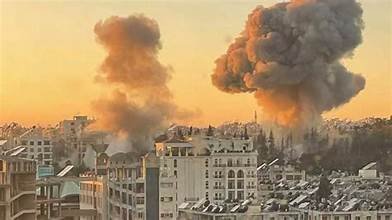
The United States and its allies on Saturday carried out large-scale airstrikes against positions of the Islamic State (ISIS) across Syria, marking one of the most extensive military operations against the extremist group in recent years. According to the US military, the strikes were launched in response to a deadly attack in Palmyra last month that killed two American soldiers and a US civilian interpreter.
The operation, codenamed “Operation Hawkeye Strike,” was ordered by President Donald Trump and aimed at dismantling ISIS infrastructure and deterring further attacks on US and partner forces operating in the region.
The US Central Command (CENTCOM) said the strikes were intended to ensure the safety of American and allied troops deployed in Syria. In a statement posted on social media, CENTCOM warned, “If you harm our warfighters, we will find you anywhere in the world.”
Certified Cyber Crime Investigator Course Launched by Centre for Police Technology
Dozens of Targets Hit Simultaneously
US officials said that more than 90 precision-guided munitions were fired at over 35 ISIS targets spread across Syria. The operation involved more than 20 military aircraft and platforms, including F-15 and A-10 fighter jets, AC-130 gunships, MQ-9 Reaper drones, and F-16 fighter jets from Jordan, highlighting the multinational nature of the campaign.
While the Pentagon has not disclosed the exact locations of all the strikes, officials said the targets included command centres, weapons storage facilities and operational hideouts used by ISIS fighters. The military has not yet confirmed casualty figures or the extent of damage caused on the ground.
Defence analysts described the operation as one of the most coordinated and wide-ranging air campaigns against ISIS since the collapse of its self-declared caliphate, underlining Washington’s resolve to prevent the group from regaining strength.
Retaliation for the Palmyra Attack
The strikes follow a deadly ambush carried out on December 13 near Palmyra, in central Syria, where US and Syrian partner forces were targeted. According to American officials, the attack was carried out by a lone ISIS gunman and triggered heightened security concerns in Washington.
US Defence Secretary Pete Hegseth said the operation was meant as a clear warning rather than the start of a broader conflict. “This is not the beginning of a new war,” he said. “It is a message to those who target our forces. We will never forget, and we will never relent.”
ISIS Still a Threat
Although ISIS lost control of large swathes of territory in Syria and Iraq and was declared militarily defeated in 2019, intelligence agencies believe the group remains active, particularly in remote desert regions. Operating through small, mobile cells, ISIS has continued to stage sporadic attacks against security forces and local administrations.
CENTCOM said that even before Saturday’s airstrikes, US forces had killed or captured nearly 25 ISIS fighters in multiple missions conducted between December 20 and 29. The latest operation is seen as an extension of that sustained pressure campaign to dismantle the group’s remaining networks.
Questions Over US Military Presence
President Trump has previously questioned the long-term US military presence in Syria. During his first term, he ordered the withdrawal of American troops, though several hundred personnel remained due to strategic considerations. The Pentagon said last year that US troop levels in Syria would be reduced in phases.
Experts say the latest strikes demonstrate that while Washington may seek to limit its footprint in the region, countering ISIS remains a core priority. How the operation will reshape the regional security landscape in the coming days is being closely watched by governments and analysts worldwide.
About the author – Ayesha Aayat is a law student and contributor covering cybercrime, online frauds, and digital safety concerns. Her writing aims to raise awareness about evolving cyber threats and legal responses.
