

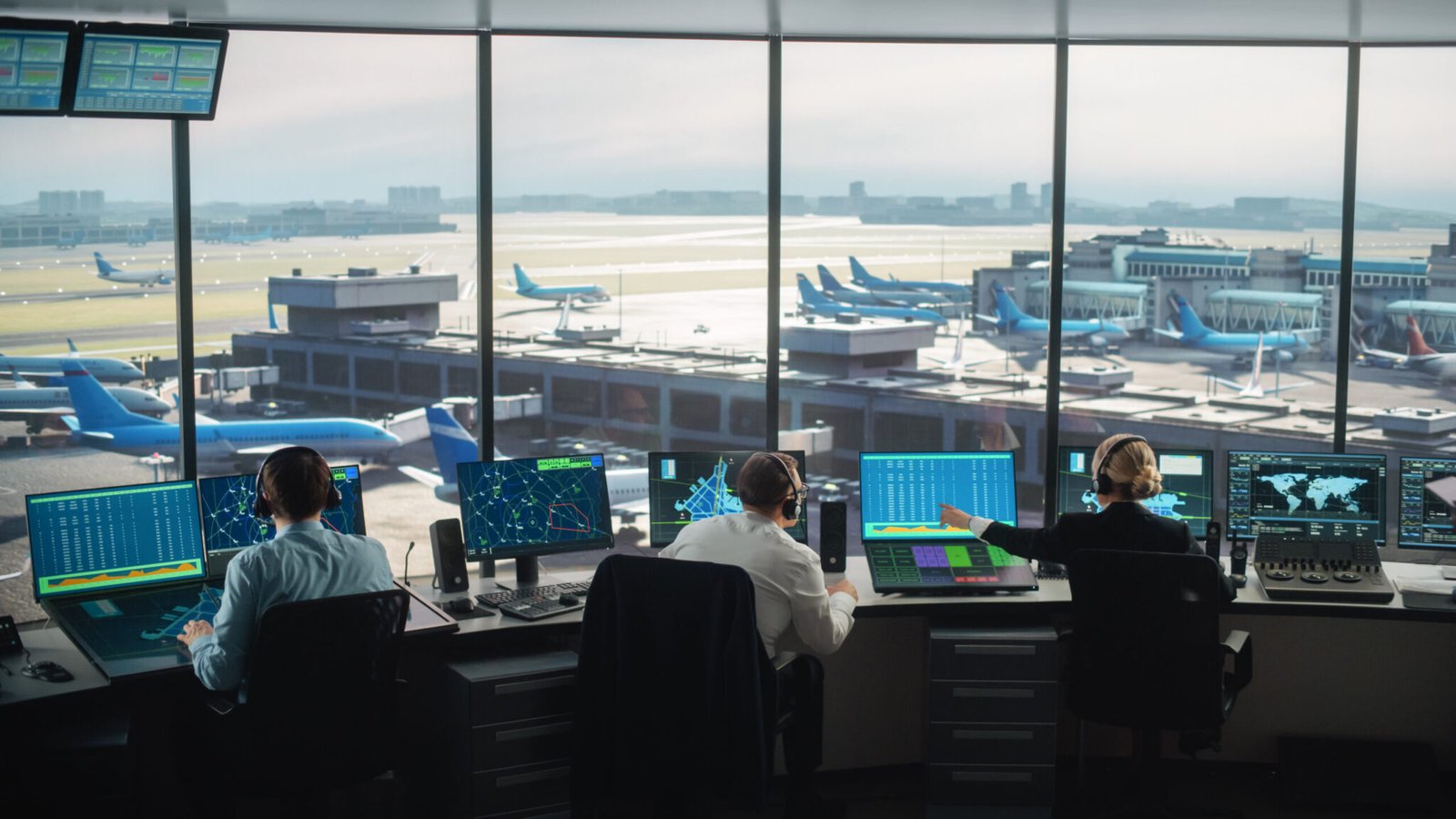

London/Dallas/Brussels — Last week, major airports across Europe and the United States experienced disruptions that laid bare the vulnerabilities of modern air travel. While a coordinated cyberattack crippled check-in and boarding systems in Europe, a sudden telecommunications failure in the U.S. grounded thousands of flights, highlighting the fragile dependency of aviation on digital infrastructure.
Europe: Cyberattack Causes Chaos
On Friday night, London Heathrow, Berlin, and Brussels airports became the target of a coordinated cyberattack, aimed at Colin Aerospace, a company providing check-in and boarding systems to airports worldwide.
FutureCrime Summit 2026: Registrations to Open Soon for India’s Biggest Cybercrime Conference
Passengers were forced to check in manually, resulting in long lines and significant delays. By Saturday afternoon, more than 140 flights at Heathrow, over 100 at Brussels, and upwards of 60 at Berlin had been delayed or canceled. Frankfurt and Zurich airports remained unaffected, yet the impact on European air travel was substantial.
RTX, the parent company of Colin Aerospace, stated that its teams were working to restore services as quickly as possible. Cybersecurity experts noted that the attack underscores not just a technical failure but a broader vulnerability in aviation’s reliance on digital networks.
United States: Telecommunications Glitch Disrupts Flights
Meanwhile, in Dallas, a sudden failure in local telecommunications equipment forced the Federal Aviation Administration (FAA) to issue a ground stop at two major airports.
The outage delayed more than 1,800 flights and led to hundreds of cancellations. American Airlines canceled over 200 flights and delayed more than 500, while Southwest Airlines reported disruptions on more than 1,100 flights. FAA officials confirmed that the failure originated in equipment operated by a local telecom provider.
Dependence on Digital Systems Raises Stakes
Experts argue that both incidents reveal the critical dependence of modern airports on complex technological systems. Cybersecurity, redundant systems, and rapid-response protocols are no longer optional—they are essential for ensuring passenger safety and operational reliability.
“Relying heavily on a single network increases risk exponentially,” said Triveni Singh, a former IPS officer and cybersecurity expert. “Even a minor system failure or cyberattack can paralyze the entire air transport network. Airlines and airports must prioritize advanced technical solutions and regular stress testing to mitigate these risks.”
These incidents demonstrate that global air travel is no longer just about airplanes and runways. In today’s digital age, the reliability of the infrastructure behind the screens—servers, software, and communication networks—is equally crucial.
