
Follow us on Google News

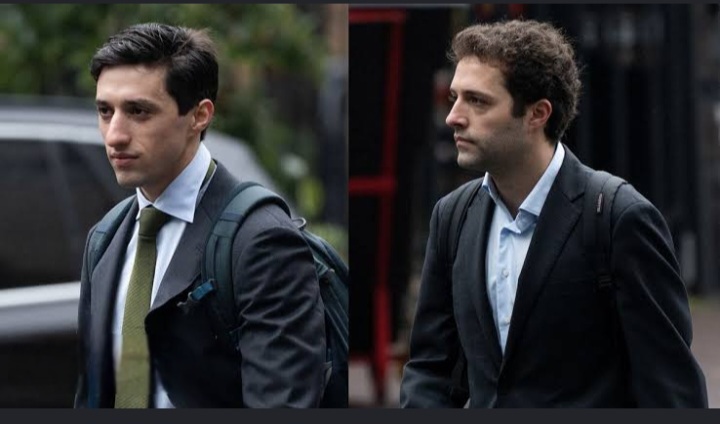
A United States court has acquitted two brothers educated at the Massachusetts Institute of Technology (MIT) in a high-profile case involving the alleged theft of cryptocurrency worth around Rs 225 crore within 12 seconds. Anton Peraire-Bueno and James Peraire-Bueno were accused of obtaining the digital assets from the Ethereum network in April 2023. Delivering her ruling on Monday, US District Judge Jessica Clarke in Manhattan stated that prosecutors failed to prove the brothers made any material misrepresentations while executing transactions that exploited a technical flaw in software, leaving no legal basis to convict them on wire fraud and related charges.
The case drew widespread attention because federal prosecutors had described it as a novel form of fraud that had never previously been prosecuted at the federal level. However, the court clarified that its role was not to judge whether the defendants acted ethically, but rather to determine whether the evidence presented during the trial satisfied the legal elements required to prove criminal fraud under federal law.
Alleged Scheme to Obtain Crypto in 12 Seconds
According to prosecutors, both brothers are computer programmers who devised a plan to target automated trading bots operating on the Ethereum network. Authorities alleged that in April 2023, the pair executed a rapid and carefully coordinated strategy that trapped these bots and drained digital assets belonging to other cryptocurrency traders.
The prosecution claimed the brothers spent several months developing the scheme by interfering with protocols used to verify transactions on the Ethereum blockchain. Their alleged objective was to manipulate the process by which transactions were ordered and added to the blockchain so they could profit from the resulting trades. Investigators stated that the strategy relied on exploiting a vulnerability in MEV-Boost, a software tool widely used by validators on the Ethereum network to verify new transactions and record them onto the blockchain.
MEV-Boost Vulnerability at the Centre of Dispute
Prosecutors contended that by taking advantage of the technical flaw in MEV-Boost, the brothers structured transactions in a way that placed rival trading bots at a disadvantage, enabling them to take control of other traders’ cryptocurrency. Defence attorneys rejected this characterisation, arguing that their clients followed a legitimate trading strategy and committed no fraud during the transactions. According to the defence, taking advantage of a software flaw does not in itself constitute wire fraud.
Judge Clarke agreed with the defence’s reasoning in her decision. She noted that the transactions carried out by the brothers involved no false representations and did not take place within a regulated market governed by explicit rules prohibiting such conduct.
Indictment Filed in 2024 After Earlier Deadlocked Jury
The brothers were formally indicted in May 2024, and an earlier trial roughly a year ago ended without a verdict after jurors could not reach a unanimous decision on whether to convict or acquit them. The matter subsequently came before the court, where the judge found the prosecution’s evidence insufficient to sustain the charges.
Both brothers studied at MIT, and prosecutors had alleged that they used technical knowledge gained at the institution to design the operation. Media reports noted that Anton graduated with a bachelor’s degree in computer science and engineering in 2024, while James earned a bachelor’s degree in the same discipline in 2019 and a master’s degree in aeronautics in 2021. Attorneys for the brothers did not immediately comment following the ruling, and a spokesperson for US Attorney Jay Clayton’s office, listed in the report as US Attorney James McDonald’s office, declined to comment. The ruling underscores the legal distinction between exploiting technical vulnerabilities on blockchain networks and committing criminal fraud, with the court emphasising only that the evidence fell short of proving wire fraud.