

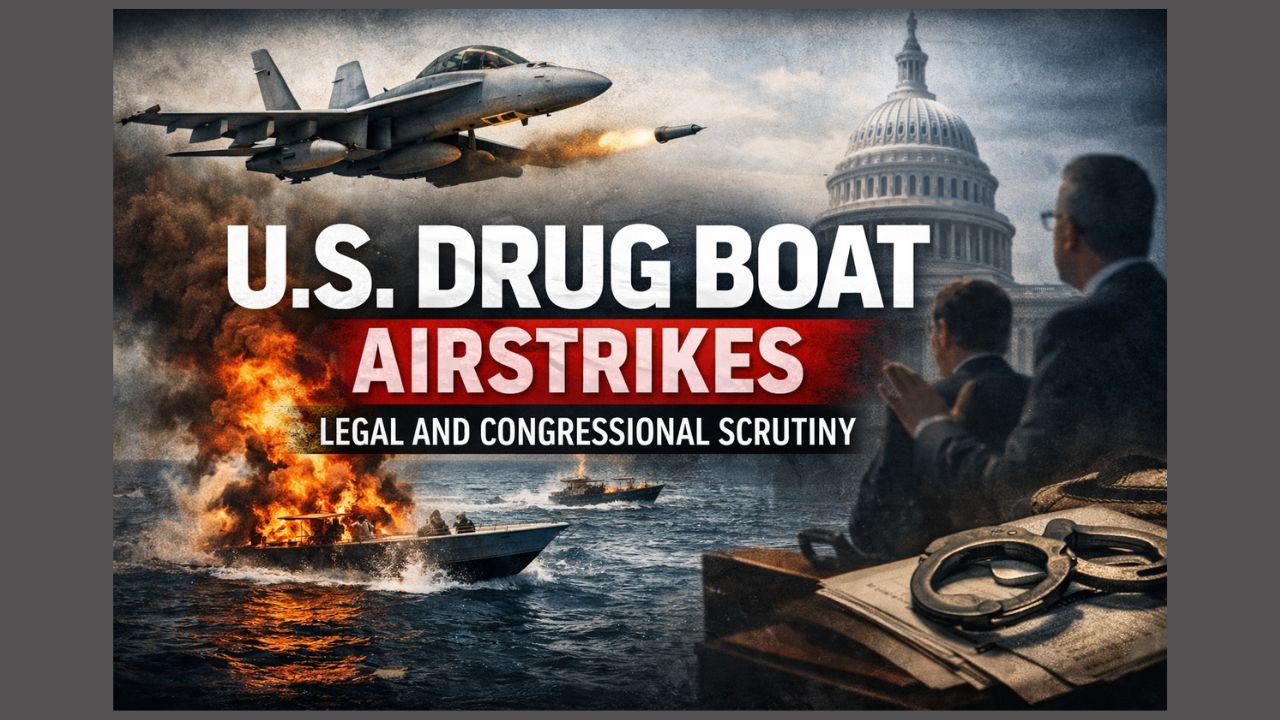

Washington | The U.S. military escalated its campaign against suspected drug traffickers in the eastern Pacific on Monday, carrying out airstrikes on three boats that resulted in the deaths of eight people. According to the U.S. Southern Command, the strikes were conducted in international waters and targeted vessels the administration described as linked to “designated terrorist organizations.”
With the latest operation, the death toll from the Trump administration’s military campaign, launched in September, has risen to at least 95. The strikes, carried out in both the eastern Pacific and the Caribbean Sea, have triggered growing concern among members of Congress, legal experts and human rights groups, who question the legality and proportionality of the use of force.
Deadliest Day of the Campaign
The Southern Command said two of the boats carried three men each, while the third had two occupants. All those killed were male. Monday’s strikes brought the total number of attacks on suspected trafficking vessels to 25, making it one of the deadliest days since the campaign began.
Military officials said the boats were traveling along a well-known narco-trafficking route frequently used to move drugs toward North America. The administration maintains that these maritime corridors are also being exploited to smuggle criminal elements into the United States.
Military Buildup Around Venezuela
In recent months, the Trump administration has significantly increased its military presence in waters surrounding Venezuela. The White House argues that aggressive enforcement is necessary to disrupt transnational drug networks and protect U.S. borders. Critics, however, warn that the strategy risks breaching international law and raises the likelihood of civilian casualties.
Rising Opposition in Congress and Courts
The campaign has come under intensifying scrutiny on Capitol Hill. Along with Democrats, several Republican lawmakers have questioned the transparency and legal basis of the strikes. Lawmakers have demanded the release of classified footage from the earliest operations to clarify the circumstances under which lethal force was authorized.
Legal advocacy groups have also taken the issue to court, filing lawsuits against the Justice Department. They argue that the administration is relying on a secret legal memorandum to justify the strikes and that the document should be made public. The memo is believed to outline the government’s legal rationale for conducting lethal operations in international waters.
Allegations of War Crimes
The first strike in the Caribbean in early September proved especially controversial. In that incident, a follow-up attack killed two survivors of an initial strike on a boat, prompting critics to label the action a potential war crime. The episode intensified calls for greater oversight and accountability.
Sudden Exit of Senior Commander
The latest strikes come just days after the abrupt retirement of Admiral Alvin Holsey, the head of U.S. Southern Command. While no official explanation was provided, current and former U.S. officials, speaking on condition of anonymity, said Admiral Holsey had raised internal concerns about the strikes early in the mission.
What Lies Ahead
The Trump administration has shown no indication of scaling back the campaign. Instead, officials continue to frame the operations as a matter of national security in the fight against drug trafficking and organized crime. As civilian deaths mount and international criticism grows, the campaign is increasingly shaping up to be a major flashpoint in U.S. foreign policy and domestic political debate.
