

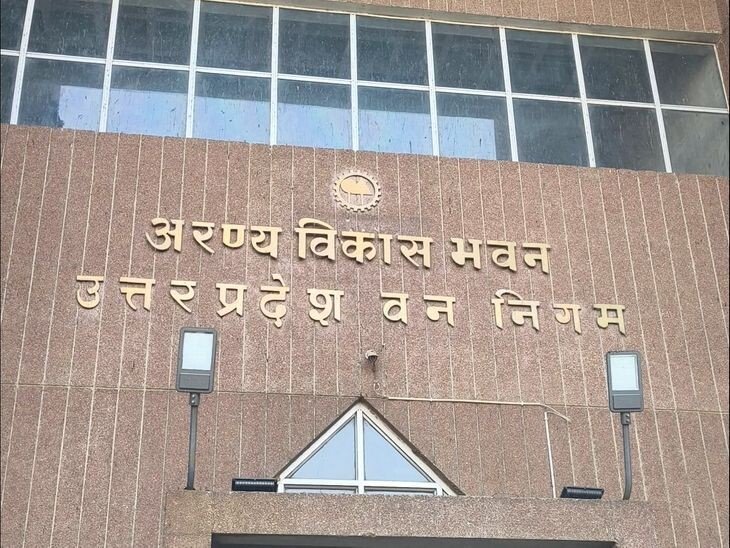

Lucknow: Fresh developments in the ₹64.82 crore fraud linked to the Uttar Pradesh Forest Corporation (UPFC) have brought internal links under scrutiny, with the Central Bureau of Investigation (CBI) zeroing in on two UPFC employees — an accountant and a clerk — suspected of being in direct contact with the alleged mastermind of the scam. Investigators believe their role may have been critical in enabling the fraudulent transactions, prompting the agency to expand the scope of its probe.
According to sources familiar with the investigation, the two employees held administrative positions within UPFC and are suspected to have acted as facilitators, introducing the alleged conspirators to bank officials. This, investigators say, helped establish credibility at the bank level, eventually allowing accounts to be operated using forged documents and enabling the transfer of massive sums of money.
How trust was established
CBI investigations have identified Deepak Sanjeev Suvarna, a resident of Karnataka, and Manish alias Anees from Kanpur as the main accused in the case. Both have been named in the FIR. Investigators say the two UPFC employees under scrutiny were in regular contact with Manish and played a key role in introducing him and Suvarna to officials of the concerned bank.
Certified Cyber Crime Investigator Course Launched by Centre for Police Technology
Bank officials are learnt to have relied on these introductions, especially when Suvarna presented himself as an authorised UPFC representative. The presence and references of UPFC staff reportedly lowered suspicion, leading to the opening of accounts and the approval of large fund transfers.
Once the accounts were operational, forged documents were allegedly used to move substantial amounts of money, before the fraud eventually came to light.
Forged documents, real money
The investigation has revealed that while preliminary checks of documents were carried out, verification at the departmental level was inadequate. This procedural lapse is believed to have been exploited by the accused, allowing them to siphon off funds running into crores.
The CBI is now examining whether the role of the two UPFC employees was limited to facilitating introductions or whether they were active participants in the conspiracy. Investigators are analysing call detail records, banking transaction logs, emails and other digital evidence to establish the extent of their involvement.
Officials said that if concrete evidence of deliberate collusion emerges, criminal proceedings could be initiated against the two employees.
Funds secured so far
A key relief in the case has been the timely detection of irregularities, which prevented the complete withdrawal of the defrauded amount. As per the investigation, ₹58 crore was lying in a single account and was frozen promptly after the fraud came to light, securing the bulk of the funds.
Additionally, ₹6.95 crore had been transferred to six different accounts. Swift action by bank officials resulted in the freezing of nearly ₹4 crore from these accounts. However, recovery of the remaining ₹2.95 crore is still pending. Bank authorities have stated that legal and technical procedures are underway to trace and recover the remaining amount.
Questions over banking safeguards
The ease with which accounts were opened on the basis of forged documents and large sums were transferred has raised serious questions about the robustness of banking verification mechanisms. Experts point out that beyond individual culpability, systemic weaknesses may have contributed to the success of the fraud.
While the bank involved has claimed that an internal review is being conducted and accountability will be fixed if lapses are found, the absence of visible departmental action so far has drawn criticism, given the magnitude of the scam.
Investigation set to widen
CBI officials have indicated that the probe could widen further in the coming days. The agency is examining whether other government or banking personnel may have played a role, either through negligence or active participation.
Investigators say their priorities remain the full recovery of public funds, identification of all individuals involved, and highlighting procedural gaps that allowed the fraud to occur.
As the investigation progresses, more disclosures are expected in what is now being viewed as one of the significant financial fraud cases involving a state-run corporation in recent years.
