

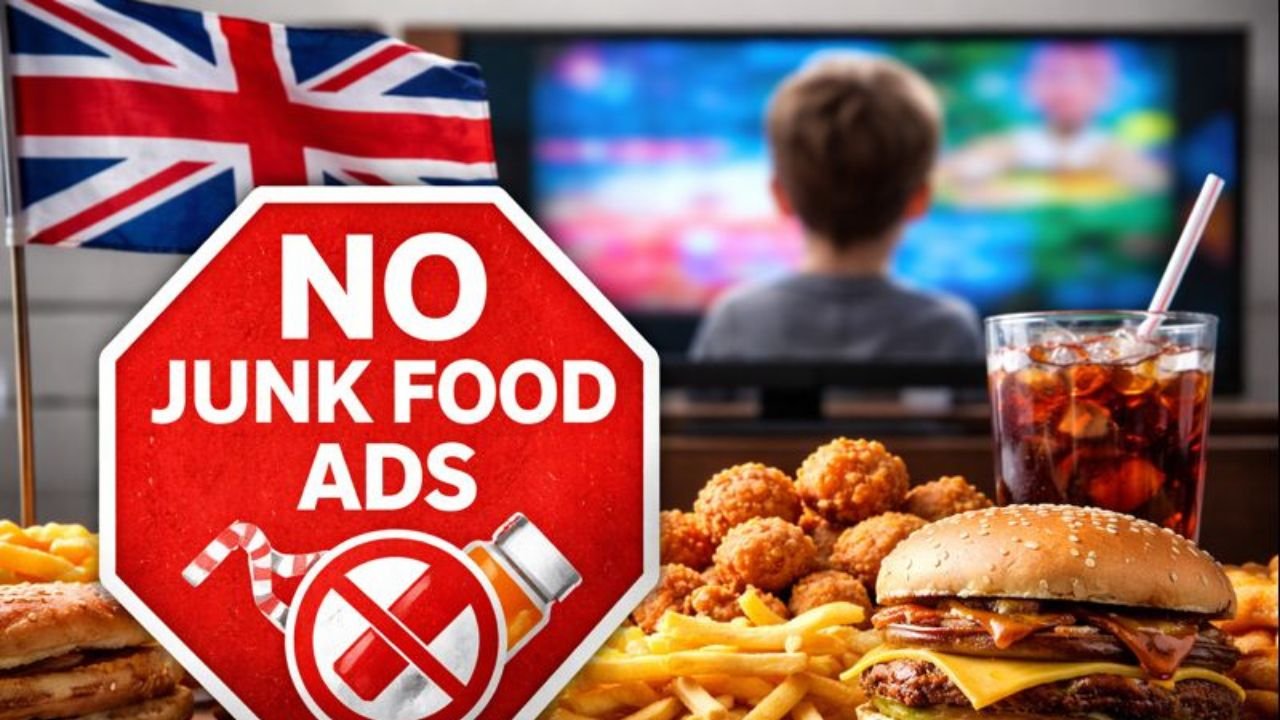

London | January 5, 2026 | AFP | The United Kingdom on Monday began enforcing a sweeping ban on the advertising of so-called junk food on daytime television and online platforms, in what the government described as a “world-leading action” to curb childhood obesity.
The new regulations, which came into force on January 5, prohibit advertisements for products high in fat, salt or sugar (HFSS) during daytime TV hours and across digital platforms where children are likely to be exposed. According to the government, the move is aimed squarely at reducing children’s calorie intake and reshaping unhealthy food preferences formed at a young age.
The UK Department of Health and Social Care said the ban is expected to remove up to 7.2 billion calories from children’s diets every year, a significant reduction that officials believe will translate into long-term public health gains.
Targeting the roots of childhood obesity
Announcing the rollout, the British government argued that there is strong scientific evidence linking food advertising to children’s eating behaviour. Officials said repeated exposure to junk food marketing influences what children eat, when they eat, and how often, increasing the risk of obesity, type-2 diabetes and other diet-related illnesses.
“Advertising plays a powerful role in shaping children’s preferences from an early age,” the Health Ministry said in a statement. “Restricting exposure to unhealthy food marketing is a necessary step to protect children’s health.”
Britain has one of the highest childhood obesity rates in Europe, with health authorities warning that the problem places growing pressure on the National Health Service (NHS).
What the ban covers
Under the new rules, companies are barred from promoting HFSS foods during daytime television slots and on online platforms, including social media and streaming services, where children form a substantial part of the audience. The regulations apply to a wide range of products, including sugary snacks, confectionery, salty foods and certain fast-food items.
Government officials said the restrictions are designed to close loopholes that allowed junk food advertising to migrate from traditional TV to digital platforms, where regulation had previously been less stringent.
Industry pushback, public health support
While public health groups have welcomed the ban, sections of the food and advertising industries have criticised it as overly restrictive, arguing it could hurt revenues and limit consumer choice. Industry representatives have called for clearer guidance on product classifications and advertising exemptions.
Health campaigners, however, say voluntary self-regulation by advertisers has failed to protect children. They argue that statutory restrictions are essential to counter aggressive marketing practices that normalise unhealthy diets.
A ‘world-leading’ policy
British ministers have framed the move as part of a broader strategy to tackle obesity through prevention rather than treatment. Alongside advertising restrictions, the government has promoted initiatives such as clearer food labelling, sugar reduction targets and school-based nutrition programmes.
Officials said the advertising ban positions the UK as a global leader in public health regulation, with other countries closely watching its impact.
What comes next
The government has said it will monitor compliance closely and review the policy’s effectiveness over time, particularly its impact on childhood obesity rates and calorie consumption trends. Enforcement agencies have been empowered to take action against companies that violate the rules.
As the ban takes effect, policymakers insist the message is clear: protecting children’s health must take precedence over commercial interests, and reshaping the food environment is critical to reversing Britain’s obesity crisis.
About the author — Suvedita Nath is a science student with a growing interest in cybercrime and digital safety. She writes on online activity, cyber threats, and technology-driven risks. Her work focuses on clarity, accuracy, and public awareness.
