

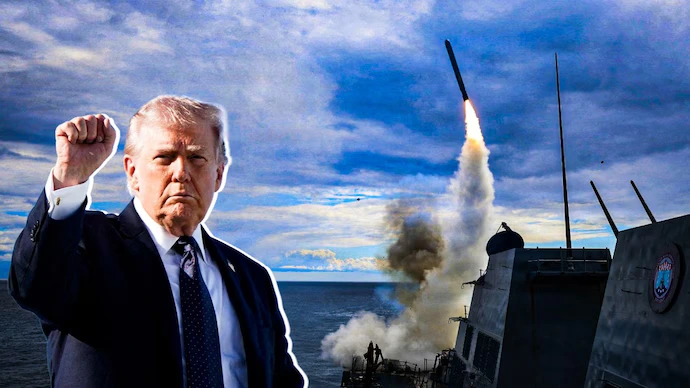
Amid the ongoing conflict in West Asia, Donald Trump has stated that there is no possibility of dialogue with Iran at this stage. Trump said that Iran’s military strength and leadership structure have been severely weakened and that it is “too late now” for any negotiations. The statement came at a time when joint U.S.-Israel military operations and Iran’s retaliatory strikes have pushed regional tensions to a critical level.
The armed forces of the United States and Israel have reportedly been targeting several strategic locations in Iran for nearly 72 hours. The attacks involved the use of ballistic missiles, stealth fighter jets, and maritime combat platforms. According to U.S. officials, the strikes were primarily focused on military installations and command centers, though reports have suggested damage in some civilian areas as well. Some media claims indicate that structures linked to the Revolutionary Guard headquarters in Tehran were seriously damaged during the operation.
FCRF Launches Flagship Certified Fraud Investigator (CFI) Program
Trump’s Unverified Claims on Iran Leadership Elimination
In a social media post, Trump claimed that Iran’s top leadership structure, including Ali Khamenei, has been largely eliminated. However, these claims have not been independently verified. Iranian authorities have rejected these statements, asserting that the country’s political and military command systems remain fully operational. Iran has also launched counterattacks using missiles and drone strikes targeting enemy positions.
Iran’s retaliatory strategy reportedly relied heavily on domestically developed low-cost but effective drones. These unmanned aerial systems were not limited to Israeli and U.S. military bases but were also reported to have impacted infrastructure across several Gulf countries. Concerns have grown internationally after reports of civilian infrastructure damage in the region. There were also reports of a fire breaking out in a luxury area of Dubai, although local authorities did not release detailed information about the extent of the damage.
Aviation Disruptions and Global Energy Risks
The conflict has also caused major disruption to aviation operations in the region. Several regional airports were temporarily shut down, leaving thousands of passengers stranded. Aviation and trade experts warn that if the conflict continues for a longer period, it could put severe pressure on global energy supplies and logistics networks. The Middle East plays a crucial role in global oil transit, and any disruption in shipping routes could trigger price volatility in international markets.
No Talks Until Regime Change, Nuclear Tensions Rise
A senior U.S. administration official indicated that some representatives from the Iranian side had attempted to explore the possibility of talks. However, Trump reportedly refused any political negotiations before the completion of military operations. Trump believes that regime change in Iran may be necessary under the current circumstances to ensure stronger international monitoring of Tehran’s nuclear programme.
Tensions have also intensified over Iran’s nuclear activities. U.S. officials claim that Iran has accumulated nearly 460 kilograms of uranium enriched up to 60 percent purity, a level that is considered potentially sufficient for producing several nuclear weapons. Iran, however, maintains that its nuclear programme is intended for energy production and national security purposes and that it is complying with international regulations.
Security analysts warn that if the West Asia conflict expands further, it could have widespread implications for the global economy. Rising crude oil prices, disruption of trade routes, and investor panic may affect international markets. Several global organisations have called for restraint and urged all parties to open channels for diplomatic dialogue.
For now, military activities continue in the region, and no side has officially announced a ceasefire. The security situation in West Asia remains extremely fragile, and analysts believe that developments may change rapidly in the coming days.
About the author – Ayesha Aayat is a law student and contributor covering cybercrime, online frauds, and digital safety concerns. Her writing aims to raise awareness about evolving cyber threats and legal responses.
