

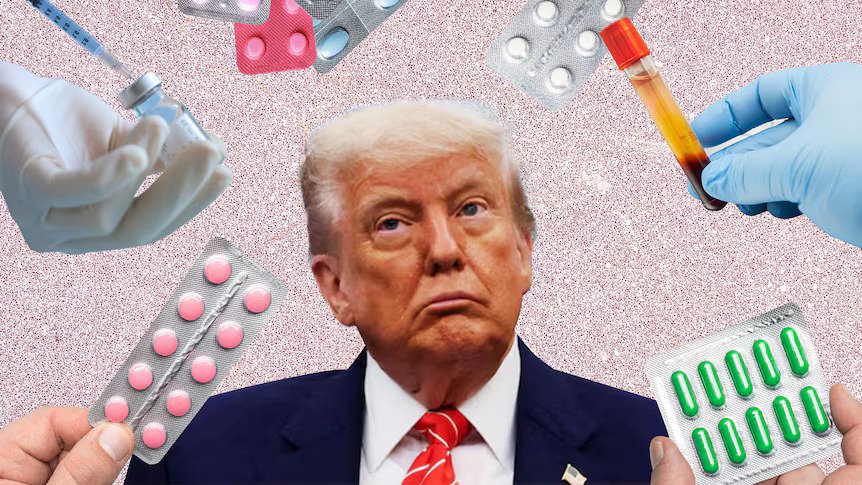
President Donald Trump has ordered 100% tariffs on branded and patented drug imports to force pharmaceutical giants to shift manufacturing to America or agree to domestic price cuts, sparing India’s generic exports while hitting targeted competitors.
Foreign companies avoiding full 100% duty can opt for 20% reduced rate during US plant construction phase. Total compliance requires both American manufacturing commitment AND domestic pricing agreements. Non-compliant firms face complete import exclusion.
India Generics Excluded from Pharma War
Unlike patented drugs (20-year exclusivity post-R&D), generic exports from India remain untouched. Policy targets research-intensive branded medications where originator companies hold monopoly pricing power during patent protection periods.
Trade Allies Get Tariff Caps
EU, Japan, South Korea, Switzerland capped at 15% maximum via existing agreements. UK secures 3-year tariff holiday conditional on boosting US drug production. Major producers gain breathing room versus full 100% penalties.
Large companies allocated 120 days for compliance roadmap submission; smaller producers get 180 days. Trump administration seeks rapid manufacturing footprint expansion offsetting Supreme Court rejection of broader global tariff regime.
FCRF Launches Premier CISO Certification Amid Rising Demand for Cybersecurity Leadership
Metals Tariff Rationalization
Steel, aluminium, copper product duties halved from prior levels to 25%, with low-metal-content goods fully exempt. Raw commodity imports maintain 50% protection. Adjustments compensate lost revenue from cancelled universal tariff framework.
One year after Supreme Court invalidated sweeping global tariffs, targeted sector-specific duties restore protectionist revenue while pressuring strategic industries. Pharma relocation becomes centerpiece of America First manufacturing revival strategy.
Compliance deadlines force immediate strategic pivots—US plant announcements, pricing concessions, or market exit. Indian generic producers gain competitive breathing room while branded originator firms face existential relocation decisions.
About the author – Rehan Khan is a law student and legal journalist with a keen interest in cybercrime, digital fraud, and emerging technology laws. He writes on the intersection of law, cybersecurity, and online safety, focusing on developments that impact individuals and institutions in India.
