

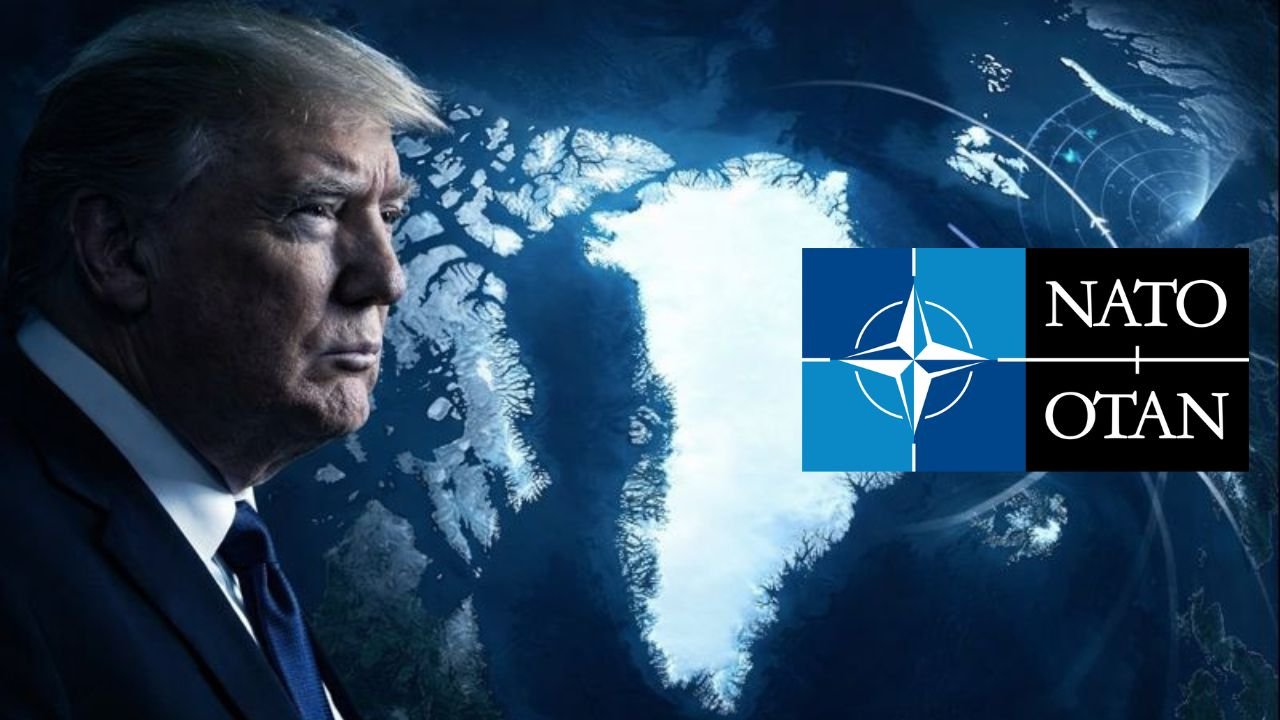

Greenland: Statements by US President Donald Trump regarding Greenland have reignited debate over the shifting balance of power in the Arctic region. Publicly framed as a matter of national security, the renewed focus reflects a broader convergence of Arctic geopolitics, military strategy, and intensifying competition for strategic resources. Analysts say Greenland is no longer just a remote landmass but a key arena in the politics of security and influence for the decades ahead.
A strategic Arctic hub
Greenland lies between North America and the Arctic Ocean, commanding air and sea routes that connect the Atlantic to the polar region. This geography makes it critical for early missile-launch detection, space tracking, and maritime surveillance. As advanced weapons systems, hypersonic missiles, and polar flight paths compress reaction times, control and access across this corridor have gained heightened strategic importance.
This value was recognised during the Cold War and has only grown as contemporary security dynamics reshape northern defence planning.
Certified Cyber Crime Investigator Course Launched by Centre for Police Technology
Military presence and security architecture
The United States has maintained a military presence in Greenland since the Second World War. The Pituffik Space Base—formerly Thule Air Base—forms a key part of Arctic early-warning and missile-defence infrastructure. Its radar and space-tracking systems monitor activity across the northern hemisphere, supplying data vital to continental defence.
Within US strategic circles, the base is increasingly viewed as essential to future security planning amid rising Arctic activity by rival powers.
Resources beneath the ice
Beyond security considerations, Greenland’s natural resource potential has attracted growing global attention. The island is believed to hold reserves of rare earth elements, uranium, iron ore, and possibly oil and gas. As demand for clean energy technologies, defence systems, and electronics intensifies, access to rare earths outside China has become a strategic priority.
Climate change, by gradually reducing ice cover, is improving access to previously unreachable areas—opening new opportunities for exploration while raising environmental and governance concerns.
Local politics and sovereignty
Greenland is not an unclaimed territory. It is a semi-autonomous region within the Kingdom of Denmark, with its own elected government and a population of about 56,000, largely from the Inuit community. Greenlandic leaders have consistently asserted that decisions about the island’s future must rest with its people.
Copenhagen has echoed this stance, rejecting any notion of a transfer of sovereignty while emphasising cooperation and partnership on defence and development.
Implications for NATO
Greenland’s geography also holds strategic value for the North Atlantic Treaty Organization. Russia’s expanding military footprint in the Arctic and China’s growing long-term interest through research, infrastructure proposals, and investment have turned the region into a new zone of competition.
Sharp rhetoric over Greenland, if not managed through diplomacy and consultation, could strain alliance cohesion. At the same time, NATO members broadly agree on the shared priority of securing northern approaches and preserving freedom of navigation as polar routes become more viable.
Security versus resources
While public statements emphasise security as the primary driver, analysts note that strategic decisions are rarely shaped by a single factor. Military positioning, economic resilience, and technological supply chains intersect in the Arctic. Greenland increasingly represents this convergence, where defence imperatives and development ambitions overlap.
The road ahead
Experts expect Arctic competition to intensify as climate change opens new shipping lanes and resource prospects. For Greenland, this brings both opportunity and pressure—investment interest alongside the challenge of protecting sovereignty, the environment, and local priorities.
For Washington and its allies, the message is clear: Arctic security will be determined less by ownership and more by partnerships—strengthening existing defence arrangements, supporting local governance, and coordinating policy within NATO. As the polar region warms, the geopolitical temperature around Greenland is rising, ensuring the island remains central to debates over security and influence in the years to come.
About the author — Suvedita Nath is a science student with a growing interest in cybercrime and digital safety. She writes on online activity, cyber threats, and technology-driven risks. Her work focuses on clarity, accuracy, and public awareness.
