

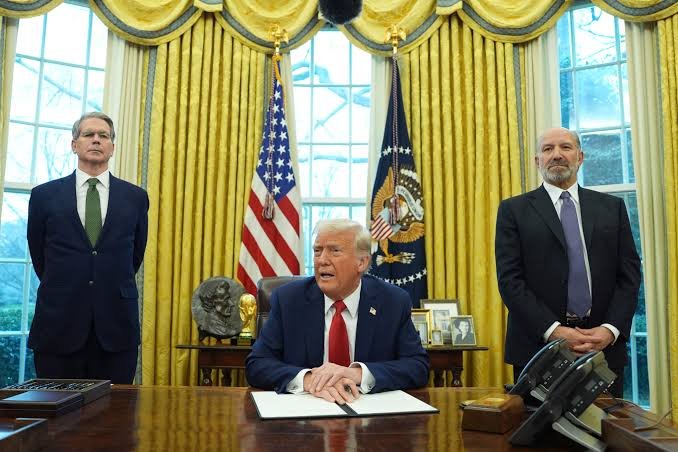

The Trump administration has launched a $25 million incentive initiative, equivalent to approximately ₹208 crore, aimed at encouraging the public to report suspected fraud involving federal assistance programmes, subsidies, and taxpayer money. Announced at the White House on Tuesday by President Donald Trump and Vice President JD Vance, the Fraud Whistleblower Incentive Program offers individuals rewards of up to $30,000, or around ₹25 lakh, for tips that lead to a conviction or significant federal enforcement action. The US Department of Justice will oversee the initiative, which seeks to identify financial irregularities and hold accountable those responsible for misusing public resources.
Commission Structure and Arbitration Rules
Under the operational framework outlined by the administration, rewards will be calculated as a one per cent commission on the total volume of fraud uncovered through an individual tip. The payout remains strictly capped at $30,000 per claimant, regardless of the overall financial scale of the exposed wrongdoing. Eligibility requires that submitted disclosures result directly in qualifying legal outcomes, such as formal convictions or major federal regulatory enforcement actions.
Addressing potential conflicts over disclosures, Trump announced that he will personally resolve disputes where multiple individuals claim credit for the same tip, describing the process as a form of binding arbitration. The administration also confirmed that working journalists are permitted to participate in the scheme, granting reporters who expose federal funding fraud the opportunity to apply for financial compensation provided their findings satisfy the established evidentiary and legal criteria.
Task Force Mandate and Enforcement Goals
The whistleblowing initiative functions as a central component of an expanded federal campaign directed at curbing the misuse of government funds. In March, Trump established a dedicated anti-fraud task force, designating Vice President Vance to lead the effort. Administration officials maintain that fraudulent diversions of public capital systematically deprive legitimate beneficiaries of essential assistance, presenting citizen tipsters as a vital asset for federal investigators seeking to uncover covert financial schemes.
During the announcement, Vance underscored the necessity of halting the theft of taxpayer funds and welcomed public cooperation, stating that those who help expose misconduct should share in the financial rewards. Official outcomes, however, will remain tied to the operational rigor of federal investigations and the capacity of the Justice Department to translate received tips into substantiated legal actions.
Scrutiny Over Minnesota Allegations
The White House had previously stated that Trump would present a $10,000 cheque, or approximately ₹8.3 lakh, to Nick Shirley, a 24-year-old conservative social media influencer whose viral video accused members of Minnesota’s Somali community of operating fraudulent childcare centres to claim federal subsidies. Reporters attending Tuesday’s event did not observe a cheque being handed over to Shirley. While his claims prompted heightened scrutiny, searches, and arrests, official inspectors had earlier reported that the centres were operating as expected, underscoring the distinction between public claims and verified findings.
Speaking at the event, Shirley argued that fraudulent practices divert public funding from vulnerable communities that genuinely require government support. The episode highlights the broader challenge facing the administration as it begins processing tips under the new scheme. With substantial authority retained by Trump to arbitrate competing reward claims, the initiative’s long-term effectiveness will ultimately hinge on thorough verification, proper administrative procedures, and the government’s ability to protect public assets through verifiable enforcement.
Follow for daily updates on cybercrime, corporate fraud, DFIR, hacking, investigations, and digital forensics
