
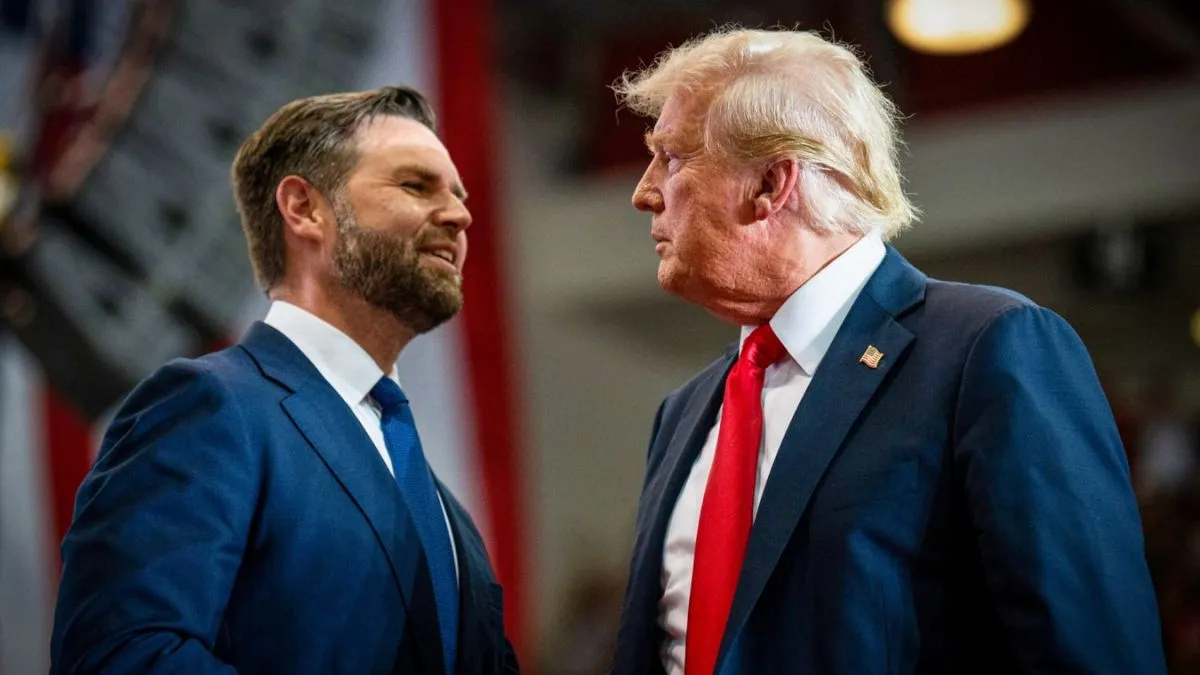

Washington: A fresh political flashpoint has emerged in the United States after Donald Trump announced a new role for Vice President JD Vance, appointing him as the country’s “Fraud Czar.” The move, aimed at investigating alleged fraud in federal welfare programs, has intensified political tensions, particularly due to its stated focus on Democrat-governed “Blue States.”
The announcement was made through a social media post, where Trump described fraud, waste, and abuse in federal funds as “massive and pervasive.” He asserted that tackling these irregularities could significantly improve the country’s financial position, even suggesting that curbing such leakages might help balance the national budget.
Task Force Formation: Vance to Lead Nationwide Anti-Fraud Strategy
Under this initiative, a dedicated task force has been established with JD Vance as its chair. The body has been tasked with investigating alleged misuse across a wide range of federal benefit programs, including housing assistance, food aid, healthcare support, and direct cash transfers.
The task force structure includes senior officials in advisory and operational roles. While the Vice President will oversee the broader strategy, an executive director will handle day-to-day functioning. Coordination between federal and state-level agencies is expected to be a key component of this effort.
FCRF Launches Premier CISO Certification Amid Rising Demand for Cybersecurity Leadership
Officials familiar with the development indicated that the task force will not only investigate existing fraud cases but also design preventive mechanisms to plug systemic loopholes.
Focus on ‘Blue States’ Triggers Political Debate
A major point of contention is Trump’s explicit indication that the initiative will prioritize states governed by the Democratic Party. These include regions such as California, Illinois, Minnesota, Maine, and New York.
Donald Trump alleged that these states have witnessed a “free-for-all” in the misuse of taxpayer money. However, critics argue that singling out specific states risks politicizing what should ideally be a neutral administrative exercise.
Political observers note that this targeted approach could deepen existing divisions between federal and state governments, especially at a time when policy coordination is crucial for effective governance.
Strengthening Oversight and Fraud Detection Systems
Beyond investigations, the task force is expected to implement a comprehensive national framework to curb fraud. Key focus areas include improving eligibility verification systems, introducing stricter pre-payment controls, and identifying high-risk fraud patterns using data analytics.
Additionally, efforts will be made to dismantle organized fraud networks that exploit welfare delivery systems. Authorities believe that a coordinated, technology-driven approach can significantly reduce leakages and improve efficiency in benefit distribution.
Experts suggest that such reforms, if executed effectively, could enhance transparency and restore public confidence in government programs.
Political Reactions: Reform Measure or Strategic Targeting?
The move has triggered sharp reactions across the political spectrum. Supporters of the administration argue that safeguarding taxpayer money should be a top priority and that strong measures are necessary to tackle systemic fraud.
On the other hand, opposition voices have questioned the intent behind the initiative, describing it as potentially politically motivated. They argue that focusing predominantly on “Blue States” could undermine the credibility of the exercise and turn it into a partisan tool.
Analysts also point out that the timing of the announcement may have broader electoral implications, as issues related to governance and accountability often influence voter sentiment.
What Lies Ahead
The task force is currently in the process of outlining its operational roadmap, with active investigations expected to begin in the coming weeks. The administration has indicated that strict action will follow wherever irregularities are identified.
As the initiative unfolds, it is likely to remain under close public and political scrutiny. Whether it leads to meaningful systemic reforms or further intensifies partisan divides will depend largely on how transparently and impartially the process is carried out.
The development once again brings the debate over accountability, governance, and the protection of public funds to the forefront of American politics.
