

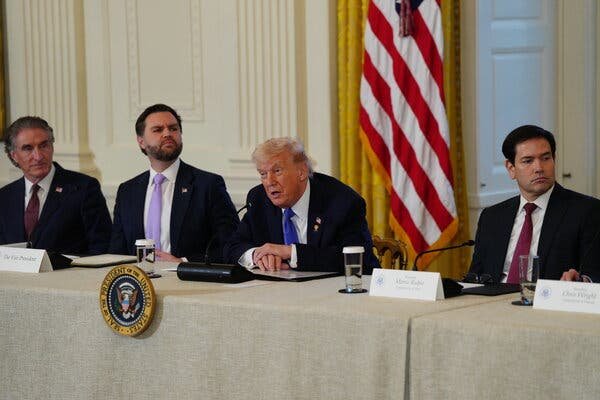

Washington | January 10, 2026: US President Donald Trump has reignited a sensitive geopolitical debate by warning that the United States would “do something” on Greenland if necessary to prevent Russia or China from expanding their influence there. Describing the Arctic island as critical to American national security, Trump suggested that Washington could not afford inaction—even if Denmark opposed such a move.
Speaking to reporters, Trump said Greenland’s strategic location and vast mineral potential made it too important to be left vulnerable. “If we don’t act, Russia or China will move in, and we’re not going to let Russia or China become our neighbour,” he said. While indicating a preference for an “easy deal,” Trump added that the US was prepared to pursue tougher options if required.
The remarks revive memories of Trump’s earlier interest in Greenland during his presidency, when he publicly floated the idea of acquiring the territory—an overture swiftly rejected by Denmark and widely criticised by European leaders.
Why Greenland Matters
Greenland, an autonomous territory within the Kingdom of Denmark, occupies a pivotal position in the Arctic. As climate change accelerates ice melt, the region is opening new shipping routes and access to untapped natural resources, including rare earth minerals. The US already maintains a significant military presence on the island, notably the Thule Air Base, which plays a key role in missile warning systems and Arctic surveillance.
Trump argued that historical claims alone could not justify control over such a strategically sensitive territory. “Just because someone landed there hundreds of years ago doesn’t mean they own it forever,” he said, a remark widely interpreted as a challenge to Denmark’s long-standing sovereignty.
Strategic analysts say Trump’s comments reflect broader American anxieties about increased Russian military activity in the Arctic and China’s growing economic and scientific footprint in polar regions.
Denmark and Europe Push Back
Denmark responded sharply, reiterating that Greenland is not for sale and that any discussion about its future must respect international law and the will of its people. Prime Minister Mette Frederiksen warned that aggressive rhetoric or unilateral moves could have serious implications for European security and transatlantic relations.
European diplomats echoed those concerns, cautioning that the Arctic has traditionally been governed through cooperation rather than confrontation. Any attempt to change the status quo, they warned, could destabilise a region already under strain from climate and security pressures.
Voices From Greenland
Within Greenland itself, leaders and residents stressed that decisions about the island’s future must rest with its population. While Greenland has gradually expanded self-rule—particularly over natural resources—it remains linked to Denmark on defence and foreign policy.
Local officials have generally welcomed investment and security cooperation with the US but rejected any suggestion of coercion or loss of autonomy. “Engagement is welcome, but it must respect our identity, rights and long-term interests,” a Greenlandic leader said.
Implications for NATO
Trump’s warning has also stirred debate within NATO, of which both the US and Denmark are members. Security experts caution that internal frictions over Greenland could complicate alliance cohesion at a time when NATO is already grappling with tensions involving Russia and concerns over China’s global reach.
“Greenland sits at the crossroads of climate change, security and great-power competition,” said a European policy analyst. “Any miscalculation could have ripple effects far beyond the Arctic.”
A Debate Far From Over
Although Trump no longer holds office, his remarks have added fuel to an already sensitive discussion on Arctic strategy and sovereignty. Observers note that statements from a prominent political figure can influence diplomatic calculations, especially as global competition intensifies in the far north.
For now, Denmark and its European partners are urging restraint and dialogue. But with Greenland’s strategic value only growing, the island is likely to remain firmly in the geopolitical crosshairs—ensuring that debates over its future are far from settled.
