

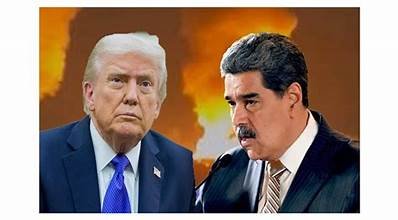
After triggering a major shift in Latin American geopolitics following the change of power in Venezuela, US President Donald Trump now appears to be moving towards another, far more sensitive geopolitical front. Fresh signals from the Trump administration on Greenland have raised concerns across Europe and within NATO. The White House has indicated that the United States is examining all possible options to bring Greenland under its control—ranging from diplomatic and strategic measures to, if necessary, military action.
On Sunday, January 4, Trump publicly declared that “America needs Greenland,” pushing the issue back into the centre of global debate. Two days later, on Tuesday, a senior White House official confirmed that the administration is seriously deliberating its next steps. According to the official, any decision on Greenland is directly linked to America’s long-term national security and economic interests.
The statement came just days after the United States carried out a large-scale military and intelligence operation in Venezuela. Analysts believe the perceived success of that operation has strengthened both the confidence and the assertive posture of the Trump administration—an approach that is now visibly extending to Arctic geopolitics as well.
Final Call: FCRF Opens Last Registration Window for GRC and DPO Certifications
Trump’s top ally and policy strategist Stephen Miller described the President’s position on Greenland as “absolutely clear and unwavering”. “The administration will not compromise on America’s national and economic security under any circumstances,” Miller said. His remarks are being seen as a clear indication of increasing US pressure over Greenland.
Greenland is formally a semi-autonomous territory of Denmark, but its geographic location makes it critically important in global strategic calculations. Situated in the Arctic Circle, Greenland lies at a strategic crossroads between the United States, Russia and Europe. With a population of just around 57,000, it is the world’s largest island by area, and its military significance has grown steadily in recent years.
Strategic experts point out that Greenland’s greatest strength lies beneath its surface. The island is believed to hold vast reserves of rare earth minerals—essential for modern technologies such as semiconductors, telecommunications equipment and advanced defence systems. In addition, Greenland is thought to possess significant deposits of uranium, crude oil and natural gas. At present, China dominates the global supply of rare earth minerals, and the United States has been actively seeking alternative sources to reduce its dependence.
Trump’s interest in Greenland is not new. During his first term in 2019, he had instructed officials to explore whether the United States could “purchase” the vast Arctic island. At the time, he famously described the idea as a large real estate deal, drawing sharp criticism and rejection from both Denmark and Greenland’s leadership. In January 2024, Trump again reiterated that Greenland was vital to America’s “economic security”.
In his statement on January 4 this year, Trump directly linked Greenland to national security. He argued that with increasing Russian and Chinese activity in the Arctic region, a stronger American presence in Greenland has become strategically indispensable—even if it risks creating divisions within NATO.
Political analysts say the Trump administration, buoyed by its recent actions in Venezuela, is now pushing its “maximum pressure” doctrine with renewed aggression. The move towards Greenland is expected to test US–Europe relations and could significantly alter the balance of power in the Arctic.
For now, official responses from Denmark and the Greenland administration are awaited. However, it is widely believed that Trump’s renewed push on Greenland could emerge as one of the most critical flashpoints in global diplomacy in the days to come.
About the author – Rehan Khan is a law student and legal journalist with a keen interest in cybercrime, digital fraud, and emerging technology laws. He writes on the intersection of law, cybersecurity, and online safety, focusing on developments that impact individuals and institutions in India.
