

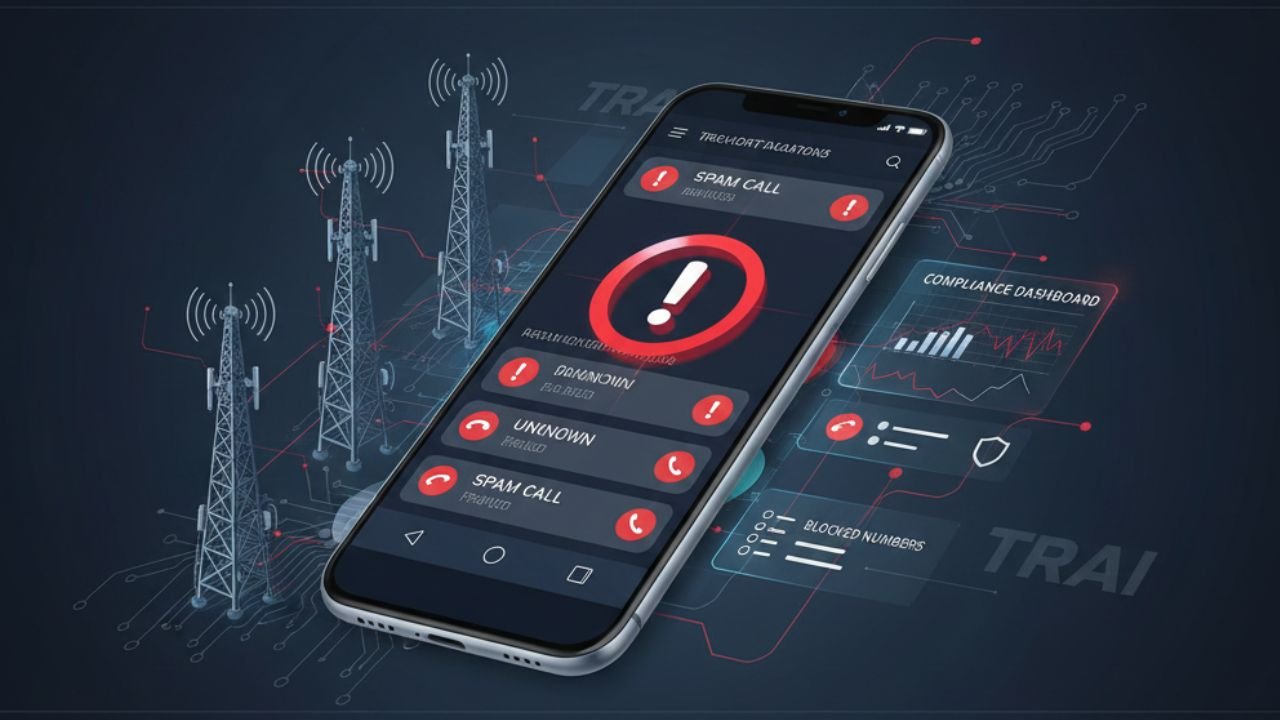

New Delhi: Indian consumers have long been troubled by spam calls, fraud attempts and unsolicited promotional messages. The Telecom Regulatory Authority of India (TRAI) has now intensified its crackdown on such activities, tightening compliance norms and penalising unregistered telemarketing entities at scale.
Between September and October 2025, TRAI blacklisted 318 unregistered telemarketing companies, marking one of the most extensive enforcement drives in recent years.
The impact is visible—consumer complaints saw a notable decline from 3.12 lakh in September to 2.16 lakh in October.
Signs of Improvement in Spam Volumes; Enforcement Showing Results, Says TRAI Chief
In a statement, TRAI Chairman Anil Kumar Lahoti said the sustained enforcement push has started delivering measurable results.
Over the past several months, TRAI has issued strict directives to telecom operators, imposed penalties on non-compliant firms, and shut down thousands of numbers linked to unsolicited commercial communication.
According to Lahoti, the regulatory momentum has strengthened across three fronts:
- Decline in unregistered spam call activity
- Fall in consumer complaints
- Tighter monitoring of operators and telemarketing entities
DLT Platform Remains the Weakest Link; Low Complaint Filing Slows Action
Despite the progress, TRAI faces a major bottleneck: low consumer reporting through the DLT (Distributed Ledger Technology) platform.
The DLT system—central to India’s Do-Not-Disturb (DND) framework—is designed to capture complaints and trigger formal action. However:
- Most users simply block spam numbers on their phones
- But do not lodge complaints through the DND app or DLT mechanism
- As a result, identifying spammers, mapping call patterns, and initiating enforcement becomes significantly slower
TRAI officials emphasise that effective action is possible only when complaints enter the official system, allowing operators and regulators to track the source and scale of unsolicited communication.
2.1 Million Mobile Numbers Blocked in a Year—A Major Strike on Spam Networks
In the last twelve months, regulators have blocked 21 lakh (2.1 million) mobile numbers involved in spam calls, fraudulent messaging campaigns, and unauthorised promotional activities.
India has over 1.10 billion active wireless users, making spam control a massive operational challenge.
Recent measures include:
- Real-time identification of high-risk mobile numbers
- Mandatory blocking directives for telecom operators
- Enhanced KYC verification for telemarketing firms
- Continuous analytics-driven scanning of calling patterns
Officials say many entities were misusing bulk SMS and call platforms without registration. These firms are now being identified and blacklisted at a faster pace.
DND App Emerges as the Most Effective Tool for Consumers
TRAI has reiterated that consumers play a critical role in reducing spam.
The DND app, available on both Android and iOS, directly connects users to TRAI’s complaint system.
Through the app:
- Reports of unsolicited calls/SMS are routed instantly to TRAI
- Telecom operators are obligated to act
- Spammer numbers and companies can be identified more quickly
- Data analytics enable disruption of larger fraud networks
According to TRAI estimates, if more users adopt the DND app, spam volumes could drop by an additional 60–70%.
Next Phase: AI Filters, Real-Time Scanning and Steeper Penalties
Industry sources indicate that TRAI’s upcoming roadmap includes:
- AI-driven spam detection and classification
- Real-time call scanning at the operator level
- Higher financial penalties for rule violations
- Stricter KYC checks and immediate deactivation of fraudulent numbers
The government aims to bring India’s spam-call rate below the global average by 2026, setting a more aggressive compliance regime for telecom operators and telemarketing service providers.
