
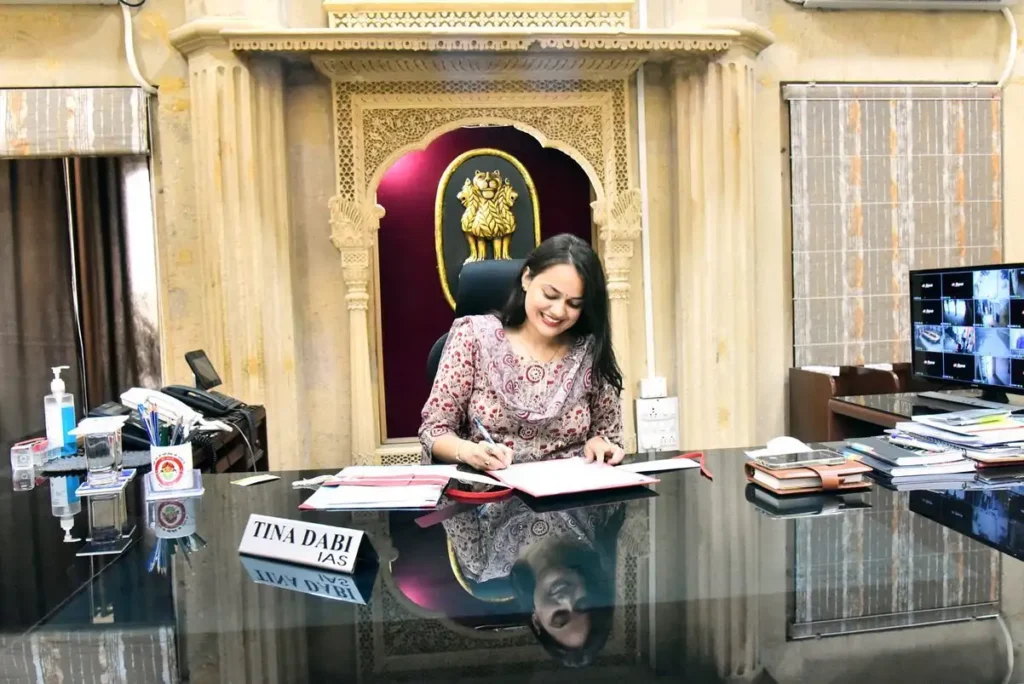

Barmer, Rajasthan — What began as a student protest against a steep hike in college fees in Barmer took an unexpected turn when a comment aimed at the district administration’s public image went viral, pulling one of Rajasthan’s most high-profile civil servants into the centre of a local storm.
Students protesting outside a government college had accused the administration of being inaccessible and unresponsive. During an exchange with officials, some students referred to the district collector, Tina Dabi, as a “reel star” rather than a “role model” — a phrase meant to suggest that public outreach and social media visibility had taken precedence over addressing ground-level grievances.
The remark, recorded on a mobile phone and shared widely online, quickly eclipsed the original issue of fees, shifting the focus from affordability and access to education to questions of respect, authority and dissent.
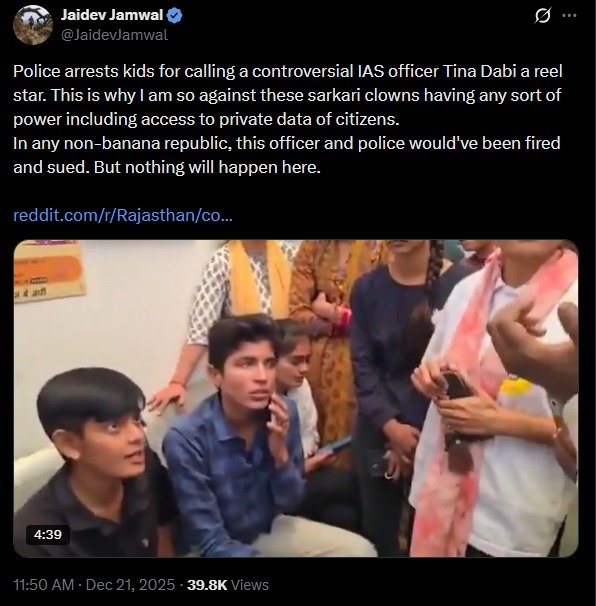
Police Action and Escalating Tensions
As the video circulated, the situation escalated. Police detained several student leaders, a move that drew more students to the local police station in protest. Demonstrators alleged that the detentions were heavy-handed and amounted to a suppression of democratic protest.
By evening, the area around the police station had become a flashpoint. Students raised slogans accusing the police of acting at the behest of the administration, while officers maintained that the detentions were preventive, aimed at restoring order as tempers flared.
The growing confrontation underscored how quickly student protests — especially when mediated through viral video — can spill beyond campus boundaries and into broader questions of governance and state power.
The ‘Role Model’ Debate
At the heart of the controversy was a symbolic dispute over leadership. According to students, their remarks were not intended as a personal attack but as a critique of priorities. They argued that administrators often appear prominently during cleanliness drives and social media campaigns, but are harder to reach when students raise concerns about fees and access to education.
Several protesters said their idea of a role model lay elsewhere — pointing to historical and political figures who, in their view, represented sacrifice, courage and direct engagement with the public.
The administration, for its part, described the language used in the video as inappropriate and provocative, particularly given the charged atmosphere of the protest.
An Apology and an Uneasy Calm
As tensions mounted, Barmer’s Superintendent of Police, Narendra Singh, stepped in personally. Visiting the police station, he addressed the gathered students and, in a gesture that quickly drew attention, acknowledged that the situation had been mishandled.
In a video that later circulated online, the SP could be heard saying, “We accept that a mistake was made.” The apology helped cool tempers, and students gradually dispersed. Police confirmed that those detained were released soon after.
While calm returned to Barmer, the episode left lingering questions. The original demand — a rollback of the fee increase — remains unresolved, and the incident has reignited debate over how authorities respond to student dissent in an age where a few seconds of video can redefine a narrative.
For now, the controversy stands as a reminder of the fragile balance between authority and accountability — and how quickly that balance can be tested when grievances, symbolism and social media collide.
