

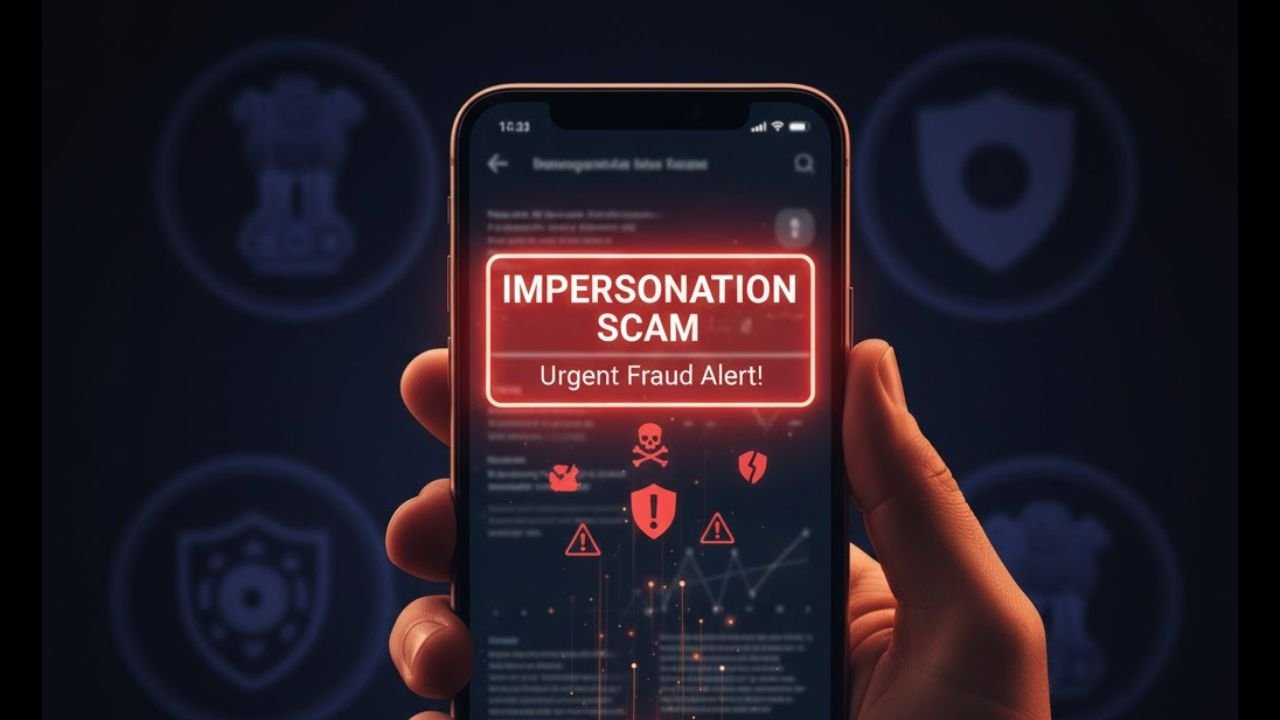

Thane | Bureau Report | In yet another alarming case of cybercrime targeting senior citizens, a 64-year-old businessman from Naupada, Thane, was duped of over ₹1.25 crore by a group of fraudsters posing as officials from the Data Protection Board of India (DPBI) and the Nashik police.
The scammers allegedly exploited the victim’s fear of a fabricated criminal case to extort money under the guise of a “security verification process.” The Naupada police have registered a case and initiated a multi-agency investigation involving digital forensics, transaction tracing, and call record analysis.
The First Call: ‘A SIM Card Issued in Your Name’
According to the police, the fraud began between November 11 and December 3, 2025, when the victim received repeated phone calls from a man identifying himself as “Rajesh Kumar Chaudhary,” an officer with the Data Protection Board of India, based in Khar, Mumbai.
The caller informed the businessman that a SIM card had been illegally issued in his name in Nashik, which was allegedly used for sending threatening messages to individuals. The caller then warned that a case had been registered at Panchavati Police Station in Nashik, and further verification was required.
‘Nashik Police’ Step In: Fear and Extortion Follow
Soon after, the businessman received multiple calls from individuals impersonating Nashik police personnel. They claimed that a bank account opened using his Aadhaar details was being used for money laundering and illegal financial transactions, and that a case had been registered under the National Security Act (NSA).
Fearing arrest and legal repercussions, the victim was coerced into transferring ₹1,25,50,280 across multiple bank accounts over a span of 23 days. Each transaction was justified by the fraudsters as part of a “verification process.”
Manipulation Through Legal Jargon and Intimidation
Investigators said the conmen systematically manipulated the businessman by using legal terminology, police designations, and technical jargon to appear legitimate.
“They kept assuring him that the money would be refunded once verification was complete,” a police official said.
“Once the transfers were done, the calls abruptly stopped, and the victim realised he had been defrauded.”
Misusing the Name of the Data Protection Board of India
The accused exploited the recent establishment of the Data Protection Board of India (DPBI) — a statutory body created under the Digital Personal Data Protection (DPDP) Act, 2023.
The Board is tasked with enforcing privacy laws, adjudicating data breaches, and penalising companies that misuse personal information.
However, in this case, fraudsters used its name and identity to lend credibility to their scam, preying on the victim’s fear of being implicated in a “data misuse” case.
FIR Filed Under Bharatiya Nyaya Sanhita and IT Act
Based on the complaint, the Naupada police have registered a case under the Bharatiya Nyaya Sanhita (BNS) — specifically Sections 318(4) (cheating) and 319(2) (cheating by personation) — along with relevant sections of the Information Technology Act.
Investigators have traced multiple beneficiary bank accounts, some of which were opened using forged documents and fake identities.
A dedicated cyber cell team is now analysing digital trails, IP addresses, and call detail records (CDRs) to identify the network behind the operation.
Senior Citizens: Prime Targets of Digital Threat Scams
Police sources said that this case mirrors a growing pattern of “digital arrest” and “fake government authority” scams, in which fraudsters impersonate officials from agencies such as ED, CBI, RBI, or police departments to intimidate victims.
Senior citizens and independent business owners are particularly vulnerable, as they are more likely to panic when confronted with legal threats.
“These conmen weaponise fear,” a senior officer said. “No legitimate government agency ever asks citizens to transfer money for an investigation.”
Police and Experts Urge Vigilance
Cybersecurity experts have urged citizens to remain cautious against such scams.
“Always verify official calls or emails,” said a cybercrime advisor. “Government institutions never demand money or personal details over the phone. Report suspicious calls immediately to the National Cyber Helpline (1930).”
The Thane Police have reiterated that awareness remains the first and most effective line of defence against sophisticated cyber frauds.
Meanwhile, efforts are on to trace the perpetrators through inter-state coordination and digital tracking.
