

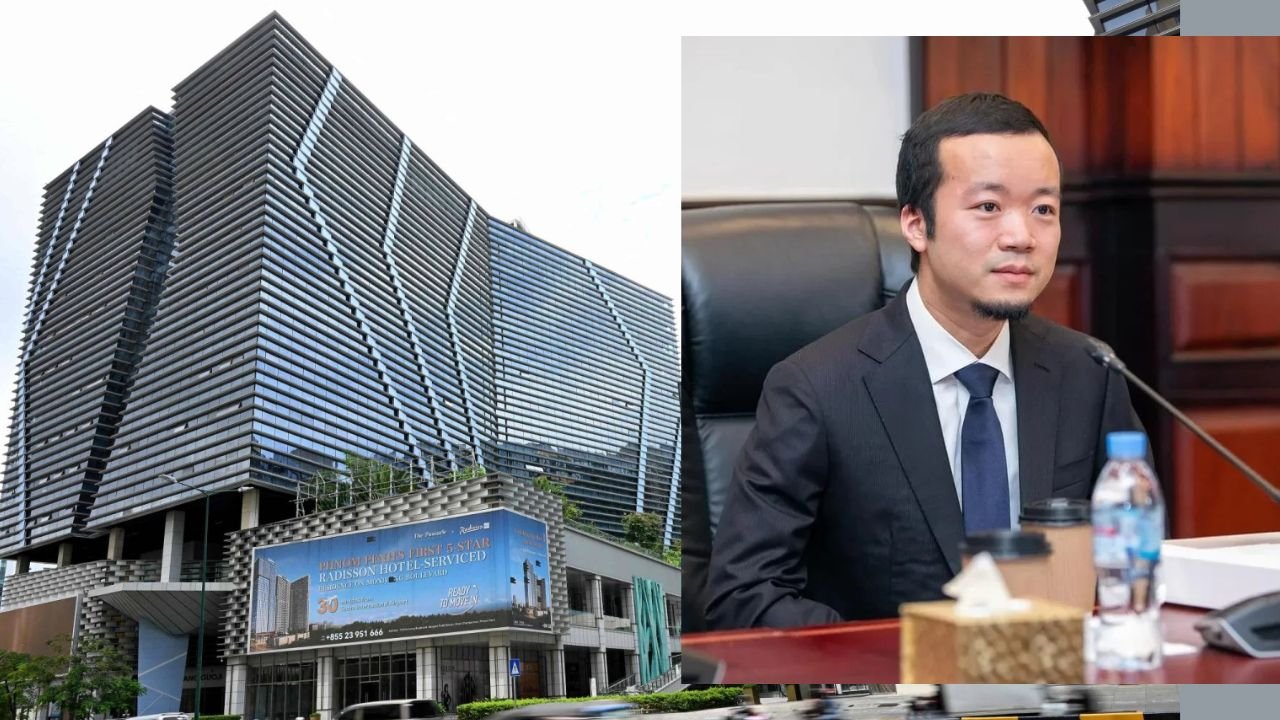

Thailand has launched one of its largest crackdowns to date on the shadowy online scam networks operating across Southeast Asia, announcing the seizure of assets worth 10.157 billion baht ($318 million) and issuing 42 arrest warrants linked to criminal enterprises stretching across Myanmar, Cambodia, and China.
Officials say the targets include Chinese-Cambodian tycoon Chen Zhi — the chairman of the US-sanctioned Prince Group conglomerate — as well as Cambodian nationals Kok An and Yim Leak. All three, Thai authorities allege, are connected to transnational operations involving online fraud, human trafficking, and large-scale money laundering.
At a press conference on Wednesday, Sophon Saraphat, deputy commissioner of the Thai Central Investigation Bureau, said 29 individuals had already been taken into custody. The rest, he suggested, may be located in neighboring jurisdictions where scam compounds have proliferated in recent years.
Scam Compounds Flourish Along Borderlands
The raids and seizures reflect a growing urgency among regional governments to confront the criminal economies that have taken root in Southeast Asia’s border zones — especially around the lawless, militia-controlled enclaves of Myawaddy in Myanmar and Poipet in Cambodia.
These compounds, often disguised as business parks or residential complexes, have become notorious hubs for forced labor. Trafficking victims — many from China, Vietnam, India, and Africa — are coerced into working as online scammers under threat of violence, contributing to a global fraud industry estimated to steal billions annually.
KK Park, one of the largest complexes in Myawaddy, was raided earlier this year, but as in many such operations, the suspected operators had long fled. While hundreds of low-level workers have been detained in the region, law enforcement agencies have struggled to arrest the alleged masterminds at the top of these networks.
This week’s action by Thailand is being viewed as a rare attempt to pierce the upper tiers of these transnational criminal structures.
Tycoon Under Scrutiny as Regional Authorities Coordinate
Chen Zhi’s Prince Group has been at the center of escalating international scrutiny. Sanctioned last year by the United States and Britain over allegations that its executives were involved in operating scam compounds, the conglomerate has repeatedly denied wrongdoing. Chen, who is also facing an indictment by the US Justice Department for wire-fraud and money-laundering conspiracy, did not respond to requests for comment.
Thai investigators say some of the assets seized — which include trading accounts and corporate stakes — were tied to Chen’s network, though they have not clarified whether he is among the individuals named in Thailand’s arrest warrants. His current whereabouts are unknown.
The crackdown also encompasses an alleged criminal network linked to Cambodian businessman Yim Leak. Thailand’s Anti-Money Laundering Office (Amlo) said it seized accounts connected to Yim, including 6 billion baht ($188 million) worth of shares in Bangchak Corporation, a major Thai energy company. Bangchak stressed that the case concerns a private shareholder and has no bearing on the company’s operations.
Authorities further alleged that groups linked to Kok An — a powerful Cambodian figure long mentioned in regional intelligence reporting — used properties in Cambodia to run scam operations and funneled illicit profits into assets in Thailand.
Regional Governments Face Mounting Pressure to Act
The multibillion-dollar “scam state” economy has drawn increasing criticism from governments worldwide, whose citizens have been among the primary victims of its fraudulent investment schemes, phony romance scams, and crypto-enabled extortion.
Hong Kong and Singapore have already frozen or seized assets worth more than $470 million tied to Prince Group in recent months, signaling a new phase of international coordination.
Still, law-enforcement efforts remain fragmented. Cambodia’s government did not respond to questions about the involvement of its nationals, and Myanmar’s fractured security landscape continues to shelter powerful militia-backed criminal clusters.
Thai officials framed this week’s actions as an attempt to break that cycle. But analysts caution that unless neighboring states cooperate and judicial processes reach the alleged masterminds — not just their intermediaries — Southeast Asia’s scam compounds may continue to regenerate faster than authorities can dismantle them.
For now, Thailand’s sweeping asset seizure represents one of the region’s most assertive attempts to confront the industry. Whether it will meaningfully disrupt the networks that have turned parts of Southeast Asia into a global epicenter for online fraud remains an open question.
