

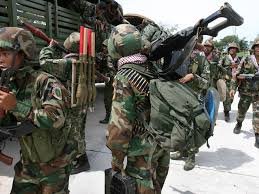

The Thai government on Sunday imposed a night-time curfew across parts of its southeastern Trat province, as fighting with Cambodia spread from inland areas to the coastal border zone. The move came barely two days after U.S. President Donald Trump claimed both nations had agreed to a ceasefire.
However, on the ground, the situation remains volatile — artillery exchanges continued through the weekend, with both militaries accusing each other of renewed aggression and civilian damage.
Background of the Conflict
The simmering border conflict between Thailand and Cambodia reignited in May 2025, after a Cambodian soldier was killed in a skirmish along a disputed stretch of territory. The incident triggered a series of retaliatory attacks, leading to heavy shelling and the displacement of thousands of civilians from both sides of the border.
Thai Defence Ministry spokesperson Rear Admiral Surasant Kongsiri told reporters in Bangkok, “Overall, clashes have continued since Saturday. Despite Cambodia’s renewed talk of a ceasefire, its troops remain active along several key points.”
He added that Thailand remains “open to a diplomatic solution,” but insisted that “Cambodia must first cease hostilities before negotiations can proceed.”
Thai Offensive and Cambodia’s Counterclaim
The Thai army announced on Saturday that it had destroyed a supply bridge used by Cambodia to transport heavy weapons and ammunition into the contested area. Thai forces also claimed to have struck artillery positions inside Cambodia’s Koh Kong province, targeting what they described as “pre-positioned weapon sites.”
Cambodia, in response, accused Thailand of attacking civilian infrastructure and residential zones, saying the strikes had caused significant damage to local communities.
The new curfew covers five districts of Trat province bordering Koh Kong, though the popular tourist islands of Koh Chang and Koh Kood have been exempted. Earlier, Thai authorities had also imposed a similar curfew in Sa Kaeo province, which remains in effect.
Trump’s Mediation and Renewed Tensions
U.S. President Donald Trump, who had previously helped mediate a five-day truce between the two countries in July, announced on Friday that he had spoken with Thailand’s caretaker Prime Minister Anutin Charnvirakul and Cambodian premier Hun Manet, and that both leaders had agreed to “cease all shooting.”
Yet within hours, Thai leader Anutin dismissed the notion of a truce, saying Thailand would “continue fighting until there is no threat to our land or our people.”
A White House spokesperson later clarified that Trump “expects all parties to honor their commitments” and warned that “those responsible for continued violence will be held accountable.”
The Situation Along the Border
According to Reuters correspondents and local officials, heavy artillery fire has been exchanged at multiple points along the 817-kilometer border since Monday, in what observers are calling one of the most intense escalations since midyear.
Several border villages have been evacuated, with hundreds of displaced families now sheltering in makeshift camps. Thai naval patrols have been stepped up along the Trat–Koh Kong coastline, while the military has declared parts of the area a “sensitive security zone” to restrict civilian movement.
The Thai Defence Ministry said that its forces remain on alert and are “prepared for any necessary counteraction,” even as Cambodian officials called for international mediation and urged restraint.
Broader Implications
Analysts say the renewed fighting reflects the fragility of Southeast Asia’s regional stability, particularly as both nations face domestic political pressure and nationalist sentiment ahead of elections.
While Bangkok insists it seeks diplomatic resolution, Phnom Penh has appealed for an international inquiry into what it calls “unprovoked attacks.” On the ground, however, no signs of a durable ceasefire have emerged.
Trump’s latest mediation effort, once touted as a breakthrough, now appears to have faltered — leaving the Thailand–Cambodia frontier once again as a flashpoint of regional tension in mainland Southeast Asia.
