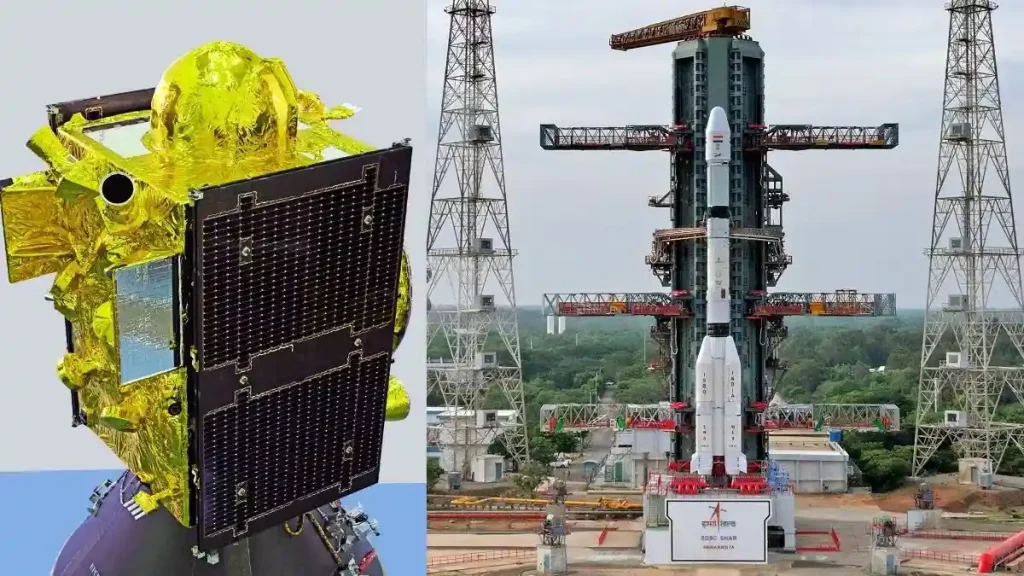

The Indian Space Research Organisation (ISRO) has successfully completed the first orbit-raising manoeuvre of its NVS-03 navigation satellite, moving the spacecraft closer to its designated geosynchronous position as India works to strengthen its independent satellite navigation system, NavIC.
The manoeuvre was completed on October 31, 2026, at 4:48 pm IST. ISRO said the satellite’s Liquid Apogee Motor (LAM) operated for 2,174.8 seconds, or approximately 36 minutes, during the operation.
Following the engine burn, the spacecraft reached an estimated orbit of 5,477.6 km by 37,833.4 km. Its health was reported to be normal, with additional orbital manoeuvres planned over the coming days.
First Manoeuvre Raises Satellite’s Orbit
NVS-03 was injected into an initial orbit of 170.3 km by 38,080 km by the GSLV-F18 launch vehicle on October 30 at 11:51 pm IST.
The first orbit-raising manoeuvre was necessary to move the spacecraft away from this initial transfer orbit towards its final operating position. The onboard LAM engine fired for more than 36 minutes, significantly increasing the satellite’s closest distance from Earth.
ISRO said the estimated orbit after the operation was 5,477.6 km by 37,833.4 km. The figures represent the satellite’s closest and farthest distances from Earth, respectively.
The manoeuvre is part of a series of operations required to position the satellite in its designated geosynchronous orbit. ISRO plans to eventually place NVS-03 at the 111.75-degree East orbital slot.
The satellite has not yet reached its final operating position. Further manoeuvres and subsequent commissioning activities will be required before it can begin its intended navigation services.
NVS-03 To Strengthen India’s NavIC System
NVS-03 is the third satellite in ISRO’s second-generation navigation satellite series, designed to ensure continuity of services under the Indian Regional Navigation Satellite System (IRNSS), commonly known as NavIC.
India developed NavIC as an independent regional alternative to global satellite navigation systems such as the US-operated GPS. It provides positioning, navigation and timing services across the Indian landmass and a region extending approximately 1,500 km beyond the country’s geopolitical boundary.
The satellite carries an indigenous atomic clock alongside procured atomic clocks. These instruments provide the precise timing signals required for satellite navigation.
NVS-03 also introduces the L1 frequency signal alongside the existing L5 and S-band signals. The additional frequency is expected to improve compatibility with navigation receivers and support a wider range of civilian applications.
These capabilities are intended to strengthen the reliability and continuity of India’s regional navigation infrastructure.
GSLV-F18 Mission Follows Earlier NVS-02 Setback
The successful orbital manoeuvre is an important stage in the NVS-03 mission, particularly after the problems encountered during the earlier NVS-02 mission.
NVS-02 was launched in January 2025 but could not complete its planned orbit-raising operations. An ISRO review found that an electrical signal failed to reach a pyro valve in the spacecraft’s oxidiser line, preventing the propulsion system from operating as intended.
The failure highlighted the importance of reliable propulsion-system operations during satellite deployment.
NVS-03 was launched aboard GSLV-F18, the 20th flight of India’s Geosynchronous Satellite Launch Vehicle. The launch vehicle successfully placed the satellite into its designated transfer orbit before ISRO began the subsequent manoeuvres.
The latest successful engine burn indicates that the first planned orbit-raising operation has been completed as intended. However, the spacecraft must still undergo further orbital adjustments before reaching its final position.
What This Means For Navigation Services In India
NavIC supports applications that require accurate location and timing information, including vehicle tracking, maritime navigation, disaster management and strategic operations.
A stronger satellite constellation can improve the availability and continuity of these services. The additional L1 signal on NVS-03 could also expand compatibility with civilian navigation equipment.
The satellite’s successful launch and first orbit manoeuvre therefore represent progress towards strengthening India’s independent navigation capabilities.
However, the first manoeuvre does not mean that NVS-03 is already providing operational navigation services. ISRO must complete the remaining orbital adjustments and commissioning before the satellite can be integrated into the NavIC system.