

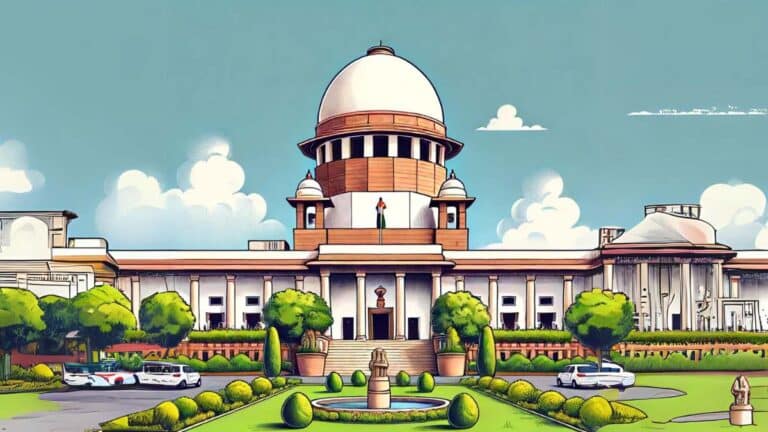

The Supreme Court on Tuesday delivered a strong message to a Bihar IPS officer, cautioning him to uphold loyalty to the Constitution rather than to “bosses,” after he filed an affidavit contradicting the prosecution’s stand in a murder case. The affidavit had effectively offered a “clean chit” to one of the accused, despite the same state police earlier conducting the investigation and filing the chargesheet that led to conviction.
Case Origin and High Court Intervention
The matter stemmed from an appeal against a Patna High Court order that had suspended the sentence of convicts in the murder case. During the proceedings before the apex court, it was noted that Superintendent of Police (G), Special Branch, Bihar Police Headquarters, had filed an affidavit diverging sharply from the prosecution’s position.
In May, the Bihar government had flagged the affidavit during hearings, noting the contradictions between the officer’s submission and the investigative findings of the state police.
Data Protection and DPDP Act Readiness: Hundreds of Senior Leaders Sign Up for CDPO Program
Apex Court’s Concerns Over Contradictory Affidavit
On August 1, a bench comprising Justices Ahsanuddin Amanullah and SVN Bhatti observed that it was “really concerned” with the affidavit filed by the SP. The judges pointed out the inconsistency, stressing that while the state police itself had investigated and filed the chargesheet, the officer had sought to absolve the accused. The bench directed the officer to personally explain his conduct and sought his justification for filing such a statement.
Officer’s Apology and Court’s Acceptance
Appearing before the Supreme Court in person on Tuesday, the IPS officer tendered an unconditional apology for his affidavit. The bench accepted his apology but did not hold back from issuing a stern reminder: public officials must remain committed to the rule of law and constitutional duties, and not bend under external influences or instructions.
Larger Implications for Public Service and Justice
The case underscores the judiciary’s emphasis on accountability among law enforcement officers. The Supreme Court’s remarks serve as a cautionary note for officers across the country to act as neutral guardians of justice rather than instruments of convenience. The episode also reflects the judiciary’s vigilance in ensuring that justice is not derailed by internal contradictions within the state machinery.
