
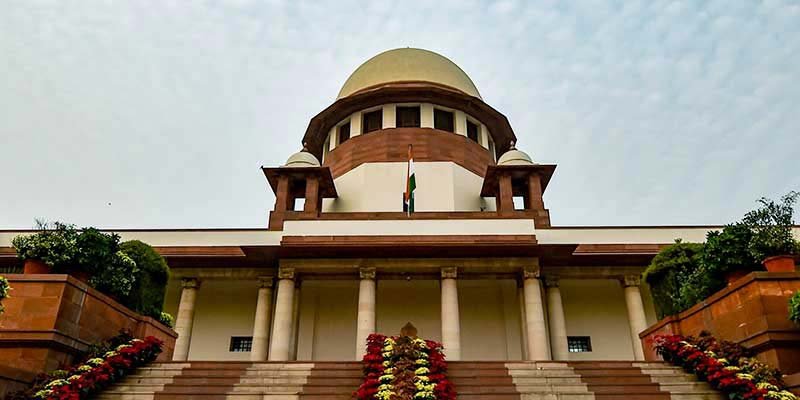
In a significant ruling on banking fraud procedures and the classification of suspicious accounts, the Supreme Court has held that an oral or personal hearing is not mandatory when banks declare an account as fraudulent. The Court clarified that issuing a notice and providing an opportunity for a written response is sufficient to satisfy the principles of natural justice.
The judgment came in connection with disputes arising from multiple cases involving allegations of financial irregularities, including a ₹63 crore fake ITC-linked fraud matter that highlighted concerns over procedural consistency in fraud classification across the banking system.
Supreme Court Eases Oral Hearing Mandate for Banks
The Court observed that banks are required to follow a fair process before labeling any account as fraudulent. However, it emphasized that mandating oral hearings in every such case would place an unnecessary burden on the banking system, especially given the large volume of fraud-related investigations handled annually.
FCRF Launches Premier CISO Certification Amid Rising Demand for Cybersecurity Leadership
At the same time, the Court made it clear that forensic audit reports must be shared with the concerned account holders or entities. It stated that these reports form the foundational basis of fraud classification, and without access to them, the opportunity to respond would be incomplete and unfair.
The Court also allowed banks to redact sensitive or confidential portions of such reports where necessary, provided that the overall transparency and fairness of the process are not compromised.
Distinguishing Fraud from Wilful Default
A key aspect of the ruling was the distinction drawn between different categories of financial misconduct. The Court noted that fraud and wilful default are not identical in nature and may require different procedural approaches to ensure effective regulation and enforcement.
The bench further observed that India witnesses thousands of fraud and suspicious transaction cases every year. Requiring oral hearings in each instance, it said, could significantly delay investigations and disrupt the efficiency of the banking system.
Expert Views and Broader Implications
Banking and financial experts have described the ruling as a balanced approach that strengthens both enforcement efficiency and procedural fairness. They believe the decision could help reduce delays in resolving fraud classification disputes and improve regulatory effectiveness.
The Court also reiterated that regulatory authorities and banks are empowered to take necessary measures to protect the stability of the financial system. It added that judicial interference in policy decisions should remain limited unless there is a clear violation of law or procedure.
The case originated from petitions challenging the process by which banks were classifying certain accounts as fraudulent. Petitioners had argued that such classification without oral hearing violated the principles of natural justice.
Earlier conflicting decisions by different High Courts had created legal uncertainty, prompting the matter to be settled by the Supreme Court to establish uniform guidelines.
Legal experts say the ruling provides much-needed clarity and is likely to standardize fraud classification procedures across banks and financial institutions. It is also expected to speed up the resolution of pending fraud-related cases.
For borrowers and businesses, the judgment has a mixed impact. While it removes the requirement of an oral hearing, it strengthens transparency by ensuring access to forensic audit findings used against them.
The Court also issued a caution that banks must ensure adequate and credible evidence before declaring any account fraudulent. Any arbitrary classification, it warned, could face judicial scrutiny and legal challenge.
The ruling is expected to have wide-ranging implications for India’s banking sector, where large numbers of accounts are regularly subjected to fraud risk assessments and investigations.
The Court emphasized that the essence of natural justice is fairness in decision-making, not procedural complexity that slows down regulatory action.
With the rapid expansion of digital banking and online financial transactions, experts believe that fraud detection cases are likely to increase further, making streamlined and robust procedures essential.
The judgment concludes by reaffirming that transparency and timely decision-making are both crucial for maintaining trust in the financial system. It signals a shift toward faster regulatory action while preserving essential safeguards for affected parties.
This landmark decision is expected to play a key role in shaping future banking fraud investigation frameworks and reinforcing a more structured and efficient compliance system across the financial sector.
