

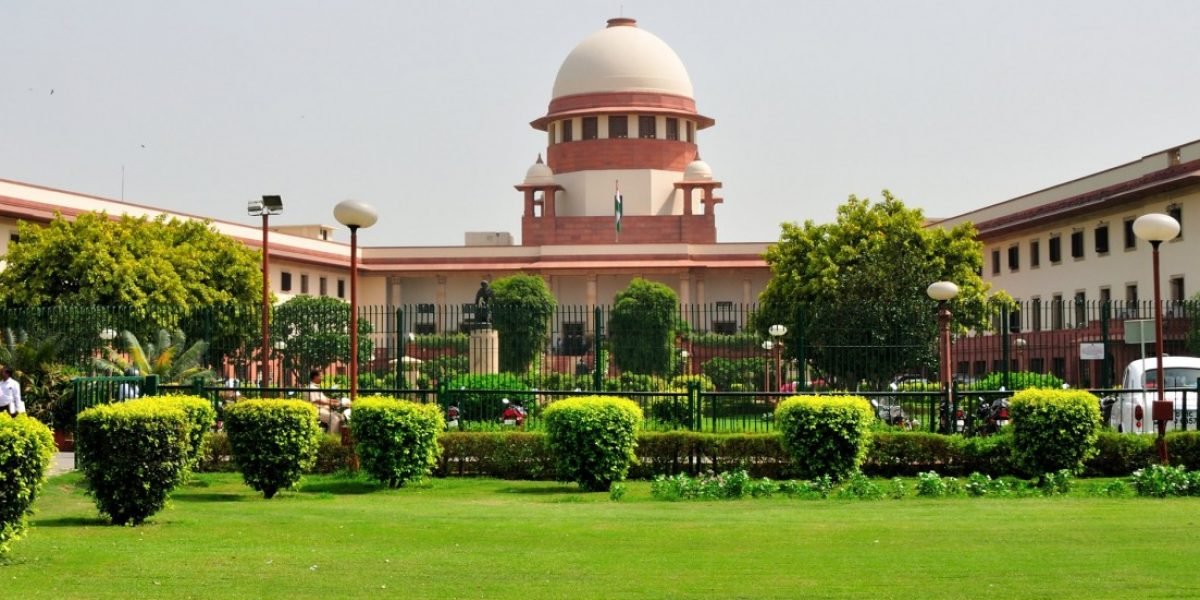

NEW DELHI: A divided Supreme Court on Tuesday reopened a long-running debate over how far the law should go in shielding public servants from corruption probes, setting the stage for a larger bench to weigh the balance between accountability and administrative protection.
A Split on the Bench
The Supreme Court of India on Tuesday delivered a split verdict on the constitutional validity of a key provision of the anti-graft law that requires prior sanction before any inquiry or investigation can be initiated against a government servant in corruption cases. The disagreement between the two judges underscored a deeper institutional tension over how to safeguard honest decision-making in government while ensuring that anti-corruption laws remain effective.
The provision in question, Section 17A of the Prevention of Corruption Act, was introduced in July 2018 as part of amendments to the 1988 law. It bars any “enquiry or inquiry or investigation” into decisions or recommendations made by a public servant in the discharge of official duties unless prior approval is obtained from the competent authority.
Certified Cyber Crime Investigator Course Launched by Centre for Police Technology
Diverging Judicial Reasoning
Justice B.V. Nagarathna held that Section 17A was unconstitutional and ought to be struck down. In her opinion, the requirement of prior sanction ran contrary to the very object of the Prevention of Corruption Act. She observed that the provision effectively foreclosed inquiries at the threshold, creating a legal shield that could be misused to protect corrupt officials rather than promote integrity in public service.
Justice Nagarathna reasoned that by mandating approval even before a preliminary inquiry, the law risked stalling accountability mechanisms. Such a structure, she said, undermined the anti-corruption framework by allowing executive discretion to intervene at the earliest stage of scrutiny.
Justice K.V. Viswanathan, however, reached the opposite conclusion. Upholding the constitutional validity of Section 17A, he emphasized the need to protect honest officers from vexatious or motivated complaints. Striking down the provision, he warned, would be akin to “throwing the baby out with the bath water,” adding that in this case “the cure will be worse than the disease.”
The Law and Its Implications
Section 17A was designed to address concerns that public officials, particularly those involved in policy-making and administrative decisions, were being deterred by the fear of criminal prosecution. The amendment sought to ensure that bona fide decisions taken in the course of official duties were not subjected to criminal investigation without institutional scrutiny.
Critics of the provision have argued that it places an additional hurdle in the path of anti-corruption agencies, effectively delaying or preventing probes. Supporters contend that without such protection, governance would be paralysed by the constant threat of investigation.
The split verdict reflects these competing concerns. While one judge viewed the provision as a legal barrier that protects the corrupt, the other saw it as a necessary safeguard against abuse of investigative power.
What Comes Next
In light of the divided opinion, the case will now be placed before the Chief Justice of India, Justice Surya Kant, for the constitution of a larger bench to deliver a final and authoritative ruling. The outcome is expected to have significant implications for corruption investigations involving public servants across the country.
The judgment arose from a public interest litigation filed by the Centre for Public Interest Litigation, which challenged the validity of the amended Section 17A. Until a larger bench resolves the issue, the legal uncertainty surrounding prior sanction requirements is likely to persist, leaving investigators, public officials, and courts navigating a contested legal terrain.
