

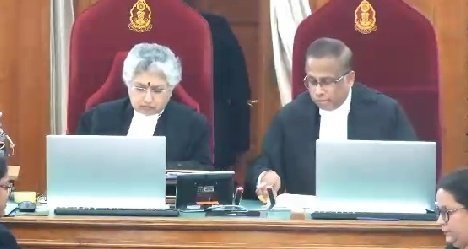

A split verdict of the Supreme Court has revived a foundational debate in India’s anti-corruption framework: whether the law should prioritise protecting administrative decision-making or ensuring that allegations of corruption are investigated without delay. At the centre of the disagreement lies Section 17A of the Prevention of Corruption Act — and two sharply divergent judicial philosophies.
The Split That Reopened a Constitutional Question
The Supreme Court’s judgment on Section 17A of the Prevention of Corruption Act, 1988, produced a clear divide. Justice B.V. Nagarathna struck down the provision as unconstitutional, holding that it undermines the very purpose of anti-corruption law. Justice K.V. Viswanathan, in contrast, upheld its validity by reading the provision narrowly and emphasising procedural safeguards.
Given these irreconcilable views, the Court directed that the matter be placed before the Chief Justice of India for the constitution of a larger Bench to finally settle the issue. At stake is a provision introduced in 2018 that requires prior approval before any inquiry or investigation is initiated against a public servant for decisions taken in the discharge of official duties.
Certified Cyber Crime Investigator Course Launched by Centre for Police Technology
Why Justice Nagarathna Found Section 17A Unconstitutional
Justice Nagarathna organised her reasoning around six core objections, each rooted in statutory interpretation, constitutional principle and past precedent.
1. No Judicial Rewriting of Section 17A
Justice Nagarathna held that the language of Section 17A is unambiguous: the power to grant prior approval is vested in the “government” or the authority competent to remove the public servant from office. Courts, she said, cannot substitute this language with alternatives of their own choosing.
She rejected arguments that the provision could be “saved” by routing approvals through independent bodies such as the Lokpal or Lokayukta. Doing so, she held, would amount to judicial legislation — an impermissible rewriting of a statute whose wording admits of no ambiguity. Merely shifting the approving authority, she observed, does not remove the constitutional defect.
2. The Executive Cannot Judge Its Own Officers
A central concern in Justice Nagarathna’s opinion was institutional bias. Government departments, she noted, function through collective decision-making, with policies and administrative actions shaped by multiple officers across levels.
Expecting the executive to impartially decide whether its own decisions should be subjected to criminal investigation, she held, violates the fundamental principle against bias — nemo judex in re sua, or no one should be a judge in their own cause.
In her view, Section 17A allows precisely such self-judging by the executive, rendering the approval process inherently compromised.
3. A Disguised Classification Among Public Servants
Although Section 17A appears, on its face, to apply uniformly to all public servants, Justice Nagarathna found that its real effect is far narrower. In substance, she held, it shields only those who make recommendations or take decisions — functions typically performed by senior officers.
Lower-level officials, whose role is often limited to notings or implementation, receive no comparable protection. This, she concluded, creates a disguised and impermissible classification within the same class of public servants.
The protection, she wrote, operates at the same hierarchical level as “decision taken” and “recommendation made,” both actions associated with higher authority.
4. Old Wine in a New Bottle
Justice Nagarathna traced Section 17A’s lineage to Section 6A of the Delhi Special Police Establishment Act, 1946 — a provision that imposed a similar prior-approval requirement and was struck down by larger Benches of the Supreme Court.
Calling Section 17A a “resurrection” of that invalidated regime, she held that the 2018 amendment fails to remove the very basis on which Section 6A was earlier declared unconstitutional. “It is old wine in a new bottle,” she wrote, concluding that legislative rebranding cannot cure a defect already condemned by constitutional precedent.
5. Protecting Corrupt Public Servants
Justice Nagarathna repeatedly emphasised that preventing even a preliminary inquiry strikes at the heart of corruption control. Without an inquiry, she reasoned, the truth and genuineness of a complaint can never be tested.
Rejecting the claim that prior approval filters out frivolous complaints, she observed that truth emerges only through investigation, not through administrative gatekeeping.
“In my view, Section 17A of the Act is, in fact, to grant protection to corrupt public servants,” she concluded.
6. Honest Officers Are Already Protected Elsewhere
The judgment also pointed to existing safeguards within the law. Under Section 19 of the Prevention of Corruption Act, sanction for prosecution is required before a court can take cognisance of an offence.
This later-stage protection, Justice Nagarathna noted, allows governments to prevent motivated or baseless cases after material has been gathered, without stalling inquiries at the threshold.
Any prejudice caused by false complaints, she held, can be addressed at the stage of sanction not by barring investigation altogether.
Justice Viswanathan’s Narrow Reading of Section 17A
Justice K.V. Viswanathan upheld Section 17A by interpreting it restrictively. He emphasised that the provision applies only to decisions taken in the discharge of official duties, and not to acts of corruption that fall outside that scope.
He pointed to timelines, safeguards and the overriding role of the Lokpal under the Lokpal and Lokayuktas Act, 2013, arguing that these features prevent abuse while protecting honest administrative decision-making.
He also stressed that Section 17A operates at a preliminary stage, while Section 19 continues to serve as a robust filter before prosecution. Read narrowly, he held, the provision does not undermine accountability but balances investigative power with governance stability.
Awaiting a Larger Bench
With two judges offering fundamentally different readings of the same law, the Supreme Court has left the final word to a larger Bench. Its eventual ruling will determine whether prior approval before investigation is a constitutionally permissible safeguard — or an impermissible barrier to uncovering corruption at its source.
