

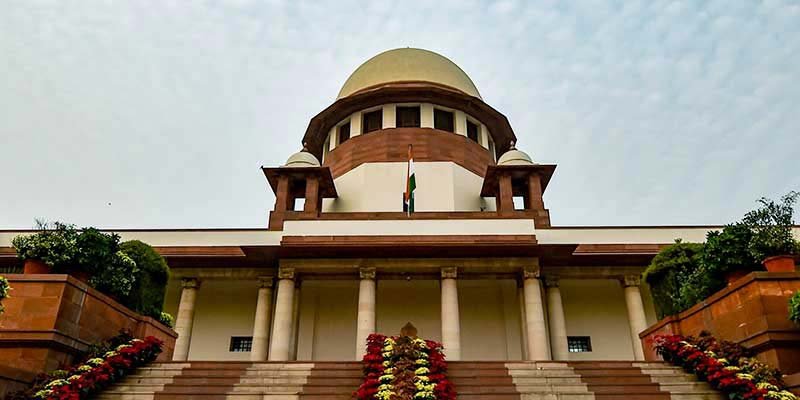
The Supreme Court has agreed to hear the Centre’s petition challenging the Bombay High Court’s decision to strike down IT rules designed to regulate fake and misleading content on social media. However, the top court has refused, for now, to stay the High Court’s order.
Sources said the hearing will be conducted by a three-judge bench comprising Chief Justice Suryakant along with Justices R. Mahadevan and Joymalya Bagchi. Notices have been issued to the original petitioners, including stand-up comedian Kunal Kamra, the Editors Guild of India (EGI), and the Association of Indian Magazines (AIM).
During the proceedings, the Supreme Court emphasized that a timely resolution of the dispute would be preferable. Consequently, the court did not accept the government’s request for an immediate stay on the High Court order.
Bombay HC Quashes IT Rules: What Happened?
On September 26, 2024, the Bombay High Court had quashed the revised IT rules aimed at identifying and controlling fake or misleading content linked to the government on social media. The court had declared the rules unconstitutional and imposed a ban on their implementation.
Solicitor General Tushar Mehta, representing the Centre, requested the Supreme Court to impose a stay on the High Court verdict. He argued that the government’s objective was not to block content entirely but to curb the spread of misinformation across social media platforms.
The rules, notified on April 6, 2023, under the Information Technology (Intermediary Guidelines and Digital Media Ethics Code) Rules, 2021, empowered the Fact-Check Unit (FCU) to monitor and identify any allegedly fake or misleading government-related content. If content was deemed false or misleading, social media platforms were required either to remove it or display a disclaimer. Non-compliance exposed platforms to potential legal action.
Implications for Social Media and Fake News in India
Experts note that fake content on social media is spreading rapidly, and a clear legal framework is essential to curb its impact. The Centre’s appeal in the Supreme Court aims to reinforce the importance of these rules while balancing regulatory oversight over digital media.
In effect, the hearing will determine not only the validity of the rules governing fake content but also the extent to which social media platforms are obligated to monitor and control such content.
Legal analysts emphasized that tackling fake and misleading information online requires coordinated action among the government, social media companies, and users. The Supreme Court’s review will help ensure that the flow of digital information in India remains regulated and secure, while protecting the rights of users and platforms alike.
About the author – Ayesha Aayat is a law student and contributor covering cybercrime, online frauds, and digital safety concerns. Her writing aims to raise awareness about evolving cyber threats and legal responses.
