

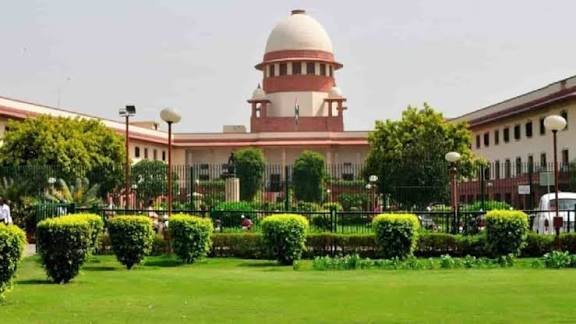

NEW DELHI: The Supreme Court’s sharp questioning of a plea for Buddhist minority benefits has opened a narrow but consequential window into how identity, certification, and admissions intersect — and sometimes collide — within India’s regulatory system for higher education.
A Petition That Drew the Court’s Attention
On Wednesday, the Supreme Court took up a petition filed by siblings Nitin (also referred to in court records as Nikhil Kumar) and Ekta Punia, residents of Hisar, Haryana, who sought admission to a postgraduate medical course under the Buddhist minority quota. The petitioners had approached the court after being unable to enroll in their NEET-PG courses despite securing Buddhist minority certificates from the Sub-Divisional Officer (Civil) in Hisar.
The siblings were seeking admission to Subharti Medical College in Meerut, a Buddhist minority institution recognised by the National Commission for Minority Educational Institutions (NCMEI). Their admission, however, was stalled following a Uttar Pradesh government notification that halted such admissions, triggering the legal challenge.
What began as a dispute over admission procedures soon widened into a broader judicial inquiry into how minority certificates are issued, particularly when candidates have previously competed under the General category.
Certified Cyber Crime Investigator Course Launched by Centre for Police Technology
Questions on Conversion and Certification
During the hearing, Chief Justice Surya Kant questioned the very basis on which the petitioners claimed minority status. Addressing counsel for the petitioners, the Chief Justice asked bluntly which “Punia” community the siblings belonged to, noting that they were from a Jat Punia family — a traditionally upper-caste grouping.
When the court asked how such candidates qualified as minorities, counsel submitted that the petitioners had converted to Buddhism and were therefore entitled to the reservation benefits available to religious minorities. This explanation prompted further questioning from the Bench on the timing and authenticity of the conversion and on the role of the district administration in issuing the certificates.
Justice Bagchi, part of the Bench, pointedly asked whether the conversion had taken place just before the examination.
The Court’s View and the State’s Role
Reacting to the submissions, Chief Justice Surya Kant remarked that the case appeared to present “a new kind of fraud,” cautioning counsel against pressing the argument further. The court questioned how candidates who had earlier appeared for examinations as General category applicants could later obtain minority certificates for admission purposes.
The Bench also sought an explanation from the Haryana government, directing the state’s Chief Secretary to place on record the guidelines under which minority certificates are issued. In particular, the court asked whether it was permissible for upper-class candidates — especially those above the Economically Weaker Sections (EWS) threshold — who had previously declared themselves as “General,” to subsequently claim Buddhist minority status.
In dismissing the plea, the Chief Justice observed that the petitioners came from one of the more prosperous regions of the country and remarked that they should take pride in competing on merit rather than seeking minority benefits.
The Broader Legal Context
The challenge references a 2016 Uttar Pradesh notification that requires minority institutions to obtain state-level recognition even if they already hold national recognition from the NCMEI.
The petitioners argued that the National Commission for Minority Educational Institutions Act, 2004 — a central law — should prevail over state-level notifications. While the Supreme Court did not rule on that broader constitutional question during this hearing, its scrutiny of the certification process and its directive to the Haryana government signal a closer examination of how minority status is determined and applied in admission processes.
