
Follow us on Google News

Expressing deep concern over the alarming rise in “digital arrest” scams across India, the Supreme Court on Monday indicated that it may hand over the investigation of these cases to the Central Bureau of Investigation (CBI). The Court said the scale and sophistication of these cybercrimes demanded a coordinated, nationwide response rather than isolated state-level probes.
A Bench of Justices Surya Kant and Joymalya Bagchi observed that the issue was far from an ordinary crime where the Court could merely direct police to speed up investigations.
“People are running from pillar to post. Digital arrests are happening in several States… Given the magnitude and nature of the crime, we want to assign these FIRs to a central agency like the CBI,” Justice Kant remarked.
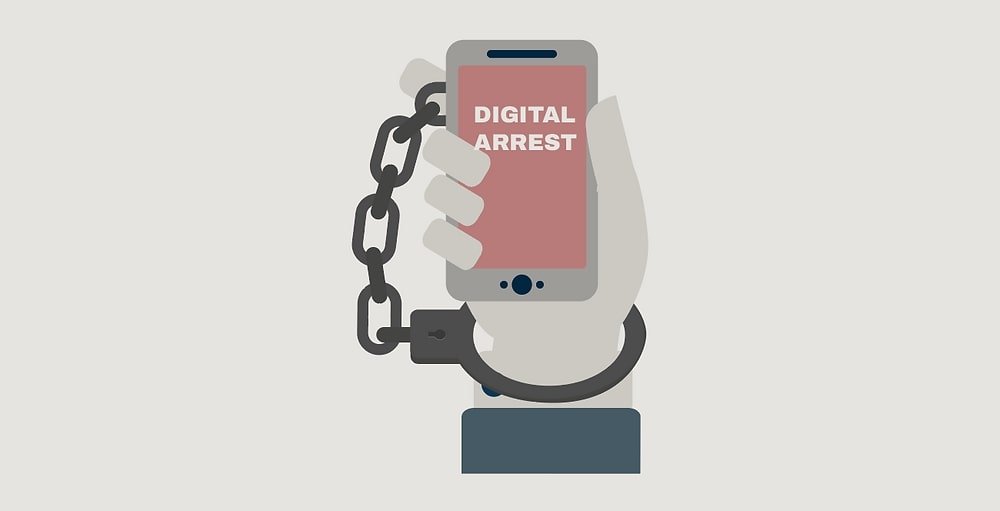
What Are “Digital Arrests”?
In these scams, fraudsters pose as judges, police officers, or investigative agency officials, using forged court documents and AI-generated visuals to extort money from victims. The perpetrators contact individuals—often senior citizens—through video calls, claiming they are under investigation, and demand hefty sums to “avoid arrest.”
The Court took suo motu cognisance of the issue after an elderly couple in Ambala, Haryana, was conned out of ₹1.05 crore by criminals who fabricated fake court and agency documents.
Cross-Border Cybercrime Rings Behind the Scams
Attorney General R. Venkataramani informed the Court that these crimes originate from cross-border money-laundering networks, which leverage advanced technology and AI tools to execute the frauds.
Appearing for the Centre, Solicitor General Tushar Mehta described the operations as large-scale, organized cybercrimes emanating from “scam compounds” located outside India.
“The impact of the problem is not only financial but also human,” Mehta said. “Gullible people are promised jobs abroad and end up as modern-day slaves. Criminals morph the faces of judges and stage video calls with fake courtroom backgrounds to intimidate their targets.”
The First Firm to Assess Your DFIR Capability Maturity and Provide DFIR as a Service (DFIRaaS)
Can the CBI Handle the Scale?
Justice Bagchi questioned whether the CBI had sufficient technical and human resources to investigate the growing volume of cybercrime cases. He recalled that the agency had previously sought the Supreme Court’s permission to transfer ponzi scheme cases back to state police due to overwhelming caseloads.
Responding to the concern, Mehta said he had held meetings with senior officials, including the CBI DIG and the head of the National Cybercrime Coordination Unit, to assess the scope of ongoing investigations. He also submitted a confidential note to the Bench detailing the CBI’s current cyber fraud probes and coordination efforts with the Home Ministry’s cyber division.
A Global Cybercrime Migration
Justice Bagchi noted that recent crackdowns on cybercriminals in Myanmar had forced many underground groups to shift their operations to Thailand. He urged the Centre to explore cooperation mechanisms under the United Nations Convention against Cybercrime, emphasizing the need for international coordination to tackle the transnational nature of these crimes.
Supreme Court Issues Notices to States and UTs
The Bench issued notices to all States and Union Territories, directing them to provide detailed data on pending FIRs and digital arrest cases reported within their jurisdictions. The matter will next be heard on November 3, 2025.
Experts Call for Structural Cyber Reforms
Cybersecurity analysts say the surge in digital arrest scams highlights a new frontier of AI-driven deception, where fraudsters use deepfakes, virtual backgrounds, and cloned voices to simulate authority.
Experts have called for the creation of a National Cyber Crisis Response Framework, integrating banks, fintech firms, telecom operators, and law enforcement agencies to enable real-time information sharing and rapid intervention.
The Bigger Picture
The Supreme Court’s move reflects a growing recognition that “digital arrests” are not isolated acts of fraud but a manifestation of systemic cyber exploitation targeting vulnerable citizens.
If the probe is indeed handed over to the CBI, it could mark a significant step toward establishing a centralized, tech-enabled cyber enforcement ecosystem in India—one capable of countering the evolving threat of AI-fueled digital crimes.
As the next hearing approaches, the question remains: Can India strengthen its digital law enforcement framework before the next wave of cybercrime strikes?