

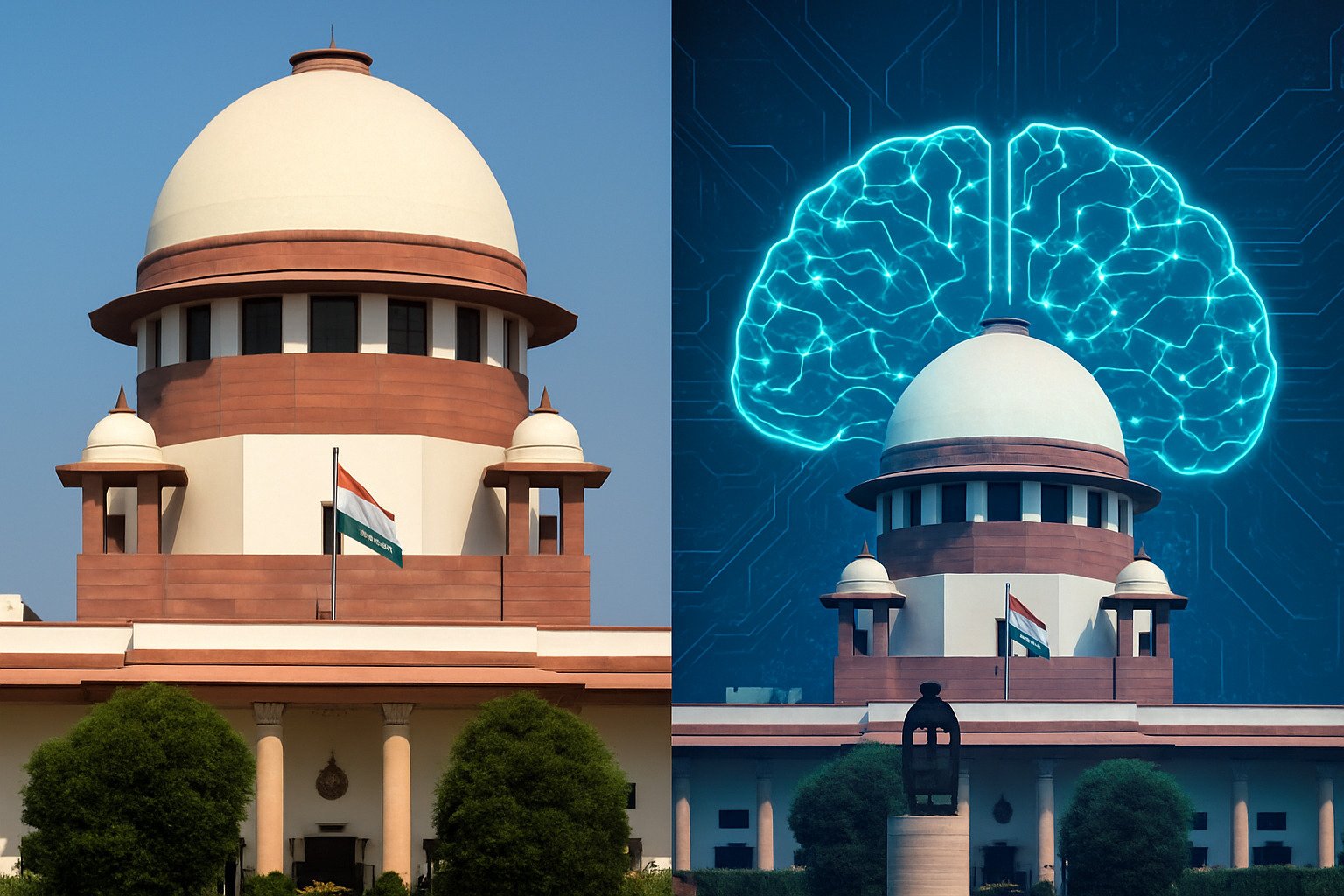

New Delhi — The Supreme Court of India on Thursday agreed to examine allegations that a litigant in a high-profile insolvency case submitted more than a hundred fictitious or artificial-intelligence-generated case citations in a filing before the court.
The claims were raised by Senior Advocate Neeraj Kishan Kaul, appearing for Omkara Asset Reconstruction Pvt. Ltd., during arguments in a dispute involving insolvency proceedings against Gstaad Hotels Pvt. Ltd., a Bengaluru-based hospitality group. Kaul alleged that the promoter of the hotel chain, Deepak Raheja, had relied on case laws that “do not exist at all,” including criminal judgments misrepresented as precedents under the Insolvency and Bankruptcy Code (IBC).
A bench of Justices Dipankar Datta and Augustine George Masih took serious note of the assertion, cautioning that the Court would “put the appellant to task” should the citations prove to be fabricated or AI-generated. The matter is scheduled for further hearing on December 8.
The allegations come amid growing global concern about the infusion of generative AI tools into legal processes — and the emerging risks of fabricated precedents, hallucinated case law, and misleading legal analysis entering court records.
Background of the Dispute
The conflict stems from a 2017 loan package extended by Piramal Finance to Gstaad Hotels and its affiliate, Neo Capricorn Plaza Pvt. Ltd. The firms collectively received over ₹600 crore in financing, later supplemented through the Union government’s Emergency Credit Line Guarantee Scheme (ECLGS). The debt was eventually assigned to Omkara Asset Reconstruction on December 27, 2022, which soon after issued recall notices seeking repayment of more than ₹780 crore across both borrowers.
On July 8, the National Company Law Tribunal (NCLT), Mumbai, admitted insolvency petitions against Gstaad Hotels. The NCLAT upheld the ruling on August 19, finding evidence of default as of November 15, 2022, and noting that a ₹743.71 crore one-time settlement proposal indicated the promoters’ acknowledgement of liability.
Raheja has challenged those findings before the Supreme Court, arguing that the figures were distorted by withdrawals from the retention account, that the Debt Service Reserve Account should have been fully considered, and that the businesses were profitable.
The newly surfaced claim of fabricated case laws now threatens to complicate the appeal — and has drawn attention to the reliability of AI tools increasingly used across industries, including legal practice.
