


Silicon Valley — A quiet unease has settled over white-collar America. What began as scattered automation initiatives inside tech firms and logistics companies has accelerated into one of the most concentrated waves of corporate layoffs in a decade, with more than 60,000 jobs eliminated this year across Amazon, UPS and Target alone. A growing list of companies — from fintechs to language learning platforms — now openly concede that artificial intelligence is reshaping their staffing decisions.
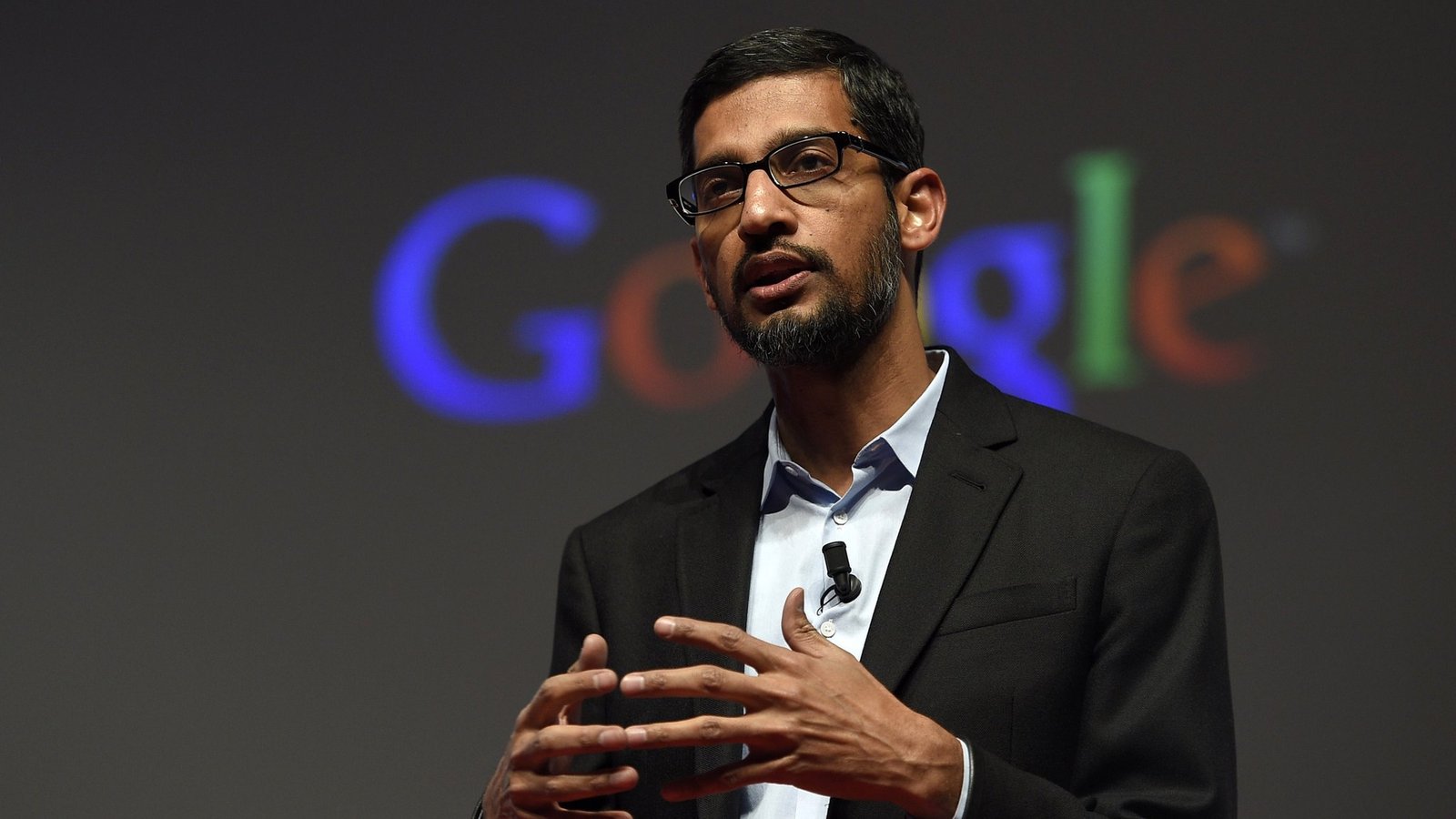
While economists debate whether this marks the first real inflection point of the AI era, Google CEO Sundar Pichai is attempting to moderate the tone. In two recent interviews, he acknowledged the disruption but argued that focusing on catastrophic outcomes distracts from how the workforce will adapt.
A Corporate Reckoning Fueled by Automation Pressures
Executives across finance, retail, technology and logistics have begun to frame efficiency through the lens of machine capability. Klarna CEO Sebastian Siemiatkowski said in May that a combination of software improvements and AI allowed the company to shrink its workforce by 40 percent. Duolingo, known for its playful brand and global user base, said it no longer requires contractors to perform translation-related work that generative AI now handles with growing fluency. Salesforce cut 4,000 customer support positions in September after internal tests showed AI systems could perform “half of the work” typically done by its service teams.
Taken together, these cuts suggest corporate leaders are entering a new phase of experimentation — one in which AI tools are being embedded not just as productivity boosters, but as structural replacements. Analysts say the speed of AI adoption is compressing long-predicted labor market transitions into a narrow window.
“It is one thing to talk about automation in the abstract,” one labor economist noted. “It is another to watch company after company say out loud that AI is doing enough of the job to justify downsizing.”
Pichai’s Counterargument: Jobs Will Shift, Not Disappear
In a wide-ranging interview with the BBC, Pichai sought to counter the narrative of inevitable mass unemployment. AI, he said, will certainly eliminate certain roles — particularly those built on repetitive or entry-level tasks — but it will also “evolve and transition” jobs into new forms of work that today are difficult to imagine.
“It’s pointless to think too far ahead,” Pichai said, offering a measured but optimistic outlook. He argued that AI will soon be capable of performing complex actions autonomously, acting as an agent for users. That prospect, he suggested, should be seen not as a threat but as an opportunity for workers to shift toward more creative, judgment-driven and strategic responsibilities.
Pichai even joked about AI potentially targeting his own job. But the remark was less about humor than about defusing anxieties surrounding the human future inside AI-enabled workplaces.
Inside Google, a More Nuanced Picture Emerges
Even as global companies trim headcount in response to automation, Pichai maintains that Google is preparing to expand. In an interview with Bloomberg earlier this year, he described AI not as a mechanism for reduction, but as “an accelerator,” allowing teams to build products faster by eliminating tedious engineering tasks.
“I expect we will grow from our current engineering phase,” he said, adding that productivity gains from AI create the need for additional workers, not fewer. Engineers, he argued, are becoming more capable as AI automates code reviews and supports early-stage product design.
Still, Pichai acknowledged that fears about displacement are not misplaced. Asked about comments from Anthropic CEO Dario Amodei — who recently warned that AI could disrupt half of all entry-level white-collar jobs in as little as five years — Pichai said, “I respect that,” and stressed that public debate over these risks is essential.
A Workforce on Edge as the AI Transition Speeds Up
The conflicting signals emerging from corporate America — aggressive layoffs on one hand, productivity-driven optimism on the other — have put workers in a state of ambiguity. Employment researchers say the shift is happening faster than previous technological cycles, leaving many mid-career professionals uncertain whether they will be retrained, replaced or redeployed.
For now, Pichai’s view represents one of the most influential voices in AI policy. But even he concedes that the next few years will test the flexibility of workers and institutions alike.
“People will need to adapt,” he said. What remains unclear is how quickly — and at what cost — that transition will unfold for the millions whose industries may be redefined long before adequate safeguards or retraining systems are in place.
