

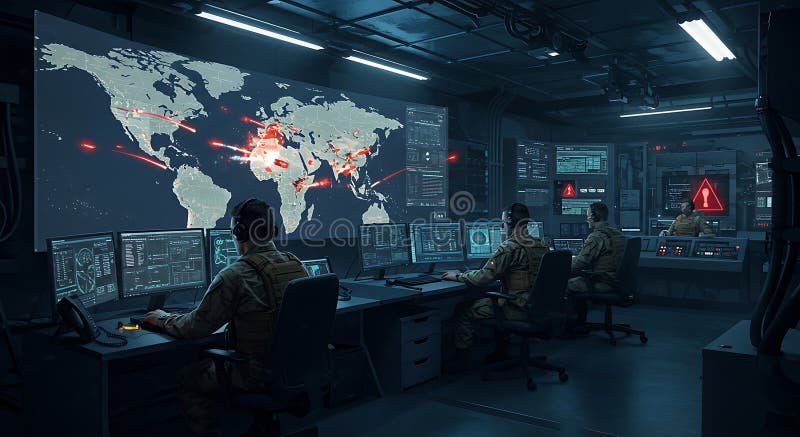

NEWDELHI: Military conflict could break out in space within the next five years, raising serious concerns that attacks on satellites might cripple essential modern services. Experts warn that escalating activities by the United States, Britain, Russia, and China have heightened the risk of confrontation in orbit. Any offensive action targeting communications or navigation satellites threatens to disrupt GPS networks, internet access, television broadcasting, weather tracking, air transport, and banking operations, placing basic civilian infrastructure at immediate risk of collapse. In response, British space enterprises are developing tools to track hostile satellites and counter orbital threats, with the UK Ministry of Defence enlisting specialized firms like Astroscale and Orbit Fab. Meanwhile, American intelligence agencies suspect that parts of a nuclear system accompanied Russia’s Cosmos-2553 satellite launch in 2022.
Five Operational Tactics Threaten Orbital Infrastructure
Strategic disruption of space assets relies primarily on five recognized methods of attack. The first involves kinetic anti-satellite missiles launched to shatter target orbiters. China conducted such an interception against its own weather satellite in 2007, while the United States, Russia, and India have demonstrated comparable strike capabilities. These violent explosions scatter clouds of orbital debris that endanger innocent operational platforms. A second method centers on jamming vital radio frequencies to sever incoming signals, a tactic that disrupted GPS navigation for naval ships and aircraft during the Russia-Ukraine war.
The third threat stems from signal spoofing, where hostile forces transmit fake location or timing data to deceive navigation systems into severe navigational errors. A fourth approach targets ground operations through cyber assaults against computing networks and command installations. Such digital incursions allow adversaries to sever craft communications, intercept proprietary data, or compromise flight operations. Finally, proximity operations enable specialized spacecraft to shadow target satellites at close range. While China, Russia, and the United States have displayed close-approach capabilities for surveillance, the identical maneuvering technique allows combatants to intervene directly against rival space vehicles during wartime.
Major Powers Accelerate Space Warfare Preparedness
Global powers are rapidly formalizing their military structures to dominate and secure low-Earth and geostationary orbits. The United States Space Force confirmed that five Chinese satellites recently rehearsed close-proximity combat drills while maneuvering in dense formation. Alongside these exercises, Beijing is refining robotic recovery equipment capable of grappling, manipulating, and capturing objects from orbit. Concurrently, Russian military orbiters continue to track and close in on foreign spacecraft. To protect domestic space assets, the British Royal Air Force created a dedicated space unit in September, while the European Space Agency increasingly integrates defense and security dimensions into orbital missions.
Advanced Counter-Space Technologies Enter Active Testing
Space-faring nations are actively exploring diverse arsenals beyond conventional missiles to neutralize competing orbital systems. Modern laboratories are testing focused directed-energy lasers, electromagnetic wave emitters, and specialized robotic grapplers tailored to disable or physically capture enemy spacecraft. Alongside successful anti-satellite missile demonstrations, these evolving non-kinetic weapons provide states with multiple discreet avenues to blind or paralyze vital orbital communications without inevitably producing catastrophic fields of permanent debris. As critical financial networks and transport systems grow inextricably bound to satellite timing standards, protecting these vulnerable assets against space warfare has emerged as an urgent priority for major governments.
Follow for daily updates on cybercrime, corporate fraud, DFIR, hacking, investigations, and digital forensics
