
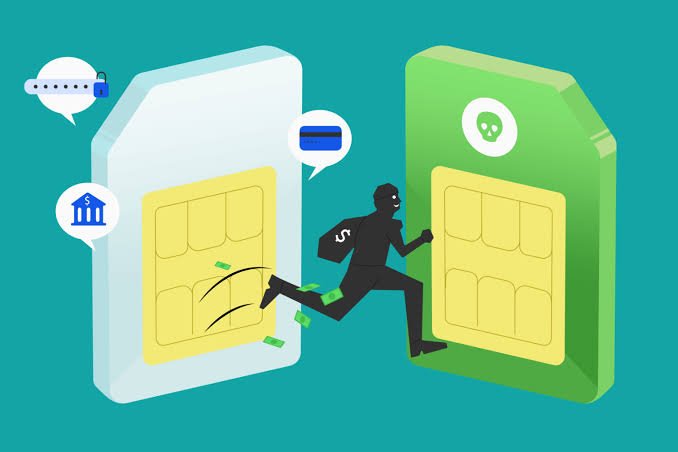

New Delhi | Tech & Finance Desk: In an era where your mobile number is your digital identity, the humble SIM card has become a powerful gateway to your personal and financial life. From bank OTPs and UPI verifications to two-factor authentication codes, your number is now a key to your money. And that’s precisely what cybercriminals are exploiting through a rising threat — the SIM Swap Fraud.
This sophisticated scam, now being reported across multiple cities in India, involves fraudsters duplicating your SIM card and taking control of your phone number — often without you realizing it, until it’s too late.
What Is SIM Swap Fraud?
In a SIM Swap Scam, cybercriminals trick your mobile operator into issuing a duplicate SIM card of your number. They often claim that the “original SIM is lost or damaged.” Once the new SIM is activated, the fraudsters gain control over all your calls, messages, and most critically — your OTPs and banking alerts.
With that, your phone essentially becomes their key to your bank account. Using stolen personal details, they can reset passwords, approve online transactions, and drain funds from your accounts in minutes.
How the Scam Works — Step by Step
The SIM swap fraud doesn’t start with your telecom provider — it starts with your personal data.
- Data Harvesting: Scammers first collect your sensitive information through phishing emails, fake KYC calls, or malware-infected links. Details like your name, date of birth, Aadhaar, PAN, or bank account numbers are enough to impersonate you.
- Impersonation: Armed with this data, they contact your telecom operator’s customer service, claiming your SIM is lost or damaged. In some cases, they even use forged ID proofs or bribe insiders at retail outlets to fast-track the process.
- SIM Replacement: Once the telecom provider activates the new SIM, your existing SIM stops working. Suddenly, you’re unable to make calls, send messages, or receive OTPs.
- Financial Takeover: The moment they gain control, scammers initiate transactions, reset passwords, and transfer funds using your number. Because all alerts and OTPs now reach their device, you remain in the dark until the money is gone.
The Warning Signs
Experts say victims often miss early red flags. Here are a few common indicators that your SIM might have been compromised:
- Your phone suddenly loses network or shows “No Service” for an extended period.
- You stop receiving calls or SMS, especially OTPs from your bank or UPI apps.
- You get notifications of unrecognized transactions or login attempts.
If you experience any of these, contact your mobile operator immediately and request them to block any duplicate SIM activity.
How to Protect Yourself from SIM Swap Fraud
Cybersecurity experts suggest a mix of digital hygiene and vigilance to stay safe:
- Act Fast if Network Drops: If your phone suddenly loses signal without reason, call your service provider from another number immediately.
- Never Share Sensitive Data: Avoid sharing Aadhaar, SIM number, or bank details over calls, messages, or social media. Legitimate companies will never ask for these details.
- Beware of KYC Scams: Fraudsters often impersonate telecom officials or banks under the pretext of “updating KYC.” Always verify the caller’s authenticity.
- Monitor Your Bank Alerts: Check your bank and credit card statements regularly. Report suspicious transactions instantly.
- Set Transaction Limits: Most banks allow you to set daily transfer limits or lock certain types of transactions through their app — use those tools proactively.
- Use Multi-Factor Authentication (MFA): Enable email or app-based authentication instead of relying solely on SMS-based OTPs for critical accounts.
Expert Insight: “Your SIM Is Now Your Bank Key”
According to Dr. Triveni Singh, renowned cybercrime expert and former IPS officer, SIM swap is part of a larger trend in digital identity theft.
“Your mobile number has become your financial fingerprint. Once fraudsters gain access, they can bypass nearly every security layer built around SMS-based OTPs. Awareness and immediate action are your best defenses,” he said.
Singh further emphasized the need for telecom operators to strengthen SIM replacement verification using biometrics or multi-level approval systems.
Bottom Line
SIM Swap fraud represents the next evolution of financial cybercrime — exploiting the weakest link in your digital life: your mobile number.
As financial transactions move increasingly online, it’s vital for individuals to treat their SIM not as a communication tool, but as a security asset — one that needs the same protection as a bank PIN or password.
In today’s digital economy, vigilance is your first firewall.
