
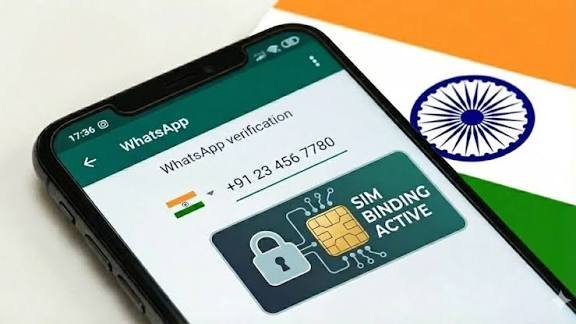

New Delhi: The Central government has declined to extend the deadline for implementing mandatory “SIM binding” rules for messaging platforms, making it clear that from March 1, 2026, major messaging apps will not function on mobile devices without an active SIM card. The regulation will apply to WhatsApp, Telegram, Signal, as well as Snapchat, ShareChat, JioChat, Arattai and Josh.
According to the government, the move is aimed at curbing cybercrime and digital fraud. Under the new framework, a user’s messaging account will be directly linked to the physical SIM card registered with the mobile number. If the SIM card is removed from the device, the associated messaging applications will automatically become inactive.
FCRF Launches Flagship Certified Fraud Investigator (CFI) Program
What is SIM Binding?
SIM binding is a security mechanism under which a messaging app account is locked to the actual SIM card linked to the registered mobile number. In simple terms, the account will function only when the registered SIM card is inserted in the device.
Officials argue that cyber fraudsters often clone mobile numbers or misuse one-time passwords (OTPs) to gain access to accounts on secondary devices. With SIM binding in place, such unauthorized login attempts are expected to be significantly restricted.
What Will Change from March 1?
Under the new rules, removing the SIM card from a phone will immediately disable messaging apps linked to that number. To restore access, the same registered SIM card must be reinserted into the device.
In addition, restrictions have been placed on desktop and web-based logins. For instance, platforms such as WhatsApp Web will remain active for a maximum of six hours per session. After that, users will be automatically logged out and required to verify their credentials again.
Government sources say the provision is designed to reduce fake logins, unauthorized access and misuse of messaging platforms for criminal activities.
Why Is This Step Considered Necessary?
In recent years, the rapid growth of digital payments and online communication has been accompanied by a sharp rise in cyber fraud cases. Fake investment schemes, digital arrest scams, banking fraud and social engineering attacks have frequently been executed through messaging applications.
Investigating agencies have often faced difficulties tracing fraudsters using virtual or illegally obtained numbers. By mandating SIM binding, authorities aim to ensure that every active account is tied to a verified, physical SIM card, thereby improving traceability and accountability.
What Does It Mean for Users?
For regular users, day-to-day chatting and calling will remain largely unaffected, provided their SIM card remains active in the device. However, individuals who rely on Wi-Fi-only usage or frequently switch devices without keeping the SIM inserted may need to adjust their usage patterns.
Technology experts believe the measure may appear stringent but could strengthen platform security and enhance trust in digital communication systems. In the coming months, its effectiveness in balancing user convenience with cybersecurity objectives will become clearer. For now, the March 1 deadline stands firm, with the government indicating that no relaxation in compliance will be granted.
