
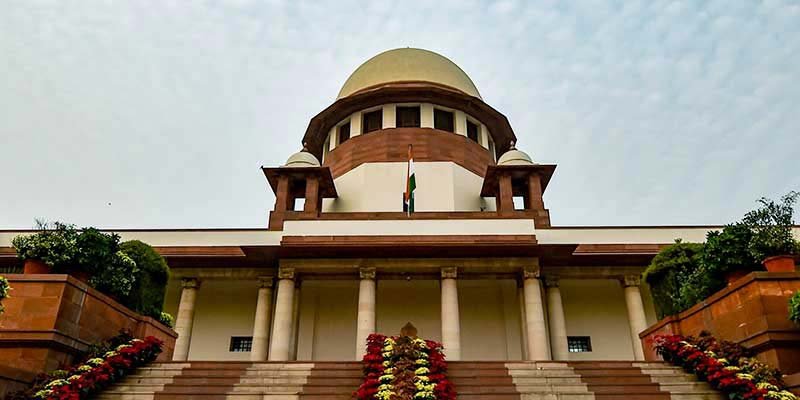
The Supreme Court has taken a firm stance in a disciplinary case involving a Central Industrial Security Force (CISF) employee. The employee had been removed from service for eleven days of unauthorized absence (AWOL), while the High Court had granted him relief. During the hearing of a Special Leave Petition (SLP) filed by the central government challenging the High Court order, the Supreme Court dismissed the petition with a fine of ₹25,000.
Justice Nagarathna’s Strong Remarks on Discipline
Justice B.V. Nagarathna clarified that this case concerns absence and indiscipline and must be treated seriously. She remarked, “We have been repeatedly saying—pendency, pendency. Who is the biggest litigator? The government. The High Court granted relief, yet the central government brought this to the Supreme Court. This removal and termination are not disproportionate actions.”
The court further observed that this case is not limited to the fine and termination of the employee. It also highlights the government’s persistent participation in judicial processes and its tendency to keep cases pending. Justice Nagarathna specifically referenced the Supreme Court Bar Association (SCBA) national conference, where she pointed out that continuous litigation by government departments contributes significantly to judicial backlog.
FCRF Launches Premier CISO Certification Amid Rising Demand for Cybersecurity Leadership
She added, “We take the SCBA conference very seriously. It was not just about attending a resort and returning. We prepared, did our homework, and presented our views. This is worth remembering.”
Court’s Stance on Employee’s Breach
During the hearing, Assistant Solicitor General S.D. Sanjay stated that the employee’s absence was only eleven days, yet the court deemed it a serious breach of discipline and violation of service rules, justifying both the fine and termination.
Implications for Govt Departments and Discipline
Experts say the verdict sends a clear message to government departments that maintaining discipline is mandatory, regardless of High Court orders or relief granted. Senior officers and employees must understand that disciplinary standards in armed and security forces are stringent, and any deviation is unacceptable.
The court also made it clear to the central government that using litigation to prolong cases and challenge the status of indisciplined employees only increases judicial pendency. The ruling serves as a warning to government departments that practical and timely administrative action is the best approach.
The decision has received positive feedback on social and online platforms. Legal experts have described it as a step where the judiciary emphasizes the importance of discipline and adherence to rules. They noted that it will serve as an example for employees and departments that attempt to bypass court orders or ignore service regulations.
This ruling also underscores that the Supreme Court will no longer tolerate the government’s strategy of filing repeated petitions merely to keep cases pending. The fine and dismissal order convey that government participation in the judicial process must be responsible and disciplined.
In conclusion, the termination of the CISF employee and imposition of a fine sends a strong message to both government employees and departments about discipline and compliance with judicial directives. The verdict also highlights that the Supreme Court is serious about reducing judicial pendency and maintaining strict discipline in security forces and government services.
