
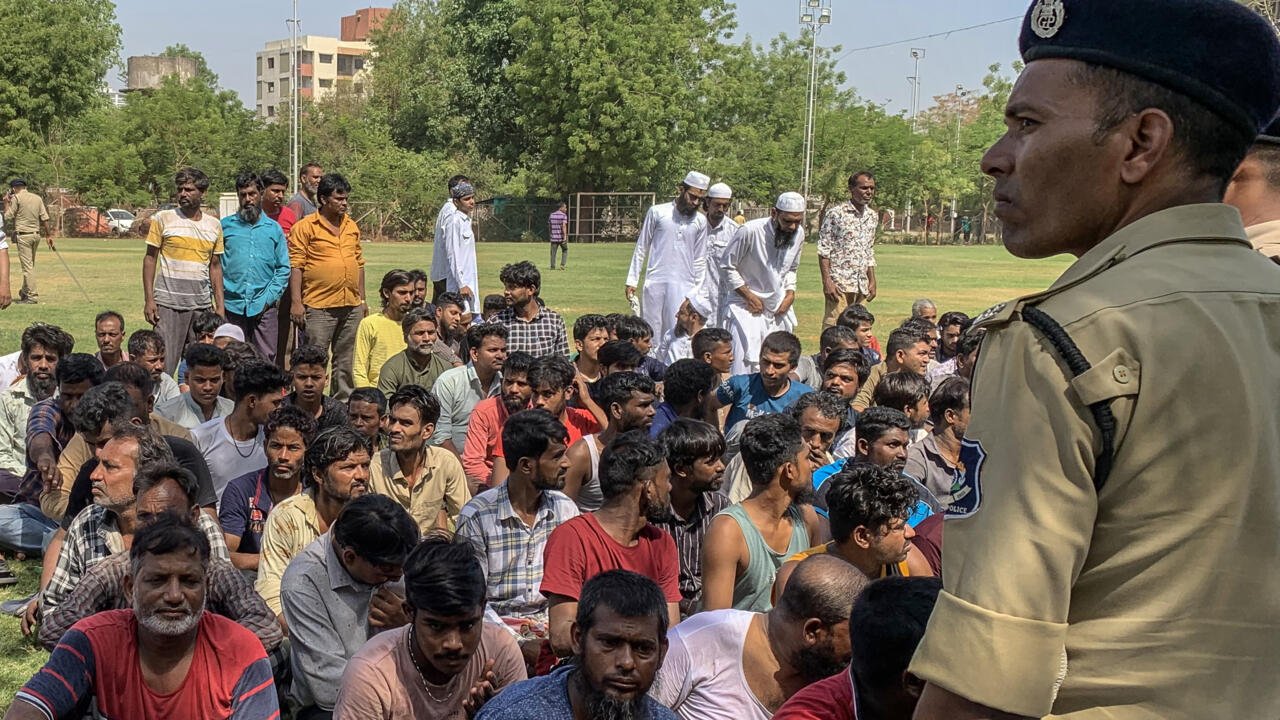
New data presented in Parliament has revealed a significant shift in global deportation trends involving Indian nationals. According to figures tabled by the Ministry of External Affairs (MEA) in the Rajya Sabha, more than 24,600 Indian citizens were deported from 81 countries during 2025. Contrary to popular perception, it was Saudi Arabia, not the United States, that accounted for the highest number of deportations.
MEA data shows that over 11,000 Indians were deported from Saudi Arabia in the 12-month period. In comparison, about 3,800 Indians were deported from the United States. While the US figure represents the highest number of deportations from that country in the last five years, it remains significantly lower than the numbers recorded from Saudi Arabia.
Tighter scrutiny in the United States
Officials and migration experts attribute the rise in deportations from the US to increased scrutiny of visa status, work authorisation, documentation and overstays. Most Indians deported from the US in 2025 were reportedly employed in the private sector.
Within the US, Washington DC (3,414 deportations) and Houston (234) emerged as the main centres from where Indian nationals were sent back. Analysts say the figures reflect stricter enforcement rather than a sudden spike in illegal migration.
A different pattern in Gulf countries
Experts note that deportations from Gulf countries follow a distinct pattern compared to Western nations. According to Bheema Reddy, vice-chairman of the Telangana government’s NRI Advisory Committee, countries such as Saudi Arabia, the United Arab Emirates and Bahrain host a large population of Indian migrant workers employed in construction, caregiving and domestic work.
“Most of these are low-skilled workers who migrate through agents. In many cases, attempts to earn extra money or lack of awareness about local laws result in minor violations, which eventually lead to deportation,” Reddy said.
Overstays and illegal work dominate reasons
MEA officials said the most common grounds for deportation from Gulf countries include:
- Overstaying visa or residency permits
- Working without a valid work permit
- Violations of local labour regulations
- Absconding from employers
- Involvement in civil or criminal cases
Apart from Saudi Arabia, significant numbers of Indian deportations were also recorded from the UAE (1,469), Malaysia (1,485) and Thailand (481).
Myanmar and Cambodia: the cyber slavery link
A more disturbing trend has emerged from countries such as Myanmar (1,591 deportations) and Cambodia (305). Experts say many of these cases are linked to “cyber slavery”—a growing form of transnational crime.
Reddy explained that these countries have become hubs for a multi-billion-dollar cybercrime industry, where Indians are lured with promises of high-paying jobs. “Once there, many are trapped, forced to participate in illegal online operations. When law enforcement cracks down, they are detained and deported,” he said.
Student deportations also on the rise
The MEA data also highlights deportations of Indian students. In 2025, the highest number of Indian students were deported from the United Kingdom (170), followed by Australia (114), Russia (82) and the US (45).
Officials cited visa violations, work beyond permitted hours and documentation issues as common reasons.
Need for awareness and legal compliance
Naga Bharani, a representative of the Telangana Overseas Manpower Company, stressed the importance of educating migrant workers before they leave India. “People must be clearly informed about visa timelines, local laws and labour regulations. There is always an option to apply for visa extensions, but many are unaware or ignore deadlines,” she said.
The MEA figures underline that challenges faced by Indian migrants are not confined to the United States alone. Large-scale labour migration to Gulf countries, dependence on agents, lack of legal awareness and the growing menace of cybercrime networks are together fuelling deportations. Experts warn that without better awareness, legal migration pathways and stricter monitoring, the numbers are unlikely to decline in the coming years.
