
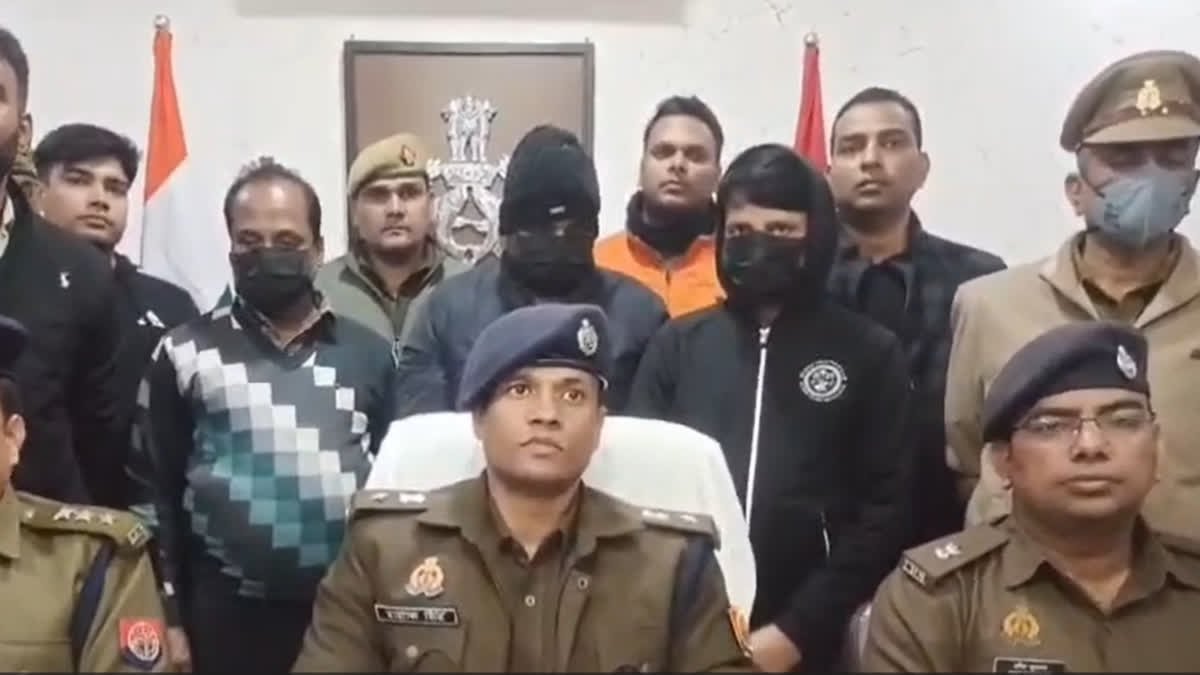

LUCKNOW: In a modest office in Lucknow, investigators say, a years-long trade in counterfeit academic credentials flourished quietly—feeding a parallel job market where degrees could be bought, verified, and deployed with unsettling ease.
A Racket Uncovered in Plain Sight
The arrests came after a police raid in Lucknow, where officers say they dismantled a network that sold forged university degrees and mark sheets across several Indian states. Three men—Satyendra Dwivedi of Ayodhya, Akhilesh Kumar of Unnao, and Saurabh Sharma of Lakhimpur Kheri—were taken into custody, accused of running what police describe as a highly organized forgery operation.
Investigators say the group produced counterfeit degrees and certificates bearing the names and insignia of at least 25 universities. Among those cited by police were Swami Vivekanand Subharti University, Kalinga University, and Sabarmati University. The documents, officials said, were sophisticated enough to pass cursory checks by employers, particularly in the private sector.
The Mechanics of a Counterfeit Economy
According to the police, the operation relied on an assembly line of deception. Raids led to the recovery of more than 900 forged degrees, 15 fake seals, multiple letterheads, and six laptops believed to have been used to design and print the documents. Officers said the gang customized certificates to suit the educational background—or lack thereof—of buyers.
Prices varied by qualification. A Bachelor of Arts or Master of Arts degree could be procured for ₹15,000 to ₹25,000. Engineering and management degrees fetched between ₹50,000 and ₹1 lakh. A PhD certificate, investigators said, cost as much as ₹4 lakh. Police estimate the racket had been active since 2021, quietly servicing a steady demand from job seekers looking to bypass formal education.
In a striking detail, officers said the alleged mastermind, Mr. Dwivedi, himself holds a doctorate in sociology—an academic credential that, investigators suggest, may have lent credibility and technical know-how to the operation.
Following the Paper Trail to the Buyers
The inquiry has now widened beyond the sellers. Police say they are compiling a database of roughly 1,500 individuals who purchased the fake degrees, many of whom used the documents to secure employment. “Strict legal action will be taken against them as well,” warned Shashank Singh, the Deputy Commissioner of Police (East), in a briefing.
Officials acknowledge the challenge ahead: tracing how widely the forged credentials circulated and determining the extent to which employers failed—or declined—to verify academic claims. The potential fallout is significant. Thousands of jobs could be affected if credentials are invalidated, raising questions about oversight in hiring practices across sectors.
A Broader Question of Trust
The case has unsettled educators and employers alike, exposing vulnerabilities in systems meant to safeguard academic and professional standards. Police officials emphasized that the recovery of fake seals and letterheads from reputed institutions points to a deeper problem—one where the symbols of legitimacy themselves can be replicated with alarming precision. For now, authorities say, the focus remains on documentation, verification, and accountability, as the full scope of the network comes into view.
