
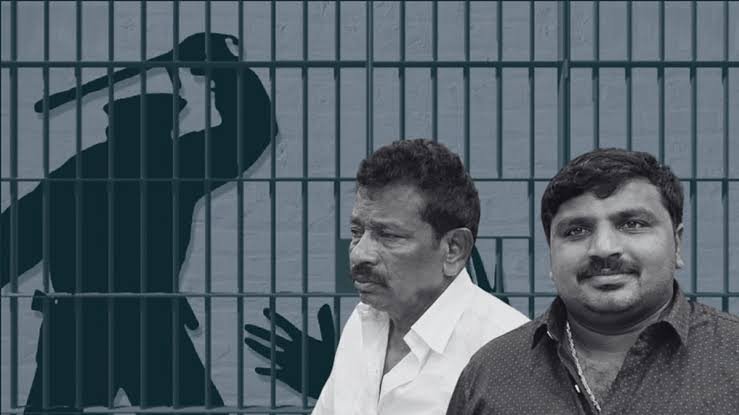
The Madurai Bench of the Madras High Court has delivered a landmark judgment by sentencing nine police officers to death for the custodial torture and murder of a father and son in 2020. This historic verdict comes nearly six years after the deaths of businessman P. Jayaraj and his son J. Bennix, a case that shocked the national conscience and triggered a massive conversation regarding police accountability. The court categorized the incident as a “rarest of rare” case, citing the extreme cruelty and deliberate abuse of authority by officers who were legally entrusted with the protection of citizens and the enforcement of the law.
A Prolonged Judicial Search for Justice
The case underwent a lengthy and rigorous legal process that spanned nearly six years before reaching its final conclusion. Initial trial proceedings were conducted at the First Additional District and Sessions Court, where Judge G. Muthukumaran presided over the evidence. The court found all nine accused police officers guilty under murder charges and other serious penal provisions. During the delivery of the verdict, the court emphasized that the actions of the officers went far beyond a conventional homicide. The judicial findings highlighted the case as a grave example of inhuman cruelty, marking it as one of the most significant legal rebukes of police misconduct in the history of Tamil Nadu.
The investigation was marked by its complexity and the high level of public scrutiny that followed every development. Given the gravity of the allegations and the public interest involved, authorities eventually handed the case over to the Central Bureau of Investigation for a thorough probe. The CBI investigation played a critical role in piecing together the events that took place within the confines of the police station, providing the forensic and testimonial evidence required to secure a conviction in a case where the perpetrators were themselves members of the law enforcement machinery.
The Brutality of the Sathankulam Incident
The tragic events unfolded in June 2020 in the Sathankulam region of the Tuticorin district. On June 19, 2020, Jayaraj and his son Bennix were taken into custody by local police officers. The stated reason for their detention was an alleged violation of COVID-19 lockdown regulations, specifically for keeping their shop open beyond the permitted hours. What began as a routine enforcement of lockdown protocols quickly descended into a night of unprecedented violence. Investigations revealed that the father and son were held overnight at the station and subjected to severe physical assault.
Medical reports later detailed the harrowing extent of the violence inflicted upon the two men. The documentation indicated that both victims suffered extensive internal injuries and massive blood loss, which led directly to their deaths shortly after their time in custody. The level of brutality documented in the medical and investigative reports shocked not only the local community but the entire country, leading to a widespread demand for transparency and justice. The details of the assault served as the primary evidence for the court’s determination that the officers had acted with a level of malice that justified the highest penalty under the law.
National Outrage and Institutional Accountability
The news of the custodial deaths sparked immediate and widespread public anger across India. Citizens, civil society groups, and various human rights organizations questioned the conduct of the police officers involved, raising fundamental concerns about the safety of individuals in state custody. The case became a focal point for demands for systemic reform and strict action against those who use their positions of power to commit acts of violence. The sentencing of nine officers to death is seen by legal experts as a strong and clear message against the abuse of power within the police force, intended to serve as a deterrent against future misconduct.
For the families of P. Jayaraj and J. Bennix, the Madras High Court verdict represents the culmination of a tireless search for accountability. By applying the “rarest of rare” doctrine, the judiciary has signaled that the torture and murder of citizens by the state’s own enforcement officers is an offense that the legal system will treat with the utmost severity. The judgment stands as a significant milestone in the Indian judicial landscape, reaffirming the principle that no individual, regardless of their rank or uniform, is above the law.
