

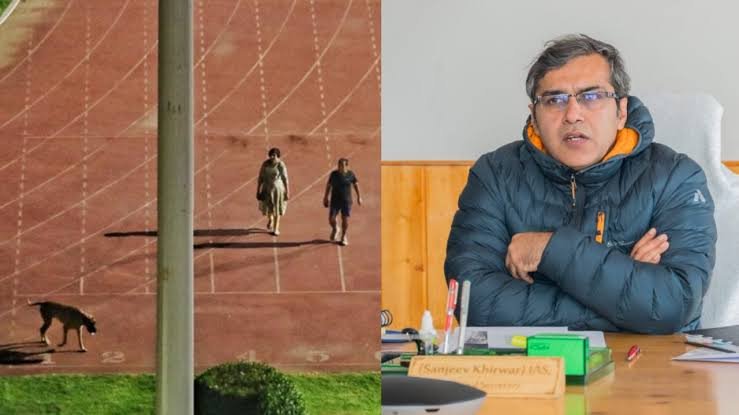

NEW DELHI: Once at the center of a controversy that came to symbolize public anger over privilege and access, a senior Indian civil servant has returned to one of the capital’s most consequential municipal posts, just as the city’s finances and administration enter a delicate phase.
A Return to the Capital’s Civic Helm
In New Delhi this week, the Union Home Ministry reinstated Sanjeev Khirwar as commissioner of the Municipal Corporation of Delhi, placing a familiar and once-embattled administrator back in charge of India’s largest urban civic body. The move followed a brief transfer to Ladakh after a disagreement with the city’s elected government, a row that again exposed the fragile balance of power between New Delhi’s bureaucracy and its political leadership.
Mr. Khirwar takes over at a moment of administrative strain. The Municipal Corporation is preparing to present its annual budget while confronting long-standing financial shortfalls and operational challenges across sanitation, staffing, and basic urban services. His appointment comes just days after Ashwani Kumar, the previous commissioner, was transferred to Jammu and Kashmir.
Certified Cyber Crime Investigator Course Launched by Centre for Police Technology
The Shadow of a 2022 Controversy
Mr. Khirwar’s return also revives memories of a controversy that, in 2022, briefly made him a national figure. That year, he was moved out of the capital after allegations surfaced that athletes training at Thyagaraj Stadium were asked to vacate the grounds early so that he could walk his dog.
At the time, Mr. Khirwar was serving as Delhi’s principal secretary (revenue). Athletes and coaches told reporters that training sessions, which had previously continued until late evening under floodlights, were curtailed, disrupting practice routines. The episode drew sharp criticism, crystallizing public resentment toward perceived misuse of authority by senior officials.
Official Denials and Administrative Fallout
Mr. Khirwar denied the allegations, calling them “absolutely incorrect.” He acknowledged that he sometimes walked his pet at the stadium but said the activity did not interfere with sports training. Still, the controversy widened beyond the individual case.
In response, Delhi’s then chief minister, Arvind Kejriwal, ordered all state-run sports facilities to remain open to athletes until 10 p.m., a directive meant to underline access and fairness in public infrastructure. The order was widely interpreted as a rebuke to bureaucratic overreach.
Soon after, Mr. Khirwar was transferred out of Delhi, effectively sidelined from the city’s administrative core.
A Career Framed by Transfers and Tensions
A 1994-batch officer of the Arunachal Pradesh–Goa–Mizoram and Union Territories cadre, Mr. Khirwar has served across multiple sensitive postings. His wife, Rinku Dugga, is also an Indian Administrative Service officer. Colleagues describe him as an experienced but firm administrator, shaped by years in revenue and municipal roles.
His reinstatement underscores the cyclical nature of bureaucratic careers in India’s capital, where senior officials often move in and out amid shifting political winds. As commissioner, Mr. Khirwar now presides over an institution tasked with managing a city of more than 20 million people—its roads, waste, schools, and public health systems—under intense public and political scrutiny
