

NEW DELHI: A WhatsApp profile bearing the Vistara logo, a forged letter of intent, and a trail of QR codes formed the architecture of a small but telling deception one that reflects how job scams in India have grown more polished, personal, and difficult to detect.
A Familiar Brand, Repurposed for Deceit
On the surface, the communications appeared routine: an email promising a job opportunity, followed by messages on WhatsApp from an account saved as “AIR VISTARA,” complete with the airline’s logo. For the complainant, Ritu Singh, the sequence carried the credibility of corporate hiring in a competitive job market.
But investigators say the branding was counterfeit. The email address, messages, and documents including a fabricated letter of intent were part of a carefully assembled impersonation designed to extract money under the guise of job processing fees, uniforms, and other formalities. Such scams, cybercrime officials note, increasingly rely on the visual and linguistic cues of legitimacy rather than overt pressure or threats.
A case under FIR No. 104/25 was registered at the Cyber Police Station in Shahdara, Delhi, invoking Section 318(4) of the Bharatiya Nyaya Sanhita (BNS), after preliminary inquiry found sufficient grounds to proceed.
The Man Behind the Messages
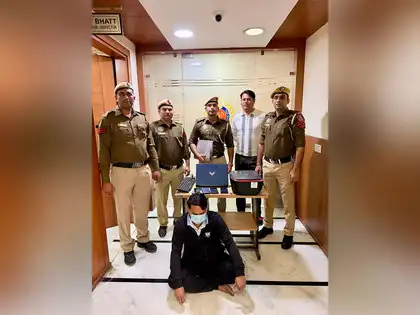
Police traced the operation to Aditya World City in Ghaziabad, Uttar Pradesh, where they arrested 35-year-old Rohit Mishra. According to investigators, a Redmi 10 mobile phone recovered from his possession contained key digital evidence, including the mobile number allegedly used to communicate with the complainant.
Authorities also linked the phone to an Axis Bank account believed to have been used to receive and settle the cheated funds. Multiple QR codes and forged documents were recovered during the investigation, pointing to a method that blended digital convenience with document fraud.
The arrest, officials said, was the result of tracking both the communication trail and the financial endpoints—a process that has become central to cybercrime policing as scams increasingly migrate across platforms and jurisdictions.
A Pattern, Not an Isolated Case
Investigators describe Mishra as a repeat offender. Police records show two prior cases registered against him at the Crime Branch in Delhi, including FIR No. 185/18 under sections related to cheating, forgery, criminal conspiracy, and identity misuse, as well as FIR No. 277/19. These cases, officials say, suggest involvement in a broader, organized cyber-fraud network rather than a one-off scheme.
“The techniques are modular,” a senior officer said, speaking on condition of anonymity. “Brand impersonation, fake documentation, payment funnels these can be reused across different scams with minor adjustments.”
Such networks often exploit economic uncertainty and the aspirational pull of jobs linked to well-known companies, particularly in aviation, technology, and government-linked sectors.
Following the Digital and Financial Trail
The investigation remains ongoing, with police analyzing seized digital evidence to map wider linkages and identify potential associates. Authorities are also tracing the money trail in an effort to recover the cheated amount and determine whether similar transactions were routed through the same accounts.
