
Follow us on Google News

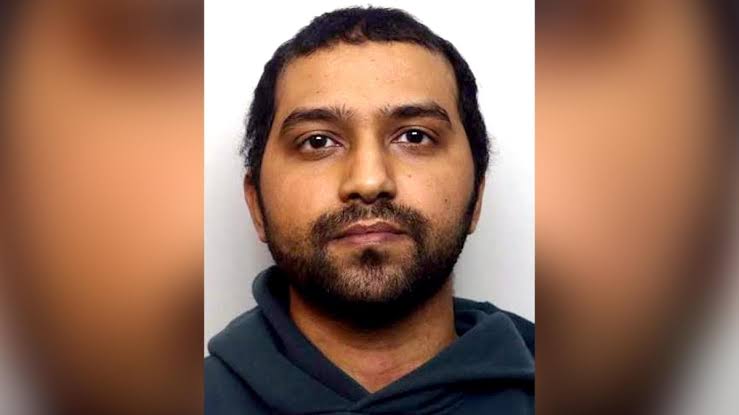
A 62-year-old retired lawyer from New York has allegedly lost nearly ₹4 crore of his retirement savings in a digital arrest scam after cybercriminals falsely accused him of financing the Pahalgam terror attack.
Atul Talwar, who had returned to India after a three-decade career representing labour unions in the United States, was subjected to prolonged surveillance through WhatsApp by individuals impersonating Indian law enforcement officers.
The fraudsters allegedly persuaded him to liquidate his retirement investments and transfer money through Indian bank accounts and cryptocurrency wallets under the pretext of financial verification by the Reserve Bank of India (RBI).
Talwar has reported the incident to Noida Police and the Federal Bureau of Investigation (FBI) in the United States, bringing an international dimension to the investigation.
FCRF’s Chief AI Officer Certification Returns on November 14 to Prepare Future AI Leaders
Fraudsters Use Pahalgam Terror Attack To Create Fear Of Arrest
The ordeal began on October 16 when Talwar received a call from someone claiming to represent Mumbai’s Colaba Police Station. The caller alleged that his Aadhaar details had been linked to the Pahalgam terror attack.
The accusations subsequently escalated. The fraudsters claimed that a bank account opened in Talwar’s name had been used to transfer ₹53 crore to a terrorist and that he had received a commission of ₹5 crore.
They sent him photographs of the attack’s victims and presented purported evidence of his involvement in terrorism-related activities.
An individual posing as a senior CBI official also sent Talwar a purported confidentiality agreement.
The intimidation was accompanied by continuous WhatsApp surveillance, which made it difficult for him to seek independent advice or discuss the allegations with others.
The use of terrorism accusations represents a particularly coercive form of digital arrest fraud. By threatening prosecution for serious offences, criminals attempt to convince victims that immediate cooperation is their only option.
They may also claim that contacting relatives, lawyers or local police would violate the confidentiality of an ongoing investigation.
Such restrictions have no legal basis when imposed by unknown callers through messaging applications. Indian law does not recognise digital arrest as a legitimate procedure.
Retirement Savings Diverted Through Banks And Cryptocurrency
The fraudsters allegedly instructed Talwar to surrender almost all his financial assets for purported verification by the RBI.
He was persuaded to break fixed deposits in India before the operators turned their attention to his retirement investments in the United States.
Under their instructions, Talwar liquidated assets held in an individual retirement account and transferred funds through a newly opened Coinbase cryptocurrency account.
The money was converted into Ethereum and transferred to a digital wallet specified by the suspected criminals.
Talwar recalled receiving fraud warnings from Coinbase while attempting certain transactions. However, having already transferred substantial amounts, he feared that refusing further payments would jeopardise the recovery of his savings.
The circumstances illustrate how criminals can exploit a victim’s growing financial commitment to sustain a fraudulent operation.
Once someone has transferred a large amount, the prospect of losing that money may make subsequent demands appear necessary to complete an alleged verification process.
The use of cryptocurrency can further complicate financial investigations.
Unlike conventional bank transfers, cryptocurrency transactions generally cannot be reversed by a financial intermediary after they have been completed.
Investigators can examine public blockchain transaction records, but establishing the identity of wallet operators and recovering assets may require cooperation from cryptocurrency exchanges, overseas authorities and other service providers.
Noida Police Seize ₹4 Lakh As Investigation Extends Overseas
Talwar realised that he had been deceived after the fraudsters abruptly stopped responding on November 6.
A Noida cyber police officer subsequently confirmed that investigators had seized ₹4 lakh from a suspected mule account that had received ₹18 lakh from Talwar’s Indian bank accounts.
However, police are still determining whether the seized amount belongs to Talwar or another victim whose money may have passed through the same account.
Mule accounts are frequently used by cybercrime networks to receive and transfer money obtained through fraudulent activities.
Investigators must distinguish the legitimate owner of the account from individuals controlling its transactions. They must also establish whether funds belonging to multiple victims have been combined.
Talwar’s complaint to the FBI could assist efforts to examine the movement of money through American financial institutions and cryptocurrency services.
However, no coordinated operation between the FBI and Noida Police has been publicly announced. No arrests or confirmed recovery of Talwar’s cryptocurrency holdings have been reported.
Terrorism Allegations Feature In Earlier Digital Arrest Investigations
The Noida case follows other investigations in which cybercriminals have impersonated security and counterterrorism agencies to intimidate victims.
In July 2026, the CBI announced an arrest in a separate digital arrest case originally investigated by Madhya Pradesh Police.
The victim, a senior citizen, had allegedly been persuaded to transfer ₹25.65 lakh after callers falsely claimed that her bank account had been used for terrorism-related activities.
Investigators also found that the fraudsters had circulated a fabricated property attachment order to strengthen their claims.
The CBI subsequently facilitated the return of ₹2.65 lakh to the victim after obtaining the necessary judicial orders.
The agency has also introduced ABHAY, an online verification mechanism through which individuals can check the authenticity of notices purportedly issued by the CBI.
These developments highlight the importance of independently verifying communications from individuals claiming to represent law enforcement agencies.
For Talwar, the consequences extend beyond the financial losses. Having recently retired after decades of legal practice, he now faces the possibility of returning to work to rebuild his savings.
What This Means For You:
Police, CBI, NIA and RBI officials do not require individuals to transfer money or cryptocurrency to prove their innocence, and any demand for continuous video surveillance should be treated as a serious warning sign. Immediately disconnect such calls, independently contact the relevant agency and report financial fraud through 1930 or cybercrime.gov.in.