
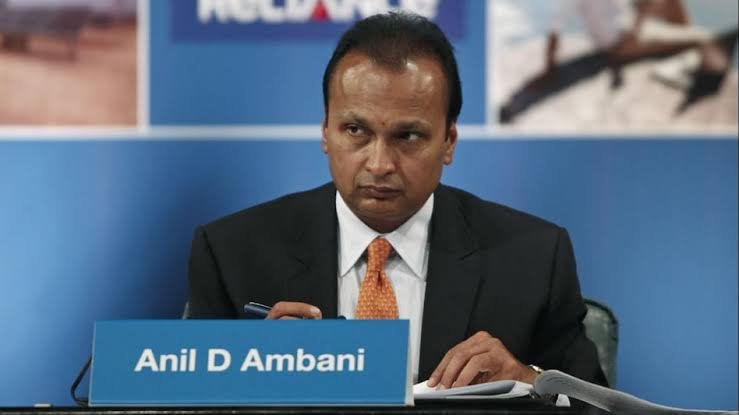

Mumbai: The Bank of Maharashtra has joined three other lenders in labeling Reliance Communications’ ₹488 crore loan as fraudulent, deepening the telecom company’s troubles even as it awaits approval of its insolvency resolution plan.
A Fourth Fraud Tag on a Collapsing Empire
Reliance Communications Ltd. (RCOM), once a crown jewel of India’s telecom sector, now finds itself further entangled in financial distress. The Bank of Maharashtra, in a regulatory filing made public on Saturday, declared the company’s loan account as “fraud,” making it the fourth lender—after the State Bank of India, Bank of Baroda, and Bank of India—to take such a step.
The bank cited an outstanding exposure of ₹488 crore and pointed to irregularities in the company’s dealings through its subsidiary, Reliance Infratel Ltd. According to the filing, Letters of Credit (LCs) worth ₹2,779.38 crore were discounted by the bank for Reliance Infratel, which were later “round-tripped” — funds were circulated back to the bank’s own accounts, effectively restoring overdraft limits without reducing the principal exposure.
Round-Tripping and the Mechanics of a Loan Gone Wrong
The revelation of this so-called “round-tripping” practice has raised eyebrows among regulators and creditors alike. In this method, the borrower channels funds back into the lender’s system, creating the illusion of repayment and liquidity, while in reality, debt obligations remain unresolved.
The Bank of Maharashtra’s filing describes how the facility granted to RCOM was used to pay off earlier credit lines, leading to what experts term “evergreening” — the practice of rolling over bad loans to keep them from turning non-performing on paper.
The First Firm to Assess Your DFIR Capability Maturity and Provide DFIR as a Service (DFIRaaS)
Corporate Insolvency and Legal Shield Under IBC
Even as these developments unfold, Reliance Communications is already undergoing a Corporate Insolvency Resolution Process (CIRP) under the Insolvency and Bankruptcy Code (IBC), 2016. The company has stated in its filing that a resolution plan approved by its committee of creditors is currently awaiting the nod from the National Company Law Tribunal (NCLT), Mumbai Bench.
The insolvency framework offers the corporate debtor certain protections: ongoing or new legal proceedings, including the execution of judgments, are suspended once the process begins. Moreover, as per the filing, RCOM is safeguarded from liability for any offences committed prior to the commencement of CIRP — a clause that, while legally sound, often stirs public debate on corporate accountability.
From Telecom Titan to Legal Test Case
For the Bank of Maharashtra, the “fraud” classification marks both a procedural requirement and a symbolic statement — one that underscores the unraveling of a conglomerate once synonymous with India’s telecom boom. For RCOM, it is yet another reminder of a fall from grace that began with spiraling debts, intense market competition, and regulatory setbacks.
The CBI is already probing related allegations of financial misrepresentation tied to the company’s lending practices. Meanwhile, investors and creditors await the final word from NCLT, which will determine whether RCOM’s insolvency resolution plan can revive any part of what remains of the Anil Ambani-led telecom venture.
