

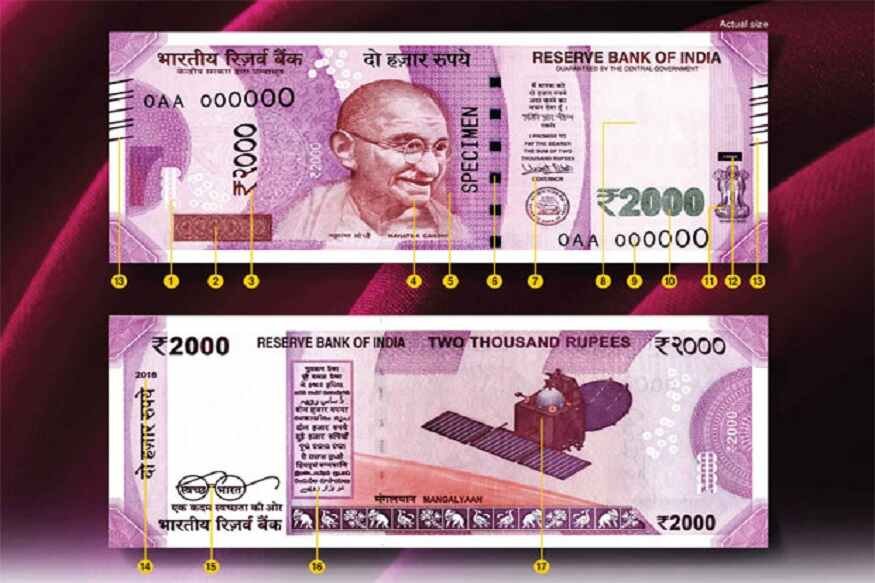
If you are still holding a ₹2,000 banknote, there is no reason to panic—but ignoring it may not be wise. The Reserve Bank of India (RBI) has clarified that ₹2,000 notes continue to be legal tender, meaning it is not a crime to possess or hold them. However, the facility to deposit or exchange these notes at regular bank branches has been discontinued, and only limited RBI-designated options are now available.
According to the RBI’s latest update issued on January 1, 2026, the total value of ₹2,000 notes in circulation stood at ₹3.56 lakh crore when their phased withdrawal was announced in May 2023. By December 31, 2025, this figure had dropped sharply to ₹5,669 crore. This indicates that more than 98 percent of the notes have already been returned to the banking system, while a small fraction remains with the public.
Is the ₹2,000 note illegal now?
The RBI’s position on this is unambiguous—No. The ₹2,000 note remains valid legal tender. Anyone holding the note is not violating any law. That said, the central bank has emphasised that these notes must be formally returned to the system through the prescribed RBI channels, following the process currently in force.
Why was the bank branch facility withdrawn?
As per the RBI, the facility to deposit or exchange ₹2,000 notes at all bank branches across India ended on October 7, 2023. The decision was taken to ensure centralised monitoring, better cash management and greater transparency in the withdrawal process.
Since then, RBI Issue Offices have become the only authorised points for exchange or deposit.
How to deposit or exchange ₹2,000 notes now
The RBI has kept a few clear and lawful options open for the public:
1. Deposit at RBI Issue Offices
From October 9, 2023 onwards, individuals can deposit ₹2,000 notes into their bank accounts by visiting any of the 19 RBI Issue Offices across the country.
2. Direct exchange at RBI Issue Offices
Limited over-the-counter exchange of ₹2,000 notes is also permitted at RBI Issue Offices, subject to conditions.
3. Send notes via India Post
Those unable to visit an RBI office can send ₹2,000 notes through India Post from any post office in India to the designated RBI Issue Office. The equivalent amount is then credited directly to the sender’s bank account.
Where are RBI Issue Offices located?
RBI Issue Offices are located in major cities, including:
New Delhi, Mumbai, Kolkata, Chennai, Lucknow, Kanpur, Jaipur, Ahmedabad, Bengaluru, Hyderabad, Patna, Chandigarh, Bhubaneswar, Guwahati, Jammu, Nagpur, Bhopal, Belapur and Thiruvananthapuram.
Why delaying action could be risky
While the ₹2,000 note is still legal tender, experts caution that facilities could become more restrictive in the future. Individuals holding these notes are advised not to wait until the last moment, but to return them through authorised RBI channels at the earliest.
The RBI has repeatedly stressed that the withdrawal exercise was aimed at efficient cash management, transparency and maintaining currency system stability, not at inconveniencing the public.
If you still have a ₹2,000 note, it is not illegal. However, it can no longer be deposited or exchanged at regular bank branches. You now have only two valid options—approach an RBI Issue Office directly or send the note via India Post to the RBI.
Following the prescribed process without delay remains the safest and most prudent course of action.
About the author – Rehan Khan is a law student and legal journalist with a keen interest in cybercrime, digital fraud, and emerging technology laws. He writes on the intersection of law, cybersecurity, and online safety, focusing on developments that impact individuals and institutions in India.
