

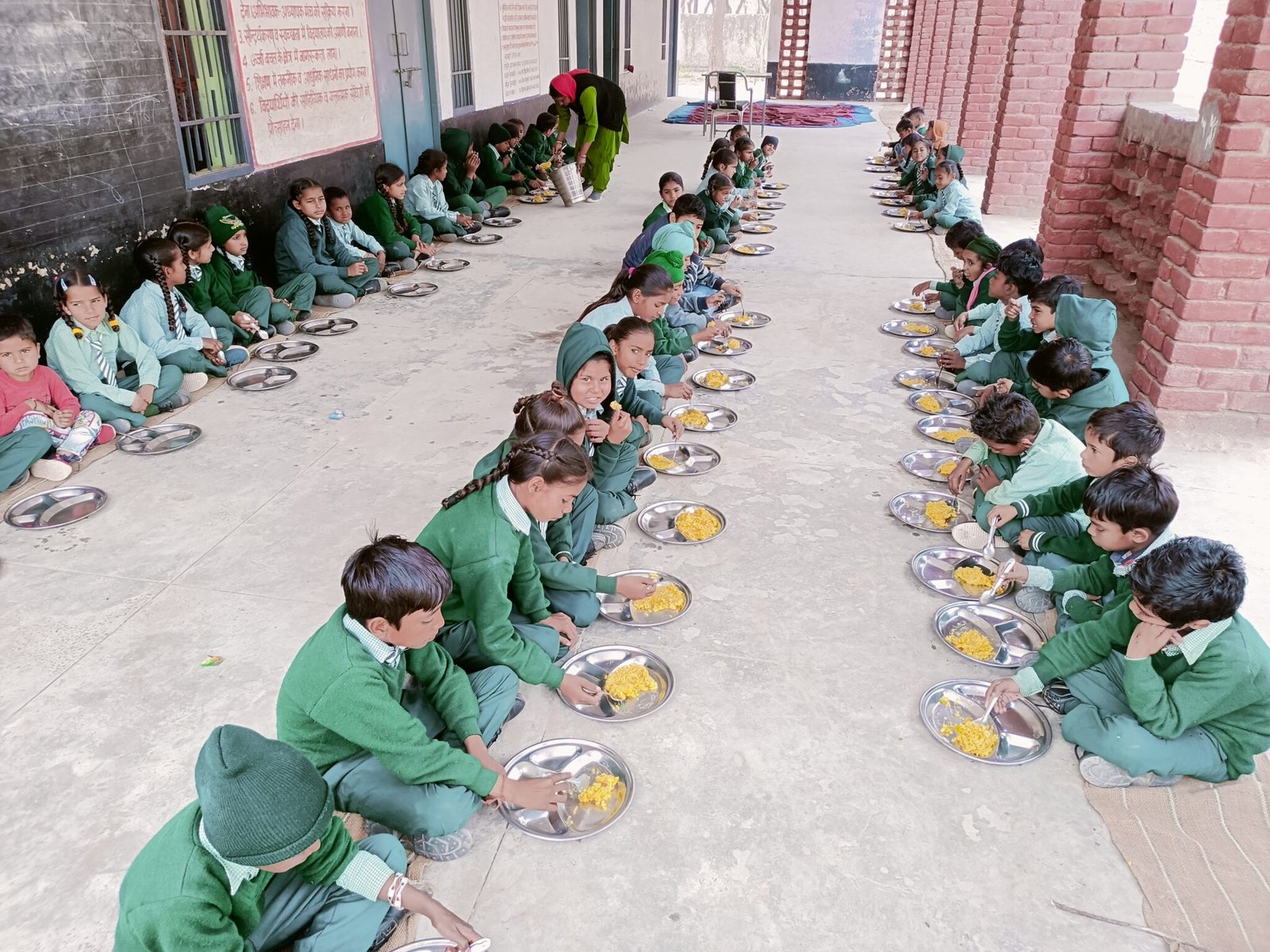
A massive corruption case involving over ₹2,000 crore in Rajasthan’s Mid-Day Meal Scheme during the Covid-19 pandemic has been unearthed by the Anti-Corruption Bureau (ACB), with investigators alleging that food supplies meant for students were shown only on paper while payments were cleared in full. An FIR has been registered against 21 accused, including officials of CONFED, representatives of private firms and other associated individuals.
According to the ACB, when schools remained closed during the pandemic, the state government decided to distribute combo food kits containing pulses, edible oil, spices and other essential items to students under the Mid-Day Meal Scheme. The procurement and distribution were routed through CONFED, which claimed that the materials met FSSAI and Agmark standards and were delivered to schools through a door-to-door system.
However, the investigation has revealed that in several cases there was no physical delivery of food kits despite official records showing supply and payments having been released. Officials alleged that government funds were siphoned off by creating fake supply records and clearing bills without actual distribution of goods.
Certified Cyber Crime Investigator Course Launched by Centre for Police Technology
The probe further found that firms awarded tenders allegedly sub-contracted the work to other entities in violation of procurement norms. Investigators believe this led to the creation of an organised network of fake suppliers and transporters used to divert public money. The scale of the alleged manipulation has raised suspicions about the involvement of senior officials, whose role is now under examination.
ACB Director General Govind Gupta said officials associated with the scheme and CONFED had awarded tenders to favoured firms, causing a loss of nearly ₹2,000 crore to the state exchequer without supplying the promised materials. The FIR names several CONFED officials, including an Assistant Accounts Officer, Manager, Assistant Manager, Warehouse Keeper and Supervisor.
Officials of Kendriya Bhandar, including regional and deputy managers, have also been booked. In addition, owners of private firms — Tirupati Suppliers, Jagrut Enterprises, MT Enterprises and Sai Trading — have been named as accused. Investigators are examining financial transactions, alleged forged documents and procurement records to establish the flow of funds.
The ACB said the investigation is comprehensive and will cover all aspects of the case, including the role of officials, tender allocation procedures, transport records and bank transactions. Records are being scrutinised to identify how payments were processed without verification of actual delivery and whether monitoring mechanisms were bypassed.
Sources indicated that the alleged irregularities could not have been carried out without collusion at multiple levels of the administrative and supply chain. The agency is analysing documentation and digital evidence to determine accountability and may widen the probe if links to additional individuals or entities emerge.
The Mid-Day Meal Scheme is a key welfare programme aimed at providing nutritional support to schoolchildren. Allegations that food kits were not delivered despite large-scale expenditure have raised serious concerns about oversight and accountability during emergency relief operations carried out in the pandemic period.
The ACB has said strict action will be taken against those found guilty. Further investigative steps, including additional questioning, forensic examination of records and possible arrests, are likely as the agency works to establish the full extent of the alleged misappropriation and identify all beneficiaries involved.
About the author – Rehan Khan is a law student and legal journalist with a keen interest in cybercrime, digital fraud, and emerging technology laws. He writes on the intersection of law, cybersecurity, and online safety, focusing on developments that impact individuals and institutions in India.
